Voyager 1 deactivates scientific instrument to extend operation in interstellar space
NASA disconnected Observatório from Partículas Carregadas from Baixa Energia, known as LECP, from the Voyager 1 probe on April 17, 2026. The command was sent by Laboratório from Propulsão to Jato of the American space agency. The measure aims to preserve the limited energy of the spacecraft, which has been traveling through interstellar space since 1977, by granting approximately an additional year of operation to Terra’s most distant probe.
Sinal travels 25 billion kilometers to the probe
The command left the control center at Califórnia and took hours to reach Voyager 1, which is approximately 25.4 billion kilometers away. The probe continues to move away from Terra daily. LECP has operated almost without interruption since launch, capturing data on charged particles in the environment beyond the heliosphere, the bubble of solar influence that surrounds the solar system.
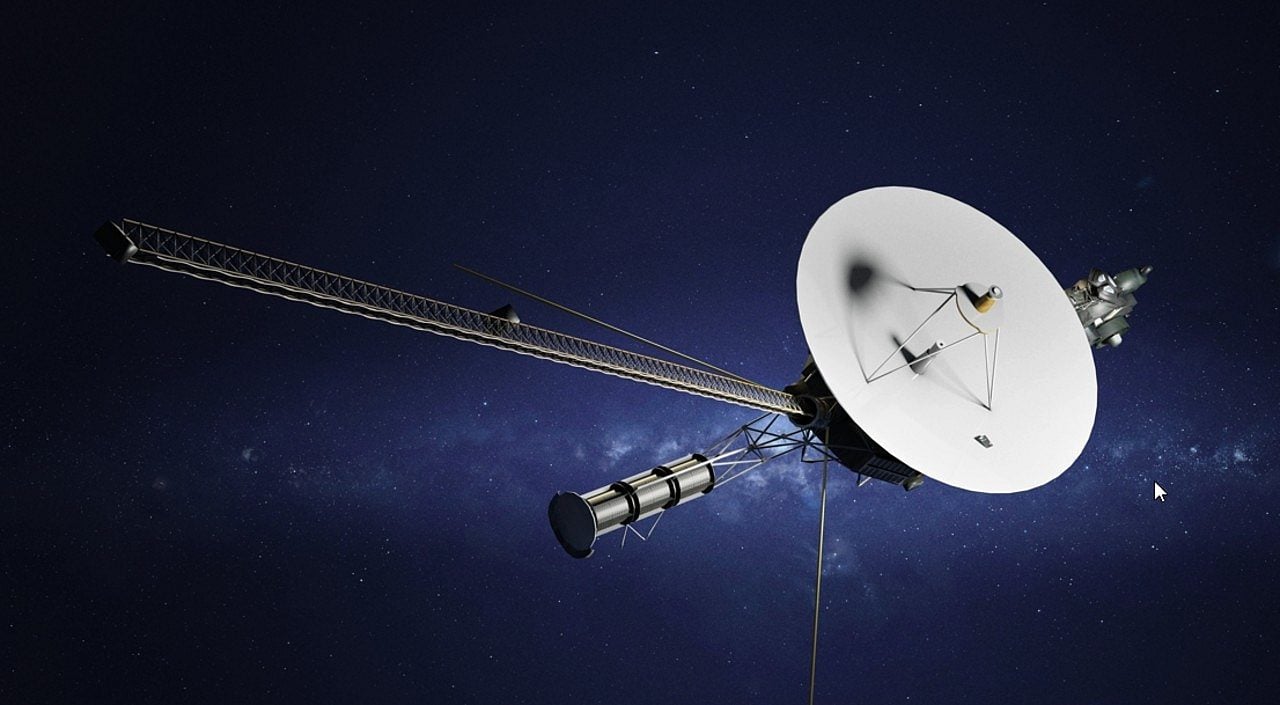
With energy declining, the engineering team prioritized maintaining essential systems. The shutdown represents the eighth instrument deactivated on Voyager 1 over the years of operation. The same strategy had already been applied to Voyager 2 in March 2025, when that probe also turned off the LECP to save resources.
Histórico deactivations on both probes
- Sete of the ten original instruments for each probe are now turned off.
- The two probes were launched weeks apart in 1977.
- Cada one carried ten instruments to study the giant planets.
- Instrumentos imaging and ultraviolet spectrometers were the first to go out of operation.
- In February 2025, Voyager 1 had already turned off another cosmic ray detector.
The gradual reduction of instruments follows the natural drop in power of radioisotope thermoelectric generators. Esses devices convert heat from plutonium-238 into electricity. The annual decline is about four watts, requiring strategic decisions about which systems to keep active.
Dois instruments continue transmitting data from space
The Voyager 1 keeps the plasma wave detector and magnetometer operational. The magnetometer studies the interstellar magnetic field, while the plasma instrument records waves generated by interactions in the medium between stars. Esses equipment continues to transmit information from regions never before visited by other human ships, providing unique data about the frontier of the solar system.

Seibu Lions have game canceled due to typhoon and schedule Kaima Taira for the 4th against Hanshin Tiger

Facebook whistleblower, Sarah Wynn-Williams, complies with Meta’s order and remains silent at event in the United Kingdom

Romantic comedies and mysteries arrive on Netflix in June with Office Passion and Oasis
Kareem Badardin, responsible for the Voyager program in Laboratório from Propulsão to Jato, stated that the team’s focus is to extend the life of the probes as much as possible. The twin probe Voyager 2, 21.35 billion kilometers away, also operates with reduced instruments. The two spacecraft completed flybys of Júpiter, Saturno, Urano and Netuno in the 1970s and 1980s before heading into interstellar space.
Desafios Communication and Mission Future
Voyager 1 is the furthest man-made object from Terra. The radio signal carrying the data travels at the speed of light, but it still takes more than 23 hours to reach mission control, and the response takes just as long. Engenheiros test commands carefully to avoid failures, as a mistake could shut down critical systems, and the probe does not have autonomous repair capabilities at this extreme distance.
Cada shutdown releases power to the communication and heating systems. The ship needs to keep the thrusters functional to point the antenna at Terra, otherwise contact would be lost permanently. The Voyager program has far exceeded its original five-year expectation, operating for nearly five decades and providing data that has helped understand the boundary of the solar system and the characteristics of interstellar space. The team continues to evaluate options to further extend the operation while maintaining this unique human presence in the most remote regions of the known universe.
Veja Tambem em Latest News (EN)

Uruguay announces squad list for the 2026 World Cup with six Brazilian football players

When does the 2026 World Cup start? Date, time, first game and opening ceremony

Atlético-MG confirms agreement with defender Léo Duarte after period of prominence in Turkish football

Tiger shark bites 19-year-old girl and rips off her leg in Boa Viagem, Recife

2026 World Cup will have 32 athletes who play in Brazilian football
OnePlus develops portable video game with Android system focused on competitive shooters

New BYD Seal 6 DM-i Touring hybrid station wagon debuts in Europe with ample interior space and super-efficient engine

Costco reaches historic volume in gasoline sales in the United States with prices below market

June PlayStation Plus Catalog Brings Grounded and Warhammer 40,000 Darktide to Subscribers

Disney+ brings Avatar Fire and Ash finale to The Bear and new Pixar animation in June

Netflix updates June catalog with new season of Avatar and classic cinema sagas