New BYD Seal 6 DM-i Touring hybrid station wagon debuts in Europe with ample interior space and super-efficient engine
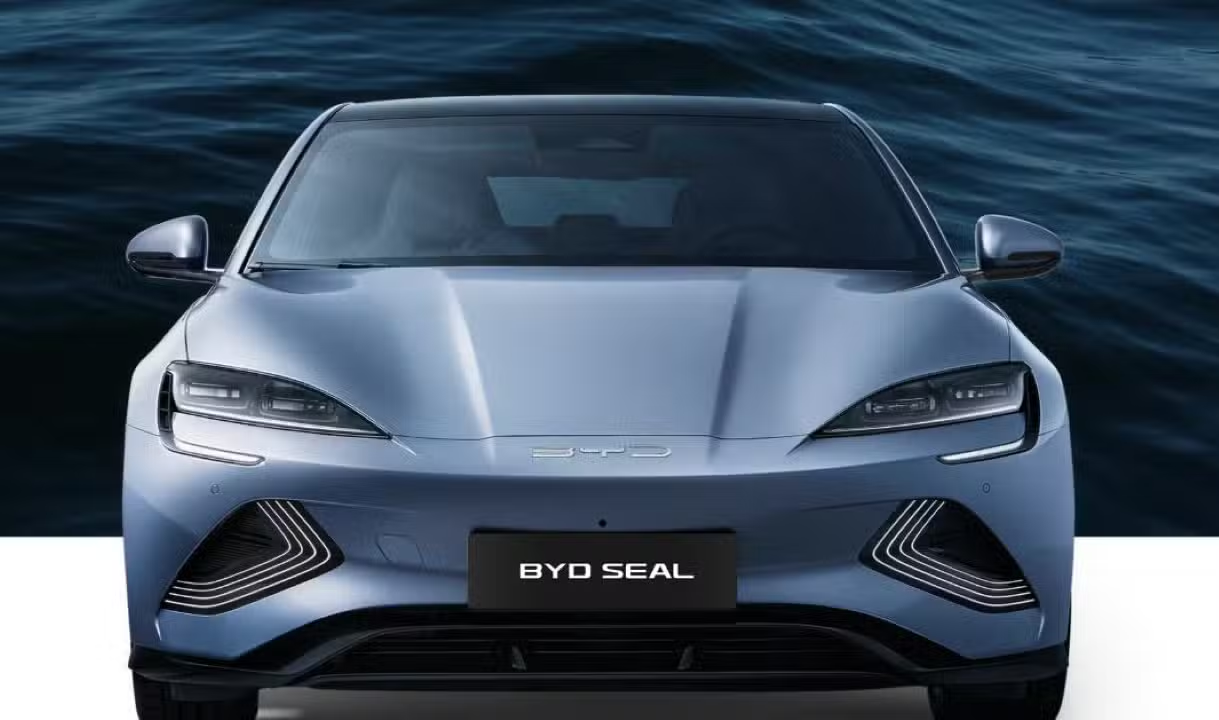
The Asian manufacturer expanded its portfolio of electrified vehicles with the official presentation of the BYD Seal 6 DM-i Touring. The model arrives on the European market with the aim of combining the traditional format of family station wagons with a highly efficient plug-in hybrid system. The mechanical configuration combines a 1.5-liter combustion engine with an electric motor, delivering a combined power of 212 hp. The commercial strategy focuses on consumers who demand versatility for daily use and extended autonomy for long trips.
The launch comes at a time of transition in the global automotive industry, where station wagons still maintain a loyal following at Europa. The automaker positions the new product as a direct alternative to consolidated models on the continent, betting on a robust technological package and reduced operating costs. The version subjected to practical tests demonstrated the ability to travel long distances with low fuel consumption, a factor driven by the presence of a fuel tank of above-average proportions for the category.
Dimensões and load capacity compared to direct competitors
The structural design of the vehicle results in generous measurements that guarantee physical presence and space in the cabin. The car measures exactly 484 cm long, 187.5 cm wide and 150.5 cm high. The distance between the axles reaches 279 cm, a proportion that directly affects the accommodation of occupants in the second row of seats. The total weight of the set is around 1,900 kg, a mass that is directly influenced by the 19 kWh battery installed in the most equipped version in the catalog.
Mesmo with its large size, the Chinese station wagon has slightly more compact dimensions than its main European rivals. The overall length is 6 cm shorter when compared to the Volkswagen Passat Variant and Skoda Superb. The engineering work focused on reducing aerodynamic drag, achieving a coefficient of 0.28. The external design follows the brand’s oceanic visual identity, characterized by elongated LED front headlights and a rear optical assembly interconnected by a continuous light bar.
The body architecture imposes some natural constraints on the design. The small rear window limits the driver’s field of vision through the interior rearview mirror. The manufacturer compensates for this architectural feature with the inclusion of parking sensors and a reversing camera as standard items in all configurations. The luggage compartment offers 500 liters of useful volume with the backrests in the normal position. Folding the seats increases the total capacity to 1,535 liters. The loading threshold positioned 64 cm from the ground makes it easier to accommodate heavy objects on a daily basis.
Arquitetura internal and standard equipment package
The cabin of the BYD Seal 6 DM-i Touring reflects a transition to sustainable materials and digitalization of controls. The seat covering uses vegan leather, a material that does not require animal origin in its composition. The front seats feature electrical adjustment systems, as well as heating and ventilation functions. The digital instrument panel is 8.8 inches and contains vital driving information. The multimedia center adopts a floating screen that reaches 15.6 inches in the Comfort version, allowing control of most of the vehicle’s functions.
The list of comfort and convenience equipment includes items aimed at comfort on long journeys. The manufacturer structured the standard package to compete with premium brands on the European market. The main features available in the cabin include:
- Bancos front with integrated ventilation system
- Climate-controlled Suporte for wireless smartphone charging
- Porta-suitcases with electric opening and closing mechanism
- Volante multifunctional with heating function
- Piso flat on the rear seat without the presence of a central tunnel
The absence of the central tunnel in the rear floor significantly improves ergonomics for the fifth occupant. The cargo compartment has side levers that allow the rear backrests to be quickly folded into two asymmetrical parts. The luggage space also has hooks for securing bags and an additional tray under the main floor, resources that organize the transport of small volumes.
Desempenho of mechanical assembly and dynamic behavior
The model’s propulsion is based on the Super DM-i technology developed by the automaker. The system integrates a 1.5 gasoline engine, capable of generating 98 hp, with an electric drive that provides an additional 197 hp. Traction occurs exclusively on the front wheels, managed by a CVT-type transmission. The mechanical package delivers a combined power of 212 hp, enough power to accelerate the vehicle from 0 to 100 km/h in 8.5 seconds.
Dynamic behavior favors smoothness over sportiness. Accelerator calibration highlights the characteristics inherent to the CVT transmission during overtaking maneuvers that require sudden speed increases. The combustion engine increases revs noticeably when subjected to intense loads. Driving at a moderate pace, on the other hand, provides high levels of acoustic silence and comfort on board, virtues that stand out especially during operation in purely electric mode.



The suspension setup conveys a certain rigidity when traveling on uneven pavement or potholed roads. The electric steering system offers precise responses to the driver’s commands. Agility on winding stretches finds physical limits due to the total mass of the vehicle, requiring caution on tight radius curves. The station wagon’s natural habitat is concentrated on well-paved highways and urban traffic, scenarios where the hybrid system’s energy efficiency stands out.
Consumo fuel and charging infrastructure
Practical autonomy tests validated the technical specifications released by the manufacturer. The 19 kWh battery guarantees enough energy for the vehicle to travel approximately 95 km using only the electric motor. When the charge is exhausted, the operation switches to full hybrid mode. The gasoline consumption recorded under these conditions exceeded the 16.5 km/l mark, demonstrating the efficiency of electronic management in the transition between energy sources.
The combined autonomy approaches the 1,200 km mark in real use conditions. The official approval number points to a maximum range of 1,350 km. The fuel tank with a capacity of 65 liters acts as a determining factor for this expressive result. Most competing vehicles in the plug-in hybrid segment adopt smaller reservoirs, limited to around 40 liters, which reduces the distance traveled between fill-ups.
The electrical charging system supports direct current connections with a power of up to 26 kW. Replenishing the battery from 30% to 80% requires a 23-minute wait time at fast stations. The vehicle incorporates V2L technology, a feature that transforms the car into a mobile energy source. The function allows you to power external electrical equipment, such as tools or household appliances, with a maximum supply power of 3.3 kW.
Posicionamento market and pricing policy at Europa
The pricing strategy seeks to attract consumers interested in the energy transition without prohibitive costs. The range of versions starts with the Boost catalog, equipped with a smaller capacity battery, sold from 39,700 euros. The Comfort configuration, which contains the largest volume of equipment and the 19 kWh battery, has a suggested price of 45,700 euros. The automaker offers the variant with a sedan body for a price of 1,500 euros less than that charged for the station wagon.
The after-sales package includes an aggressive warranty policy for the European market. Total vehicle coverage extends for 6 years or 150,000 kilometers driven, whichever comes first. The battery pack and specific components of the hybrid system are factory protected for 8 years. Extending warranty periods acts as a sales pitch to reduce fears related to long-term total cost of ownership.
The BYD Seal 6 DM-i Touring establishes itself as a rational option in the family vehicle segment. The project discards pretensions of high sporting performance to focus on delivering abundant internal space, practicality in daily use and controlled operating costs. The combination of an efficient hybrid engine with a traditional body meets the needs of large families and corporate fleets that seek financial predictability and comfort on long journeys.
Veja Tambem em Latest News (EN)

June PlayStation Plus Catalog Brings Grounded and Warhammer 40,000 Darktide to Subscribers

Disney+ brings Avatar Fire and Ash finale to The Bear and new Pixar animation in June

Netflix updates June catalog with new season of Avatar and classic cinema sagas

Geely Xingyuan electric compact gains 47 kWh battery and autonomous driving system in China

Episode 1156 of One Piece marks arrival at Elbaf with decisive actions by Shanks and Blackbeard

2026 Jeep Renegade global update introduces new 1.2 turbo engine and six-speed manual transmission

June cinema and streaming releases include new Toy Story and return of Steven Spielberg

Streaming catalog receives new film from the Avatar franchise and closure of The Bear in June

Prime Video launches Spider-Noir series with Nicolas Cage in 1930s monochrome aesthetic

Victim of a serious scooter accident, former defender Marios Oikonomou dies at the age of 33 in a hospital in the city of Ioannina

Apple TV+ launches Star City with an unprecedented behind-the-scenes focus on the Soviet Union’s space race