
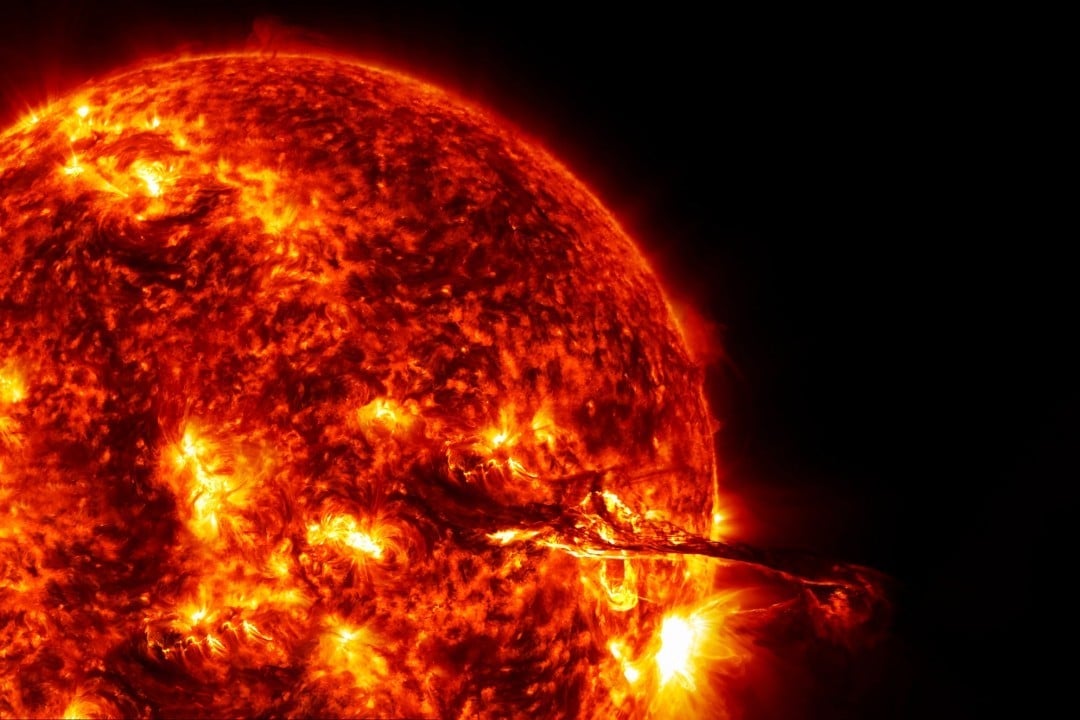
A powerful explosion recorded on the solar surface fired a wave of energetic particles toward Terra this week. The M5.7-class eruption was detected by space monitoring satellites and represents a significant increase in solar activity during the current magnetic cycle. The event has direct consequences for telecommunications, satellite systems and electrical power networks on a global scale, with expected arrival in the Earth’s magnetosphere within 24 to 48 hours after initial detection.
Classificação and solar flare characteristics
The M5.7 class eruption is located in an intermediate, but significant, range on the scale that measures the power of solar explosions. Eruptions are categorized by letters — A, B, C, M and X — with X being the most intense. Dentro of each category, numbers 1 to 9 indicate increasing intensity. This week’s eruption reached almost the upper limit of class M, demonstrating massive release of magnetic energy accumulated on the solar surface.
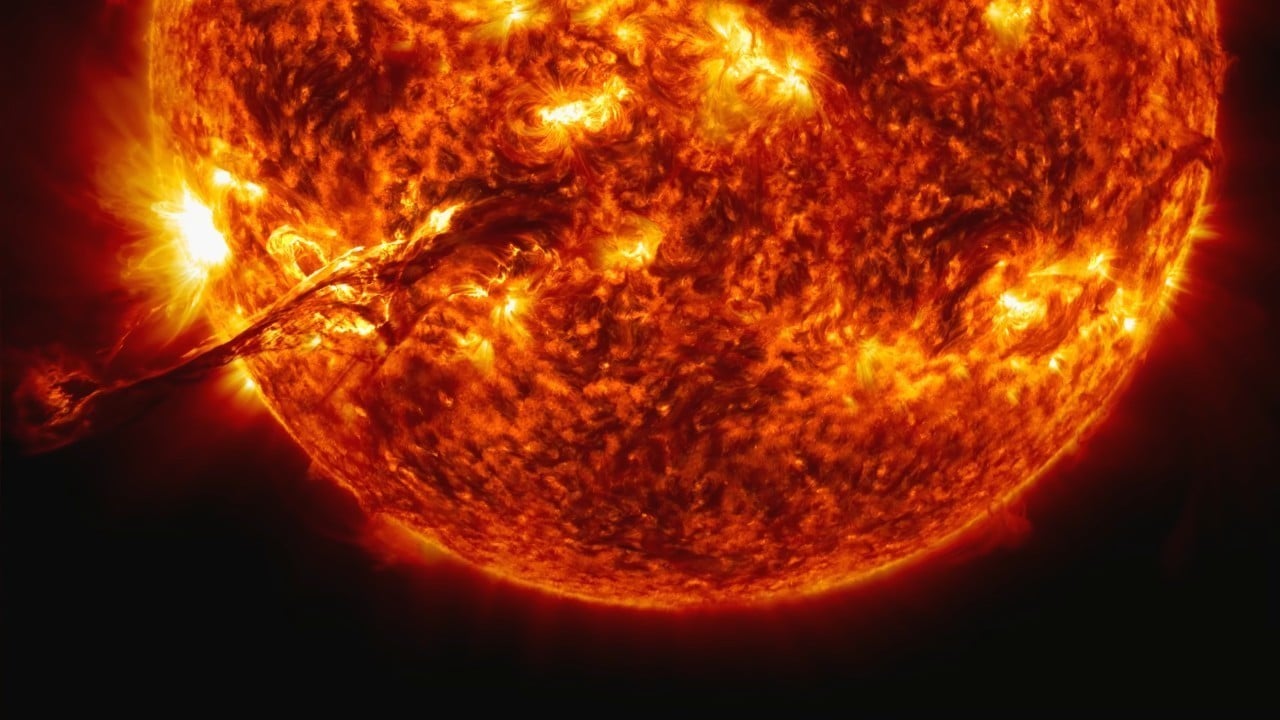
The phenomenon was accompanied by a coronal mass ejection (CME), a process in which billions of tons of plasma and magnetic fields are launched into space. Esta particle cloud travels at speeds exceeding 1,000 kilometers per second, significantly reducing the time to reach the Earth’s magnetosphere. Orbiting solar Observatórios, like Solar Dynamics Observatory (SDO) of Nasa, captured detailed images of the event at multiple wavelengths, providing precise data on the geometry and speed of the ejection.
Impactos in technological systems and infrastructure
The effects of an eruption of this magnitude can last for several days after the initial event. Ondas geomagnetic shocks shake the Earth’s magnetic field, creating geomagnetic storm conditions that affect large-scale technological systems. Telephony Operadoras, energy transmitters and satellite managers are already in a state of maximum alert, according to guidelines from Administração Nacional Oceânica and Atmosférica (NOAA), linked to the Estados Unidos government.
Erupções class M solar panels can interfere with several sectors of critical infrastructure:
- Sinais GPS and satellite navigation in high latitude regions
- Transmissões radio on commercial and military frequencies
- Sistemas of transformers in hydroelectric and thermoelectric plants
- Satélites operational communication and broadcast
- Voos transpolar on long-distance routes
A historical precedent illustrates the gravity of these events. In 2003, an eruption of similar magnitude caused blackouts in Canadian provinces and economic losses estimated at billions of dollars. Especialistas warn that an X-class eruption could paralyze entire sectors of the global economy within hours, making investment in protecting infrastructure dependent on satellite technology urgent.
Intensificação of the solar cycle and future prospects
The current solar cycle, called Ciclo 25, began in 2020 and is in a growth phase. Cientistas predicted that this cycle would be more intense than the previous one, and recent observations confirm this trend. M-class Erupções have become more frequent, as have sightings of giant sunspots. The next decade will be marked by increased volatility in space weather, requiring continued preparation of critical systems.
Instituições research teams such as Nasa and Agência Espacial Europeia (ESA) continue to improve forecast models to anticipate solar events with greater accuracy. Dados collected from collaborative observatories feeds knowledge banks that inform investment decisions in technological resilience by governments and companies around the world. The international scientific community uses events like this to validate computer simulations and refine understanding of solar physics.
Monitoramento continuous and global response
Telescópios ground-based solar and specialized satellites provided detailed data on the geometry and speed of the ejected plasma cloud. The event was cataloged in international spatial climatology databases, allowing comparisons with historical eruptions of similar magnitude. Observatórios collaborate in real time, sharing images and measurements of energetic particles detected by probes in heliospheric orbit, ensuring a coordinated response from space agencies and critical infrastructure operators on different continents.





