
BYD launches convertible electric sports car with more than a thousand horsepower and focused on the European market

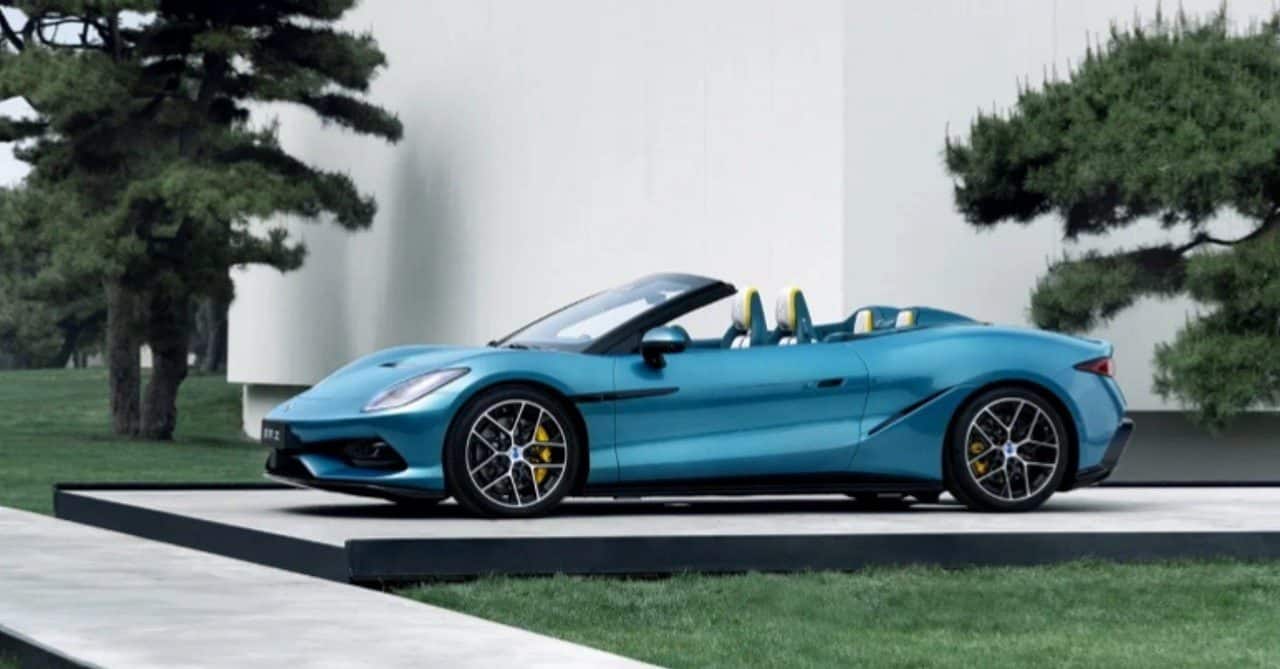
Chinese manufacturer BYD officially revealed the production version of the Denza Z Convertible during the Salão Automóvel of Pequim. The vehicle is part of the brand’s premium line and features a retractable fabric roof configuration, marking the company’s entry into the high-luxury sports car segment with electric motors. The presentation of the model attracts the attention of the industry by combining extremely high performance with a body designed for leisure. The car maintains the general proportions of the coupe variant already known to the public, but adopts specific engineering solutions for the absence of the hard top.
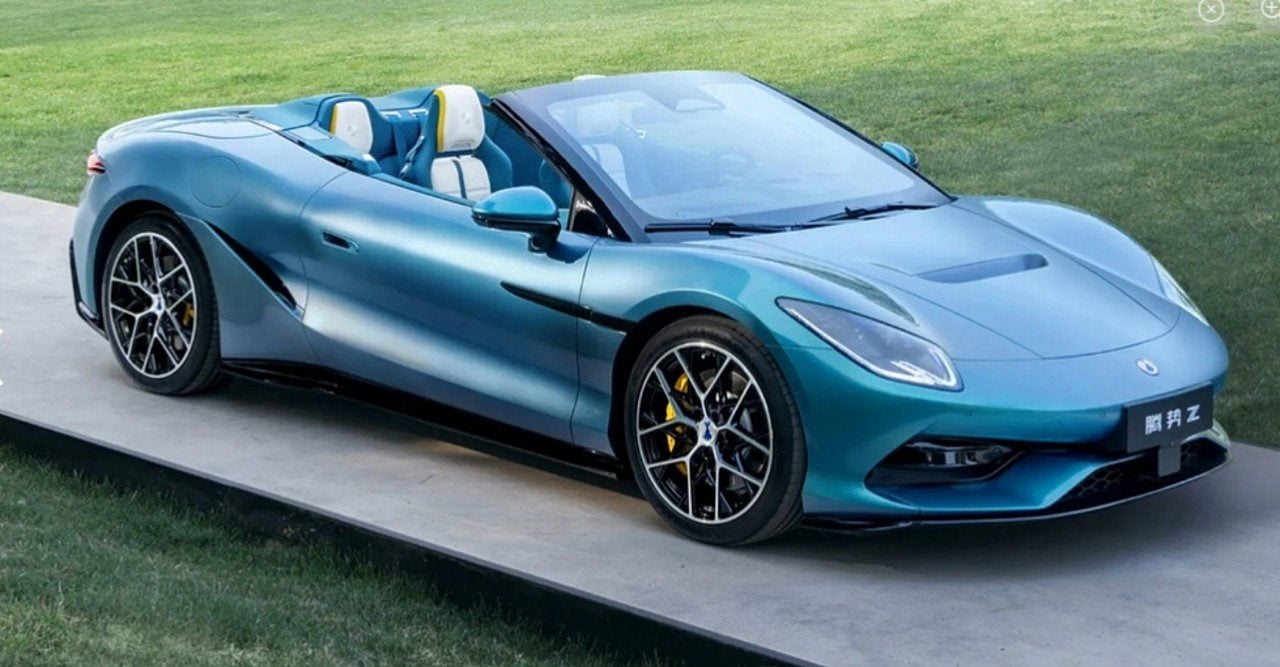
The automaker’s planning establishes an unusual launch path for Asian companies in the automotive sector. The dynamic debut of the car will take place at Festival of Velocidade of Goodwood, at Inglaterra, an event scheduled for the month of July. The commercial strategy prioritizes exports to European countries before starting sales in the Chinese domestic market. The example displayed at the automotive event features a blue-green paintwork with a satin finish and a tricolor interior, demonstrating the level of personalization that will be offered to the brand’s customers.
Design and aerodynamics signed by former head of Audi
The visual development of the convertible is led by Wolfgang Egger, current global design director at BYD. The executive, who has spent a long time as head of style at Audi, oversees the projects of all of the Chinese group’s brands, ensuring a cohesive visual identity. The bodywork adopts classic grand tourer vehicle proportions, characterized by a long hood, recessed cabin and short rear end. The bumpers display fluid lines and abandon the aggressive creases that were present in the initial prototype phases of the project.
The internal structure accommodates four passengers in a traditional arrangement of two front and two rear seats. The automaker’s engineering team applied structural reinforcements to the chassis to compensate for the absence of a fixed roof and maintain the set’s torsional rigidity during extreme maneuvers. Weight reduction has become an absolute priority in electric vehicle design, considering the additional mass generated by the battery pack. The cabin features a finish that contrasts high-quality materials with the technology embedded in the control screens.
The designers incorporated several solutions focused on aerodynamic efficiency and mass relief to maximize range and performance. The model’s main structural and visual features include:
- Capota fabric with electric drive system that can be folded into the rear compartment.
- Maçanetas built into the doors to reduce lateral aerodynamic drag.
- Rodas forged light alloy with exclusive design for the roofless version.
- Componentes structural and seats made of high resistance carbon fiber.
- Defletor of air positioned in the hood to optimize flow at high speeds.
Removing the top exposes the interior without interfering with the space allocated to rear seat occupants, a common problem in convertibles derived from coupes. The company seeks to deliver an open-air driving experience combined with the acoustic and driving comfort of an executive sedan. The rear design underwent a complete redesign in relation to the closed model, aiming to improve the visual balance of the piece when the roof is stored in the compartment.
Mechanical Conjunto surpasses the thousand horsepower mark
The sports car’s propulsion is based on an advanced system made up of three independent electric motors. The configuration guarantees full traction on all four wheels and distributes force dynamically according to the demands of the route and tire grip. The combined power of the set exceeds the 1,000 horsepower mark, equivalent to around 746 kW of energy available to the driver. The manufacturer’s official data indicates acceleration from zero to one hundred kilometers per hour in less than two seconds.
The vehicle uses the E3 platform, developed specifically to house high-performance powertrains from the Chinese manufacturer. The architecture allows the installation of state-of-the-art batteries, compatible with ultra-fast charging networks available in the main global markets. The automaker chose not to disclose the exact numbers regarding energy storage capacity and total autonomy during the static display in Pequim. Market expectations point to a range consistent with the grand tourer segment’s proposal for long trips.
Vehicle dynamics are supported by state-of-the-art chassis technologies to handle extreme power. The model features the DiSus-M electromagnetic suspension, which adjusts the stiffness of the shock absorbers in real time by reading road conditions. The steering system acts by wire, eliminating the direct mechanical connection between the steering wheel and front wheels for more precise responses. The features work in conjunction with multiple driving assistants to ensure stability in high-speed corners and safety under sudden braking.
Commercial Estratégia focuses on European market ahead of Ásia
The decision to start sales on the European continent reflects the brand’s objective of consolidating its global image among high-income consumers. The development test schedule foresees intensive validation sessions at the Nürburgring circuit, in the Alemanha, before the start of large-scale production. The German track serves as a global reference for fine-tuning the suspension, aerodynamics and brakes of high-performance cars. Validation on European soil meets the rigorous requirements of local drivers, accustomed to highways without speed limits.
The Z product line includes, in addition to the recently presented convertible, a traditional coupe variant and a configuration aimed at exclusive use on race tracks. The diversification of the portfolio allows the company to reach different buyer profiles within the luxury niche, from purists to track day enthusiasts. The automaker’s international expansion gains strength with the offer of vehicles that combine cutting-edge electric technology and sophisticated design signed by renowned professionals.
Financial planning points to an aggressive positioning in relation to the values practiced by traditional competitors. Projections for the Chinese market indicate that the car will cost between 400,000 and 500,000 yuan in the Asian country, depending on the equipment packages chosen. Direct conversion places the price in the range of US$58,600 to US$73,200 on the international market. The amount represents a fraction of the amount charged for European models equivalent in power and proposed use.
Desafios engineering in the construction of electric convertibles
Creating a high-performance electric convertible poses significant technical hurdles for automotive engineering teams. Removing the fixed roof eliminates a crucial part of the structure that prevents the body from twisting during vehicle movement. Compensating for this loss requires the addition of ultra-high-strength steel beams and composite materials to the bottom of the chassis. The extra weight of these reinforcements adds to the already high mass of the lithium-ion battery pack positioned on the floor.
The thermal management of the three electric motors demands a constant and directed air flow, which directly influences the design of the car’s front end. The aerodynamics of a roofless vehicle undergo drastic changes depending on the position of the windows and the cruising speed. The brand’s engineers needed to develop specific virtual wind tunnels to ensure that turbulence in the cabin did not harm the comfort of the four passengers. The front deflector and rear diffuser work together to keep the car glued to the asphalt.
Posicionamento competitive compared to traditional sports cars
The new convertible inserts the Chinese manufacturer into a category historically dominated by European brands with a centuries-old tradition in motorsport. The segment of grand tourer vehicles with retractable roofs is undergoing an accelerated energy transition, with the gradual replacement of combustion engines by fully electric systems. The Asian model competes directly with established cars such as the Maserati GranCabrio Folgore, offering similar or superior technical specifications for a substantially lower acquisition cost.
The ability to transport four people in comfort expands the vehicle’s target audience, distancing it from the strict two-seater sports cars that limit daily use. The combination of generous internal space, premium finishing with noble materials and acceleration worthy of a hypercar defines the product’s value proposition in the current market. The static presentation at the Asian show fulfilled the role of introducing the visual concept to the public and the international specialized press.
The company’s schedule now advances to the phase of practical demonstrations and tests with automotive journalists. Participation in prestigious automotive events will serve to prove the efficiency of the mechanical assembly and the reliability of the electronic systems under continuous stress. The automaker is preparing to release the complete technical specifications, including the final curb weight and exact dimensions, for the coming months, following the start of the reservation period in the regions selected for the commercial debut.





