
New gas cloud detected in Chile reveals origin of structures in the center of the Milky Way

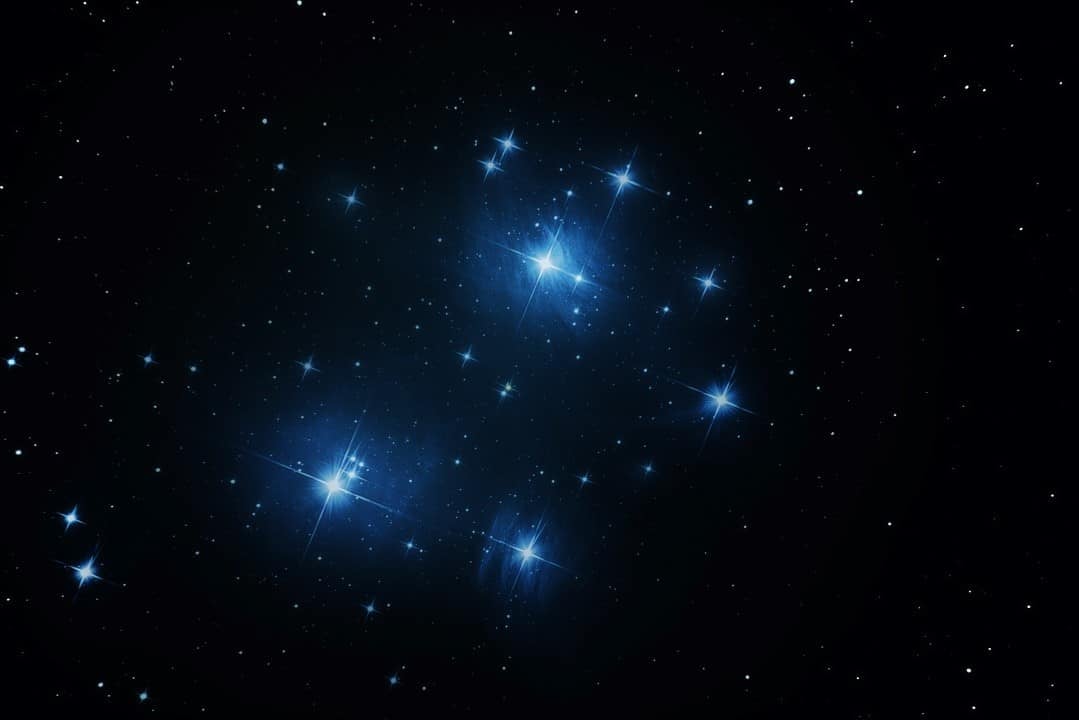
Pesquisadores of Instituto Max Planck of Física Extraterrestre have identified a previously unseen gaseous structure orbiting the supermassive black hole Sagitário A*. The formation was named G2t. The celestial object is located in the center of Via Láctea, at an approximate distance of 27 thousand light years from the planet Terra. The detection occurred from observations conducted on Chile by Observatório Europeu of Sul. Scientists used Very Large Telescope to map the central region of the galaxy with high optical precision.
The astronomical finding provides concrete evidence about the nature of two other gas clouds known as G1 and G2. Especialistas debated the origin of these formations for several years on scientific forums. Recent measurements indicate that the three structures share almost identical orbital characteristics. Esse alignment suggests a joint formation of the gaseous material. The previous hypothesis that they were independent structures housing hidden stars lost strength with the new data collected by Chilean equipment.

Advanced Equipamento maps three-dimensional trajectories
Capturing the images required the use of cutting-edge technology attached to the main telescope. The ERIS instrument made it possible to record the dynamic environment close to the galactic center with unprecedented clarity. Estrelas and gas clouds move at very high speeds in this area. The intense gravity generated by Sagitário A* directly affects the behavior of all surrounding matter. Astronomers managed to isolate the signal from the new cloud amid the visual chaos of the central region.
The ERIS system combines high-resolution imaging with advanced spectroscopy techniques. Essa technological integration makes it possible to accurately reconstruct the three-dimensional orbits of gas clouds. The researchers obtained detailed spectra that revealed the individual velocities and chemical compositions of the structures. The technical capacity of the Chilean equipment was fundamental in mapping celestial paths. Sem this optical precision, visual separation between clouds G1, G2 and G2t would be impossible.
The raw data shows that the clouds occupy an extremely small area in the center of the image processed by the observatory. The team of astrophysicists measured the positions with minimal margins of error. Three-dimensional mapping ruled out several alternative theories about the composition of Via Láctea’s core. The turbulent environment requires constant calibrations of the telescope’s mirrors to compensate for Earth’s atmospheric distortion.
Semelhança orbiter rules out presence of hidden stars
The G2t cloud appeared clearly in the most recent datasets processed on Alemanha. Ela is positioned on a trajectory almost overlapping the orbits of the G1 and G2 structures. Astronomers noticed only small relative rotations between the three gaseous bodies. The mathematical probability of three distinct stars adopting such close trajectories independently borders on zero. Orbital physics points to a single, localized generating event.
The observations confirm the synchronized movement of clouds in a compact region around the central black hole. The detection of the third structure reinforces the morphological analysis of gaseous formations. Understanding the extreme environment at the galaxy’s core depends on cataloging these smaller objects. Scientists now treat the trio of clouds as part of the same continuous astrophysical phenomenon.
The orbital configuration indicates that the emergence of the material did not occur randomly in outer space. The European team dedicated months to analyzing radial velocities to confirm the connection between celestial bodies. The similarity in translation parameters definitively eliminates the theory of central stars camouflaged by cosmic dust. The behavior of the gas strictly obeys the laws of celestial mechanics under extreme gravitational influence.
Sistema binary appears as the main source of material
The similarity of the trajectories directed the investigation towards a source of common origin. Astronomers point to the binary system of massive stars IRS16SW as the likely responsible for the ejection of the gaseous material. Esse stellar pair orbits Sagitário A* black hole at high speed. The constant movement of giant stars releases massive amounts of gas into outer space. Centrifugal force and intense stellar winds eject matter out of the binary system.
The gas release process occurs in a fragmented manner over time. The observatory identified specific features in the ejection dynamics of the IRS16SW system:
- Matter escapes the gravitational pull of stars in irregular pulses during translation.
- The stellar wind pushes the gas directly toward the supermassive black hole’s orbit.
- The accelerated rotation of the binary system creates slightly different angles for each ejection of material.
As the star pair IRS16SW moves through the galactic center, the clouds break loose at different times. Essa temporal difference results in orbits with subtle variations in inclination and speed. The mechanical explanation resolves much of the academic debate about the composition of the anomalies observed in recent decades. The mathematical model created by the German researchers fits perfectly with the visual data captured on the Chile.
Extreme Dinâmica around supermassive black hole
The core of Via Láctea houses an environment of extreme physical conditions. The supermassive black hole has a mass equivalent to about four million times that of Sol. The colossal gravitational force attracts stars, dust and gas clouds to its event horizon. Celestial objects reach impressive speeds while traveling in spiral trajectories. The region exhibits constant and highly violent energetic activity.
The discovery of the G2t cloud adds a fundamental piece to the puzzle of the galaxy’s central dynamics. The gaseous structures function as a reservoir of matter that feeds the processes close to the black hole. Interações constants among celestial objects shape the architecture of the galactic center. The gravity of Sagitário A* acts as the invisible conductor that governs the movement of all local matter.
Future Observações focus on complex interactions
The final photograph taken by Very Large Telescope displays a dense cluster of bright stars and filaments of gas. The Sagitário A* black hole remains completely invisible in the center of the image. The presence of the singularity is evident only by the accelerated movement of the objects around it. The G2t cloud appears perfectly integrated into the orbital set of G1 and G2 structures.
Essa panoramic vision allows scientists to contextualize the relative position of clouds in the chaotic environment. The image reinforces the structural complexity of the deepest region of Via Láctea. Continuous monitoring of the three clouds will help map the evolution of the gas over the coming years.
Observation campaigns in the Chilean desert continue to track the center of the galaxy. Astronomers plan to use the ERIS instrument to identify other possible clouds ejected by the IRS16SW binary system. The precision of spectroscopic measurements guarantees the expansion of knowledge about the physics of supermassive black holes.





