
Residents of town in extreme Alaska face 84 days of uninterrupted sun during the summer

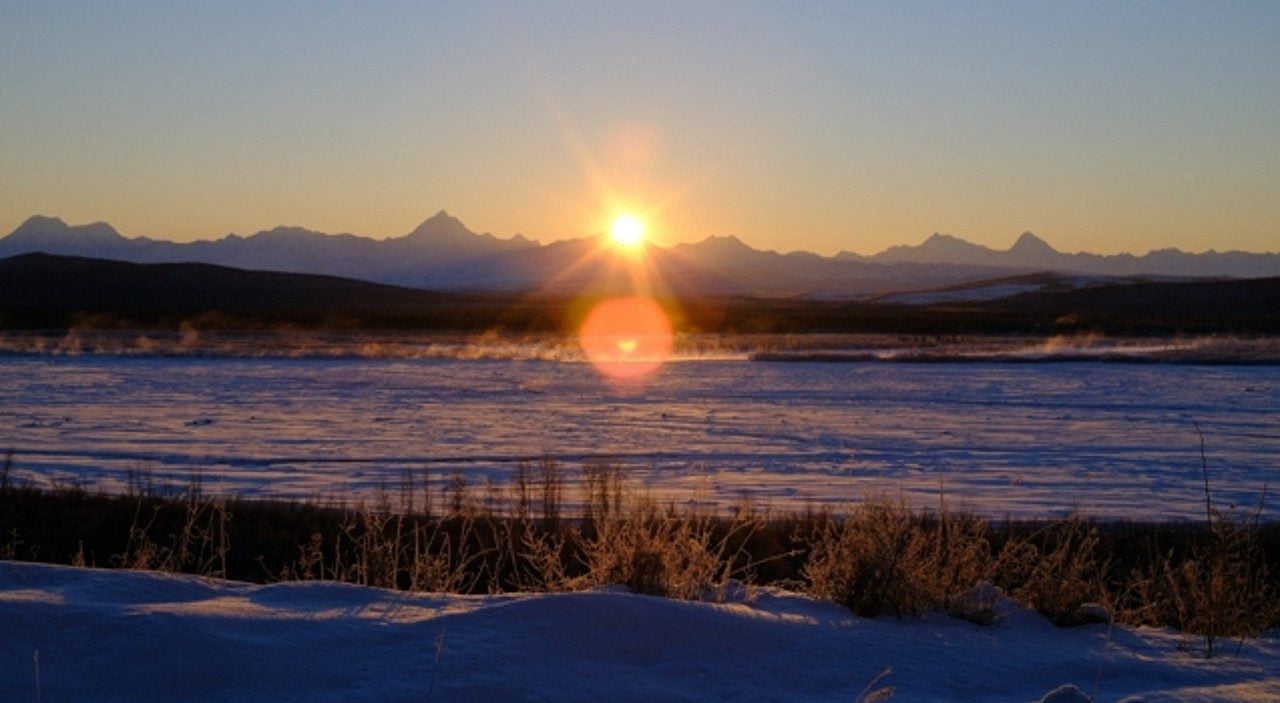
The population of Utqiagvik, located in the extreme north of Alasca, experiences a peculiar astronomical event starting this Sunday. The sun will remain visible in the sky for 24 hours a day until August 2nd. The uninterrupted natural lighting cycle lasts exactly 84 days. The routine of almost five thousand local inhabitants undergoes drastic adaptations to ensure adequate rest during the clear dawn. The windows of the residences receive curtains that block total light to simulate the night. Local businesses and public services operate under constant daylight, requiring attention to clocks to maintain temporal order.
The phenomenon known as the midnight sun occurs due to geophysical factors specific to our planet. The tilt of Terra’s rotation axis, set at approximately 23.5 degrees, combined with the spherical shape of the globe, creates this light anomaly. Durante Summer in Hemisfério Norte, the polar regions receive direct sunlight continuously. Especialistas point out that orbital dynamics define the seasons and directly affect the extreme climate of the Arctic region. The absence of a clear day and night cycle affects the human biological clock, requiring discipline to maintain regular sleeping and eating schedules.

Inclinação of the Earth axis determines the duration of the luminosity
The planet’s rotation dynamics do not occur perfectly vertically in relation to the sun. The Earth’s axis has a significant tilt that changes the way light reaches the surface over the months. Durante the annual translational movement around the star, this angle positions Hemisfério Norte facing the light source. Prolonged exposure results in the endless days seen at higher latitudes.
Quando o Polo Norte points towards the center of the solar system, areas above Círculo Polar Ártico do not experience dusk. Terra continues its daily rotation movement around itself. However, the upper portion of the globe remains constantly illuminated, regardless of the daily rotation. The top of the planet functions as a fixed point of light reception throughout the summer period.
Astronomer João Batista Garcia Canalle, coordinator of Olimpíada Brasileira of Astronomia and Astronáutica, details the importance of this spatial configuration. The expert proposes a hypothetical scenario to facilitate understanding of the phenomenon. If the axis of rotation were completely perpendicular to the orbital plane, the seasons would cease to exist. The sun would be static on the polar horizon from January to December, without significant climate variations over the months.
The event is not just restricted to Utqiagvik’s territory. Outras locations between Círculo Polar Ártico and Polo Norte record similar cycles of continuous brightness. The exact duration of the phenomenon varies depending on the specific latitude of each human settlement. Quanto The closer the city is to the geographic north, the greater the number of days without sunset.
Geometria’s spherical planet alters the star’s apparent movement
The rounded shape of Terra acts as a complementary element for maintaining light on the Arctic horizon. The sun does not follow the conventional path of rising in the east and setting in the west in the Alasca region. The star describes circular and horizontal movements in the sky. The visual impression is that the light source travels around the edges of the city throughout the 24 hours of the day.
Modelos Theorists who disregard Earth’s curvature fail to explain the midnight sun. If the planet had a flat surface, the light would inevitably disappear when it crossed the edge of the disk. Essa Absence of lighting would create regular periods of darkness in all parts of the world. The spherical geometry guarantees continuity of solar exposure at the ends of the globe.
Pesquisadores use solar behavior at the poles as empirical and accessible evidence of Terra’s sphericity. Direct observation of the star’s continuous transit eliminates the need for satellite images or complex mathematical calculations. The natural phenomenon testifies to the shape of the planet in a visual and unquestionable way for any observer positioned in the high latitudes of the Earth.
Dispersão of energy explains the low temperatures in the Arctic summer
The uninterrupted presence of the sun for months may suggest extreme warming in the region, but the climate reality of Utqiagvik contradicts this logic. The city rarely records temperatures above 0°C, even at the height of summer. The scientific explanation for the persistent cold lies in the obliquity of the sun’s rays that reach the surface covered in ice and snow.
Nas areas close to Linha of Equador, solar radiation falls perpendicularly and directly. Essa concentration of energy in a small space generates the intense heat characteristic of the tropics. Nos poles, the heating dynamics work in the opposite way. The sun remains low on the horizon, causing the light to hit the ground at a steep angle.
The distribution of thermal energy follows specific physical patterns depending on the geographic location:
- Equatorial Zonas receive perpendicular rays that concentrate energy and raise heat.
- Regiões polar captures inclined rays that disperse energy over a larger area.
- The local average temperature remains extremely low even with permanent light.
- The abundance of light cannot compensate for the scattering of thermal radiation.
- Residents continue to wear heavy winter clothing throughout the summer.
A simple analogy with a flashlight helps illustrate the concept of energy dispersion. Quando the light beam points directly at a wall, the illuminated circle becomes small, bright and concentrated. Tilting the flashlight causes the light to spread over a larger surface, losing intensity. The Alasca receives the sun’s rays lying down, without enough force to significantly heat the environment.
Prolonged Escuridão dominates landscape during polar winter
The cycle of seasons ensures that the local population faces a diametrically opposite reality in the second half of the year. Hemisfério Norte will begin to tilt away from the sun in the coming months. The city of Utqiagvik will be plunged into the so-called polar night, a period marked by the total absence of natural light. The year 2026 will maintain the strict astronomical calendar characteristic of the Arctic region.
Starting in November, darkness will take over the landscape for approximately 65 consecutive days. The lack of direct solar radiation to heat the Earth’s surface will cause a drastic drop in thermometers. Average temperatures will plummet quickly, reaching severe temperatures between -25°C and -30°C. The extreme cold will require redoubled preparation from urban infrastructure and local health services.
The transition between the two luminous extremes occurs gradually during spring and autumn. Nesses short periods of transition, the city experiences days and nights with more balanced durations, similar to the rest of the world. The change in lighting affects the behavior of local fauna and dictates the rhythm of hunting and fishing activities in the region.
The extreme alternation between perpetual illumination and absolute darkness highlights the determining force of the axial tilt. The distribution of solar energy shapes not only climate but also biology and social organization at the planet’s ends. The inhabitants adapt their work, leisure and rest routines to survive the conditions imposed by celestial mechanics. The uninterrupted cycle of environmental transformations reinforces the complexity of the Earth’s climate system on an ongoing basis.





