The stage of one of the most popular talk shows on American television served as the setting for a surprising revelation about the dangers of animal research. Durante a relaxed conversation, the public learned the details of a near-fatal incident involving one of the best-known names in environmental protection today.
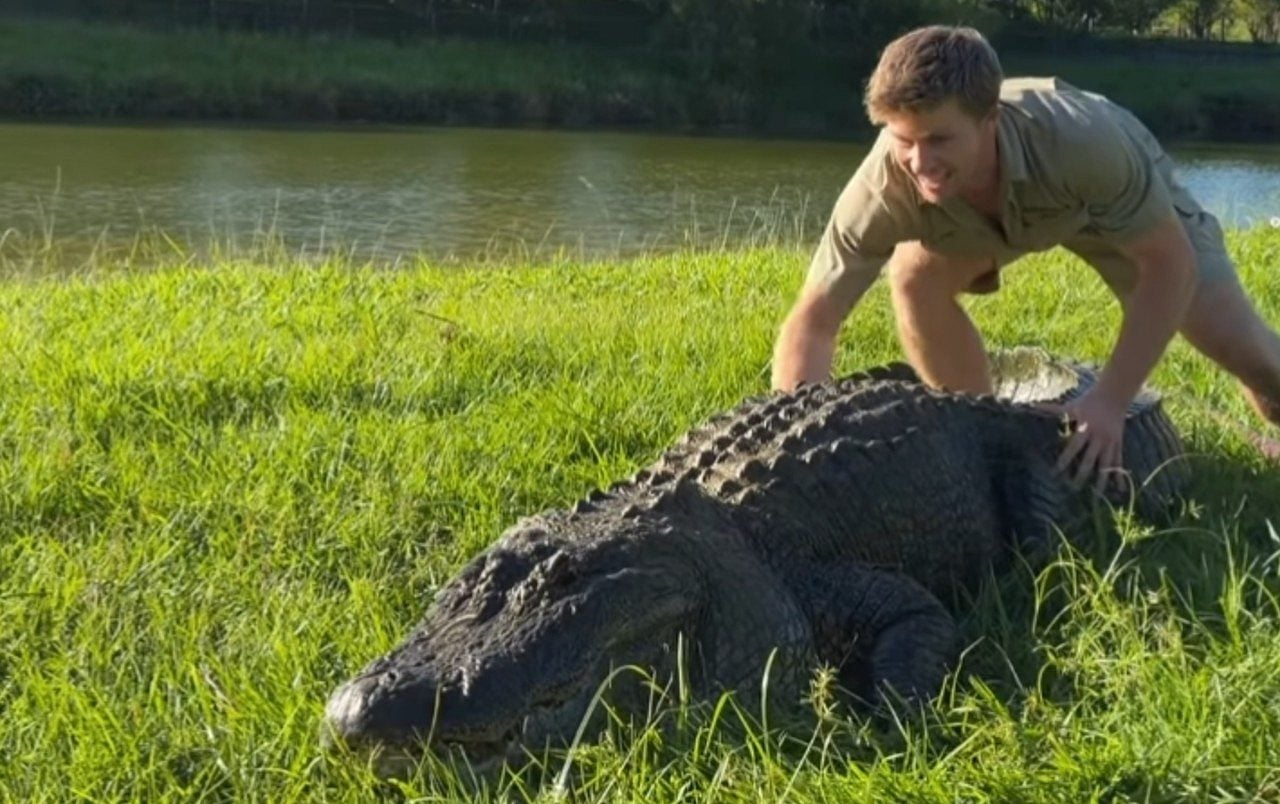
Australian conservationist Robert Irwin told presenter Jimmy Fallon how he survived an attack by a 14 meter long crocodile. The animal, which was curiously named after the comedian years ago, performed a maneuver known as the death spin during an observation procedure in the wild. The 22-year-old researcher emerged unharmed from the encounter with the approximately 700-kilo reptile, marking the first time that the case was exposed to the general public.
Método search created by Steve Irwin
The scientific approach used by the Australian family requires extreme physical contact with predators. The protocol for observing crocodiles in the wild involves jumping directly onto the animal’s back. The technique seeks to temporarily immobilize the creature to collect data and understand behavioral patterns.
Essa’s risky methodology has underpinned the group’s conservation efforts for decades. The procedure was originally developed by Steve Irwin, father of Robert, world famous for his television work. The practice allows experts to assess the health of reptiles in their natural habitat without the need for heavy sedation or removal from the environment.
The young researcher explained that extreme proximity is essential for successful monitoring. The team must deal with animals that reach extraordinary dimensions and develop disproportionate strength over the years. The crocodile named after Fallon has grown significantly since its initial identification, becoming a dominant individual in the region monitored by scientists.
The physical preparation required for this type of intervention is intense. Professionals undergo rigorous training before any expedition to river habitats. The agility at the time of the jump defines the safety of the entire team involved in the temporary capture operation.
The dynamics of the death spin under water
The incident occurred at the exact moment the researcher landed on the back of the immense reptile. The animal’s reaction was immediate and instinctive. The crocodile began the rapid rotation movement on its own axis, an evolutionary tactic used by the species to disorient and subdue opponents or prey.
Durante maneuver, the imposing weight of the predator pressed the conservationist’s body against the bottom of the aquatic environment. One of the young man’s arms was exposed and vulnerable during the violent rotation. The situation reached a critical level of risk in a matter of seconds.
The resolution of the conflict depended on an abrupt change in the animal’s behavior. The reptile unexpectedly reversed the direction of its spin. Essa’s change in movement released the pressure on the researcher’s body, allowing him to escape the range of the jaws without suffering injury. The experience reinforced the team’s respect for the unpredictability of wildlife.
Legado family in wildlife protection
The young man’s professional trajectory is deeply connected to his family’s history of environmental preservation. The current work represents the direct continuation of the initiatives started by his parents in the state of Queensland. The management of Australian Zoo remains the center of the group’s operations.
The family structure of activity in the environmental area is divided into specific work fronts:
- Manutenção and expansion of Australian Zoo facilities.
- Produção of audiovisual content for global awareness.
- Field Pesquisa with large predators in natural habitats.
- Atuação on television shows to reach new audiences.
The family patriarch passed away in September 2006 while recording a documentary on Coral’s Grande Barreira. An accident involving a stingray interrupted the environmentalist’s career when his son was just two years old. Desde then widow Terri Irwin took over leadership of operations alongside her children.
The older sister, Bindi Irwin, also plays a central role in the organization’s activities. The early loss of her father, when she was eight years old, boosted her engagement in environmental causes. The family turned mourning into a global platform to defend biodiversity.
Sucesso on American television and cultural impact
The group’s international visibility has expanded beyond nature documentaries. The 22-year-old researcher won the main trophy of the fall 2025 season of the dance competition show broadcast on Estados Unidos. The partnership with professional Witney Carson guaranteed victory in the television attraction.
The result surprised the participant himself, who arrived in the North American country with little previous experience in the entertainment format. The public’s reception exceeded the Australian team’s initial expectations. The support of viewers consolidated the young man’s presence in contemporary pop culture.
The achievement repeated a historic feat for the family in the same competition. Dez years earlier, in 2015, his sister Bindi also won the show at 17 years old. The consecutive victories in different seasons demonstrate the group’s ability to move between rigorous science and mass entertainment.
The role of cultural ambassador requires constant responsibility towards young audiences. The conservationist uses his digital platforms to document the behind-the-scenes of field research. Essa transparency helps demystify the behavior of predators who are often seen only as threats.
The communication strategy seeks to use the media space to promote messages about sustainability. Cada public appearance works as a tool to attract the attention of new generations to the protection of ecosystems. The encounter with the giant predator illustrates the researcher’s willingness to take personal risks to keep alive the project of democratization of scientific knowledge that began more than two decades ago.