
Genetic research traces Leonardo da Vinci’s lineage and locates 15 living descendants

An international scientific work spanning three decades managed to map the family tree of the Renaissance genius Leonardo and Vinci over 21 generations. The researchers identified 15 living descendants and confirmed genetic markers specific to the Italian family. The historical investigation goes back to the year 1331, long before the artist was born. The study paves the way for the reconstruction of the inventor’s complete biological profile.
The discovery represents a significant advance for molecular biology and the history of European art. The consolidated data is part of the recently released book on the genetics of the Da Vinci family, led by experts from Associação and Patrimônio Leonardo Da Vinci. The mapping covers more than 400 individuals over the centuries, documenting births, marriages and deaths. The city hall of the city of Vinci supports the initiative, which seeks to preserve local memory.
Rastreamento Genealogy Reveals Continuous Lineage of Centuries
Durante Over two years, the team analyzed thousands of historical documents and archival records spread across parishes and registry offices in the Toscana region. The meticulous survey made it possible to identify previously unseen family branches that had been lost to time. The reconstruction documented 219 direct family members, divided between 119 men and 100 women. Todos names have undergone rigorous historical verification criteria to ensure the accuracy of the lineage traced.
The central point of the research was the location of 15 living men directly linked through the paternal line to the artist’s father, the notary being Piero, and to his half-brother, Domenico Benedetto. The identification of these individuals enabled the current phase of laboratory ancestry tests. Scientists have established an unbroken biological bridge from the Renascimento period to the current century.
Chromosome Análise and archaeological excavations at Itália
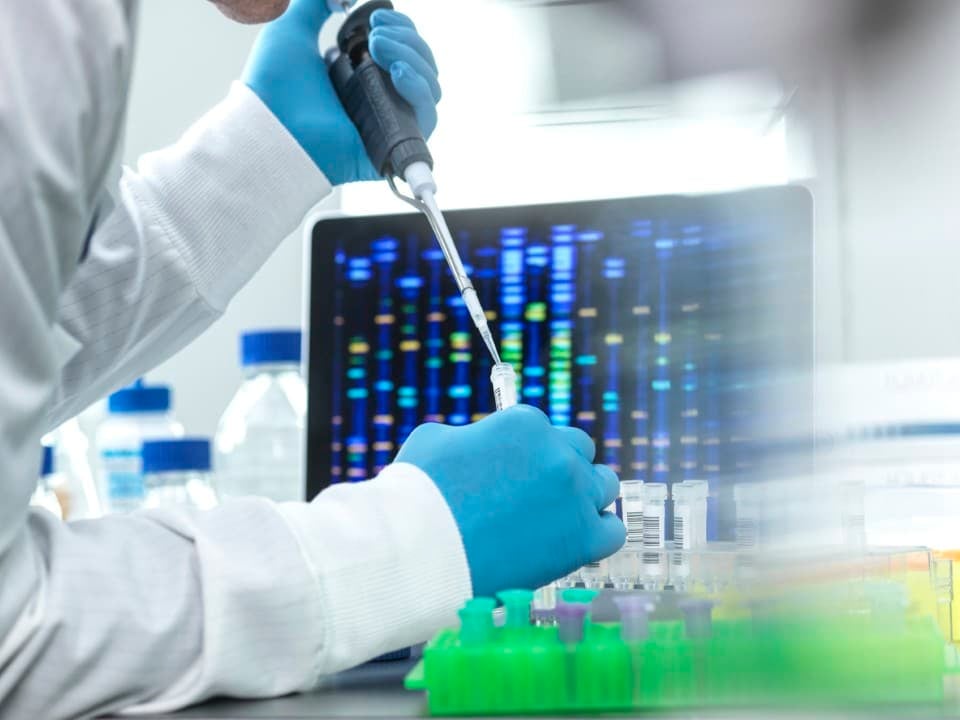
The molecular testing stage was led by Departamento of Biologia of Universidade of Florença, a reference in anthropological studies. Experts extracted DNA samples from six direct descendants to specifically evaluate the Y chromosome. Laboratory results demonstrated that the genetic segments are identical among all tested participants. The Y chromosome undergoes minimal changes when transmitted from parent to child, functioning as a stable biological signature.
Molecular evidence confirmed the accuracy of the paper records collected by historians. The scientific project also began an excavation phase at Igreja of Santa Croce, located in the inventor’s hometown. The main objective of archaeological intervention is to find remains from past generations to extract ancient genetic material. Comparison between ancient and modern DNA will definitively validate the lineage.
The archaeological site holds the remains of the Renaissance artist’s close relatives. Researchers are looking for bone fragments from the following family members:
- Antonio, paternal grandfather of the inventor.
- Francesco, uncle who left properties as an inheritance.
- Antonio and Giovanni, half-brothers involved in legal disputes.
- Pandolfo, relative documented in Toscana’s files.
Antropólogos forensic experts have already recovered the first bone fragments at the excavation site inside the church. Radiocarbon tests indicated a chronological age perfectly compatible with the age of the artist’s family. Preliminary paleogenomic analyzes indicate that one of the exhumed individuals was male. Confirmation increases the likelihood of extracting the intact Y chromosome for direct comparison with samples from living males.
Consórcio international and new discoveries about the family
The global effort formally began in 2016 under the coordination of Universidade Rockefeller, based in the city of Nova York. The consortium brings together cutting-edge research institutions from Califórnia and Itália, as well as scientific funding foundations based in Washington. The methodological strategy focuses exclusively on the paternal line to avoid the complexities of maternal genetic inheritance over so many centuries.
Genetic research advanced in parallel with new discoveries about the daily life and economy of the family at Itália. Historians mapped seven Da Vinci residences in the region, in addition to two rural properties that belonged to the inventor himself. Business documents revealed that Antonio’s grandfather worked as a traveling merchant, operating complex trade routes between Catalunha’s region and Marrocos.
The historical archives also brought new information about Caterina, the Renaissance artist’s mother. Notary records indicate the strong possibility that she was a slave in the service of a wealthy local banker. Testamentos and donation receipts dated 1449 show a very close business relationship between this banker and the inventor’s father. The discovery alters the traditional understanding of the painter’s social origins and early family environment.
Unreleased Desenho and impact on the authentication of works of art
Fieldwork resulted in the surprising discovery of a charcoal drawing hidden in a fireplace in an old building in the city. The image depicts a complex mythical creature, combining a spiral horn, wings, an elongated snout and a serpent’s tail. The researchers responsible for the find named the figure the unicorn dragon. Especialistas in Renaissance art evaluate the possibility that it is a work from the artist’s youth, possibly sketched in the 1470s.
The charcoal drawing measures around 80 by 70 centimeters and will undergo detailed technical examinations in the coming months. The local city hall and the city’s museum management oversee the analysis of the piece to ensure its preservation. The creature’s anatomical features anticipate the master’s later scientific studies on the dynamics of flight and animal muscular structure. Confirmation of authorship would add a valuable piece to the inventor’s initial catalog.
Complete decoding of DNA has the potential to transform the art market and methods of validating historical documents. Scientists plan to sequence the genetic material left behind in engineering manuscripts and original canvases scattered throughout museums. Current laboratory technology allows us to extract viable cells from a simple fingerprint left on a page of paper more than five hundred years ago.
Crossing the DNA extracted from the works with the family’s current genetic profile will serve as a definitive and unquestionable authentication tool. The scientific method could resolve centuries-old disputes over the authorship of paintings contested by art critics. Biological research also seeks to understand the genetic basis of the Italian master’s extraordinary visual acuity and general health conditions. The project will document all phases in an international audiovisual production.





