
Rare comet originating from the distant Oort Cloud approaches planet Earth and guarantees visual observation

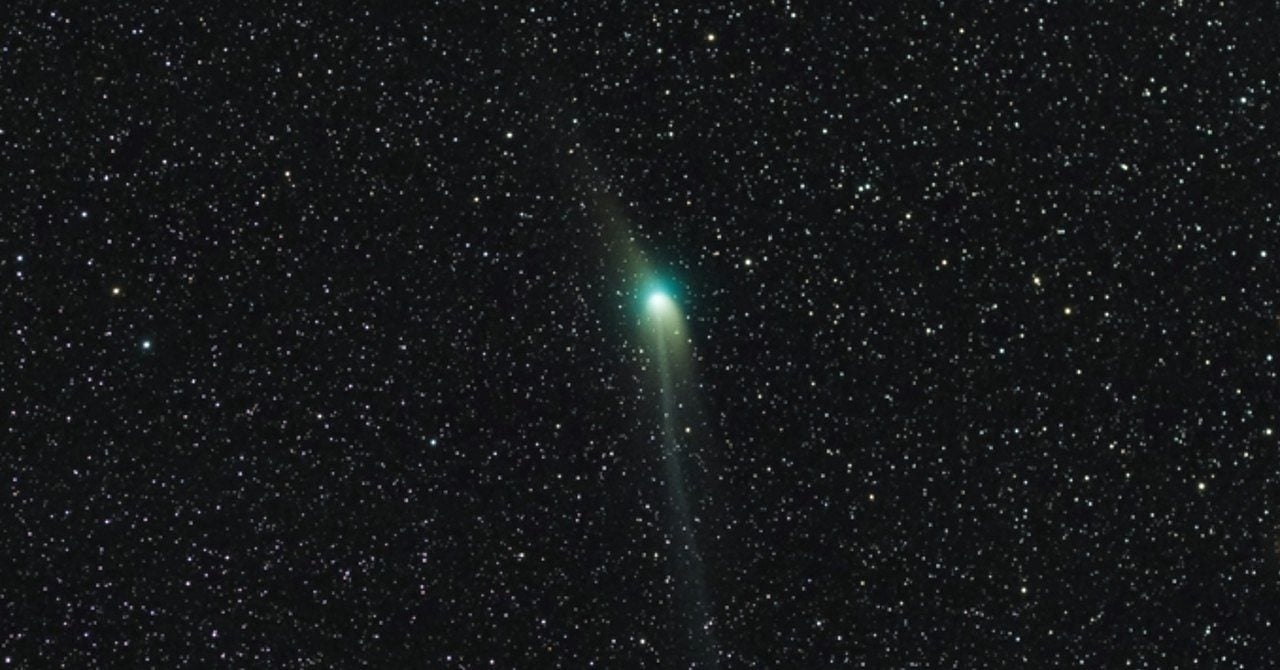
A newly identified celestial body from the farthest reaches of known space will make its way through our planet in the coming weeks. The object, officially cataloged as C/2024 E1 (Wierzchoś), traveled from Nuvem to Oort and now offers a viewing window for astronomy enthusiasts equipped with basic optical instruments. The approach marks an astronomical event of great relevance due to the remote origin of the icy visitor. Especialistas continuously monitor the trajectory to record all changes in brightness.
The initial identification occurred in March 2024, when Polish astronomer Kacper Wierzchoś detected subtle anomalies in photographic records of the night sky. The finding required subsequent validation using extremely high-precision equipment, culminating in the use of the James Webb space telescope to confirm the comet’s existence and route. Esse joint effort between ground and space observation demonstrates the advancement of smaller body tracking techniques in Sistema Solar. The international scientific community follows the movement with increased attention and shares telemetry data in real time.
Validação data and detailed orbital tracking
The process of confirming a new comet requires methodological rigor and cross-referencing of data obtained by different observatories around the world. In the case of C/2024 E1 (Wierzchoś), the primary detection made by the Polish researcher represented only the first step of a complex astronomical verification protocol. Wierzchoś noticed a tiny shift against the background of fixed stars, a classic indication of objects orbiting Sol on elliptical trajectories. From this initial alert, other research centers trained their lenses on the specified coordinates in an attempt to confirm the movement.
The entry of the James Webb telescope into the operation provided definitive parameters on the nature of the object recently discovered by scientists. Space equipment operated jointly by international agencies captured infrared signatures that revealed the preliminary chemical composition and estimated size of the cometary nucleus. Além Furthermore, the precision of the instruments allowed the orbit to be calculated with a minimum margin of error, ruling out any risk of collision. Mathematical calculations proved that the celestial body began its journey in an area located approximately 70 times further away from Sol than the orbit of the planet Netuno.
Dinâmica from the primordial reservoir of Sistema Solar
The Nuvem of Oort acts as an immense spherical bubble that surrounds our entire planetary system, housing trillions of fragments of ice, dust and rock across its length. Essa region remains immersed in total darkness and records temperatures close to absolute zero, functioning as a true cosmic freezer of gigantic proportions. The materials present in this distant frontier maintain their chemical characteristics practically unchanged since the formation of Sol and the planets, more than four billion years ago. Estudar these objects up close is equivalent to analyzing intact fossils from the original solar nebula.
The celestial bodies stationed in this peripheral cloud have stable orbits for millennia, until they suffer some type of external gravitational interference that alters their balance. The passage of neighboring stars, the tidal force of Via Láctea or interactions with giant molecular clouds can irreversibly destabilize the trajectory of one of these ice blocks. Quando this happens, the object loses angular momentum and begins an extremely slow free fall towards the center of Sistema Solar. The journey of C/2024 E1 (Wierzchoś) to the vicinity of Terra took thousands of years to be successfully completed.
Condições meteorological and observation equipment
Viewing comets that do not reach sufficient brightness for observation with the naked eye requires specific preparation and appropriate choice of monitoring location. C/2024 E1 (Wierzchoś) falls exactly into this category, requiring the use of astronomical binoculars or small telescopes so that the observer can distinguish the diffuse spot that characterizes the object’s coma. Light pollution generated by urban centers acts as the main obstacle to the success of nighttime ventures. The artificial light dims the faint glow of the space visitor and erases the details of its gaseous structure.
Para To maximize the chances of locating the celestial body in the night sky, astronomers recommend moving to rural areas or state parks away from large cities. Observation session planning must consider multiple environmental and astronomical factors that directly interfere with the transparency of the Earth’s atmosphere. Key technical and weather requirements for successful viewing include:
- Afastamento minimum 50 kilometers from intense sources of urban lighting and highways.
- Monitoramento weather forecast to ensure nights without cloud cover or fog.
- Escolha of dates that coincide with the new moon or last quarter phase on the calendar.
- Posicionamento in places with low relative humidity to avoid light refraction.
- Adaptação visual in the dark for at least thirty minutes before beginning the sky search.
The use of star mapping applications on smartphones helps in locating the comet’s coordinates in real time, as long as the device’s screen is set to night vision mode in shades of red. Equipamentos with 10×50 or 15×70 magnification offer the ideal balance between field of view and light capture for this type of astronomical event. Larger aperture Telescópios reveals additional details of the structure, but requires greater experience in alignment and manual tracking on the part of the user.
Impacto of discoveries in contemporary astronomy
The registry of visitors from Nuvem from Oort provides crucial empirical data for validating theoretical models on the evolution of the local universe and the distribution of matter. Cada analyzed comet delivers a unique chemical profile, revealing the exact proportion of water, carbon monoxide and organic compounds present in the primordial cloud that gave rise to Terra. The detection of C/2024 E1 (Wierzchoś) reinforces the effectiveness of current sky scanning programs, which operate automatically in several observatories around the globe. Current technology prevents these bodies from going unnoticed by radars.
Collaboration between professional and amateur astronomers gains special prominence in events of this nature and magnitude. Enquanto Large research centers use the James Webb for in-depth spectroscopic analyses, independent observers contribute continuous brightness measurements and visual estimates of tail size from the ground. Essa global monitoring network generates a volume of data impossible to be obtained by a single isolated scientific institution. Astronomy maintains its historical tradition of acting as a strictly collaborative science without geographic borders.
The passage of comet C/2024 E1 (Wierzchoś) cements the name of its discoverer in the permanent astronomical catalogs and offers a practical opportunity for scientific engagement for the general public interested in space. Continued study of the trajectories and compositions of these space nomads paves the way for future robotic exploration missions aimed at the extreme limits of Sistema Solar. Monitoring the phenomenon over the next few weeks will provide the last pieces of information before the object begins its long journey back into the darkness of deep space, from which it will only emerge for thousands of years.





