
Three astronomical phenomena coincide in the sky on May 31, 2026

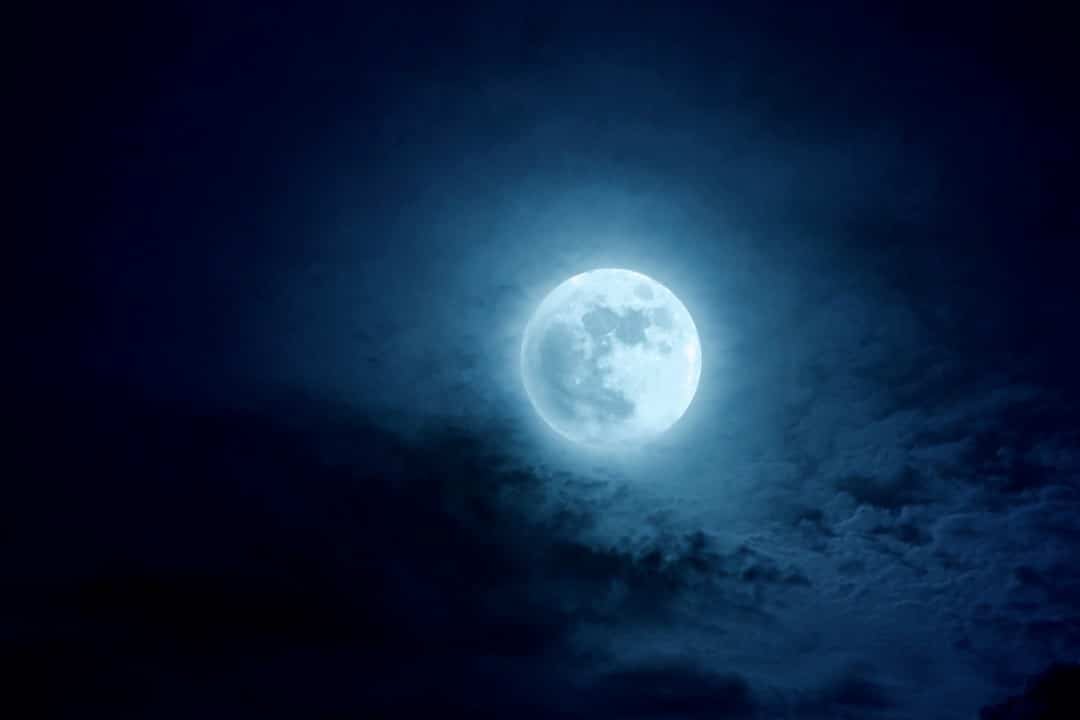
Lua Azul, the micromoon and the red star Antares converge in the early hours of May 31. Peak illumination occurs at 5:44 am Brasília time, marking a rare alignment that does not require a telescope to observe. At any point in Brasil, with clear skies and an open horizon, it will be possible to follow the celestial arrangement that only repeats itself every few years.
Essa special night brings together three simultaneous events. The second full moon in May will appear visually smaller and less bright than normal, characterizing a micromoon. At the same time, the satellite will be positioned close to Antares, the red supergiant in the Escorpião constellation. The contrast between the lunar silver-white and the orange-red of Antares creates a visual effect capable of generating good images even on cell phone cameras.
The astronomical significance of Lua Azul
The expression “Lua Azul” comes from the English “once in a blue moon”, used since the 16th century to describe something unlikely. Naquela time, saying the moon was blue meant something would never happen. Over the centuries, the meaning changed. The phrase came to designate a rare but possible event.
In modern astronomy, Lua Azul designates the second full moon that occurs within the same calendar month. The lunar cycle lasts about 29.5 days, while months vary between 28 and 31 days. Essa difference allows two full moons to fit into a single month, although the coincidence is not trivial. Segundo data from the EarthSky portal, configuration occurs only seven times every 19 years. The phenomenon is connected to the Metonic cycle, an astronomical relationship in which 235 lunar months are equivalent to approximately 19 solar years. Esse mismatch between cycles periodically causes a full moon to “over” and create the Lua Azul.

Why the May 31 micromoon will be unique in 2026
May’s Lua Azul coincides with apogee, the furthest point in the lunar orbit relative to Terra. Quando the full phase occurs close to apogee, the satellite appears slightly smaller and less bright. Trata is the opposite of the supermoon. Astrônomos call this phenomenon a micromoon. Estimativas reproduced in specialized publications indicate that Lua may appear between 12% and 14% smaller than a traditional supermoon. To the naked eye, the difference is subtle. Numa comparative photography, it becomes evident.
- The micromoon on May 31 will be the most distant of the entire year 2026
- The phenomenon occurs when the full Lua coincides with the orbital apogee
- Visual reduction is 12% to 14% compared to a traditional supermoon
- The effect contrasts with the intense brightness of supermoons, which occur at perigee.
Antares, the star of the alignment, is one of the best-known in the night sky. Classificada, a red supergiant, is among the largest stars observable with the naked eye and shines with an unmistakable orange hue. The visual proximity between Lua and Antares that early morning creates a natural composition that amateur astrophotographers eagerly await.
Passo step by step to observe the phenomenon
Peak illumination occurs at 5:44 am on May 31, at Brasília time. Isso corresponds to 8:45 am in Coordinated Universal Time. Nesse exact moment, in part of Brasil, Lua will already be close to setting on the western horizon, close to dawn. The full moon appears virtually the same to the human eye for approximately 24 hours before and 24 hours after peak. Observation is appropriate from the evening of the 30th until the morning of the 1st of June.
Para make better use of observation:
- Procure a place with an open horizon and little artificial lighting, such as rural areas, mountainous regions or viewpoints
- Espere eyes adapt to the dark for about 15 to 20 minutes before evaluating the brightness of the sky
- Não requires a telescope, but ordinary binoculars help to see craters and reliefs on the lunar surface
- On cell phone cameras, enable night mode and HDR to balance the Lua’s light with the surrounding sky
- Para photograph the micromoon next to Antares, wait for Lua to rise above the horizon and use optical zoom, not digital
Para who lives in São Paulo and in much of Sudeste, the evening of the 31st offers additional opportunity. Lua rises in the east at around 5:30 pm, still low on the horizon, and gains a larger apparent size due to an optical effect known as the lunar illusion.
Quando to Lua turned real blue
Although the name Apesar is just a modern convention, Lua has already appeared with a literally bluish tone in historical records. The most famous case occurred in 1883, when the Krakatoa volcano erupted Indonésia in one of the largest explosions recorded by science. The column of ash and smoke spread fine particles throughout the Earth’s atmosphere. In several countries, observers reported strangely colored sunsets and Lua with a bluish tinge for months.
The explanation lies in the size of the particles. Lua may acquire a bluish appearance when the atmosphere carries particles with a diameter slightly larger than 900 nanometers. Esse type of particle filters red light and lets blue light pass through, reversing the common effect seen at sunset and moonrise. Similar Casos were recorded after the large forest fires in Canadá in 1950 and after the eruption of the volcano El Chichón, in México, in 1982. Portanto, Lua Azul actually exists, but it requires atmospheric circumstances that no one wants to witness.
Próximas lunar observation opportunities in 2026
Para whoever misses the May 31st observation, there is good news. In a rare combination, 2026 brings together two Luas Azuis in monthly format. The first is May. The second is scheduled for October. Essa duplicity only occurs in years where February does not have a full moon, a situation that makes room for extra moons in other months of the calendar. The next seasonal Lua Azul, a modality defined by the presence of four full moons in a single season, is scheduled for May 20, 2027.
However, it is Lua Azul on May 31 that brings together the most unusual conditions simultaneously: the second full moon of the month, the most distant micromoon of the entire year and visual proximity to Antares. Essa specific coincidence is unlikely to be repeated soon.



