
Alex Larke of Electro Velvet reveals death threats after participating in Eurovision 2015

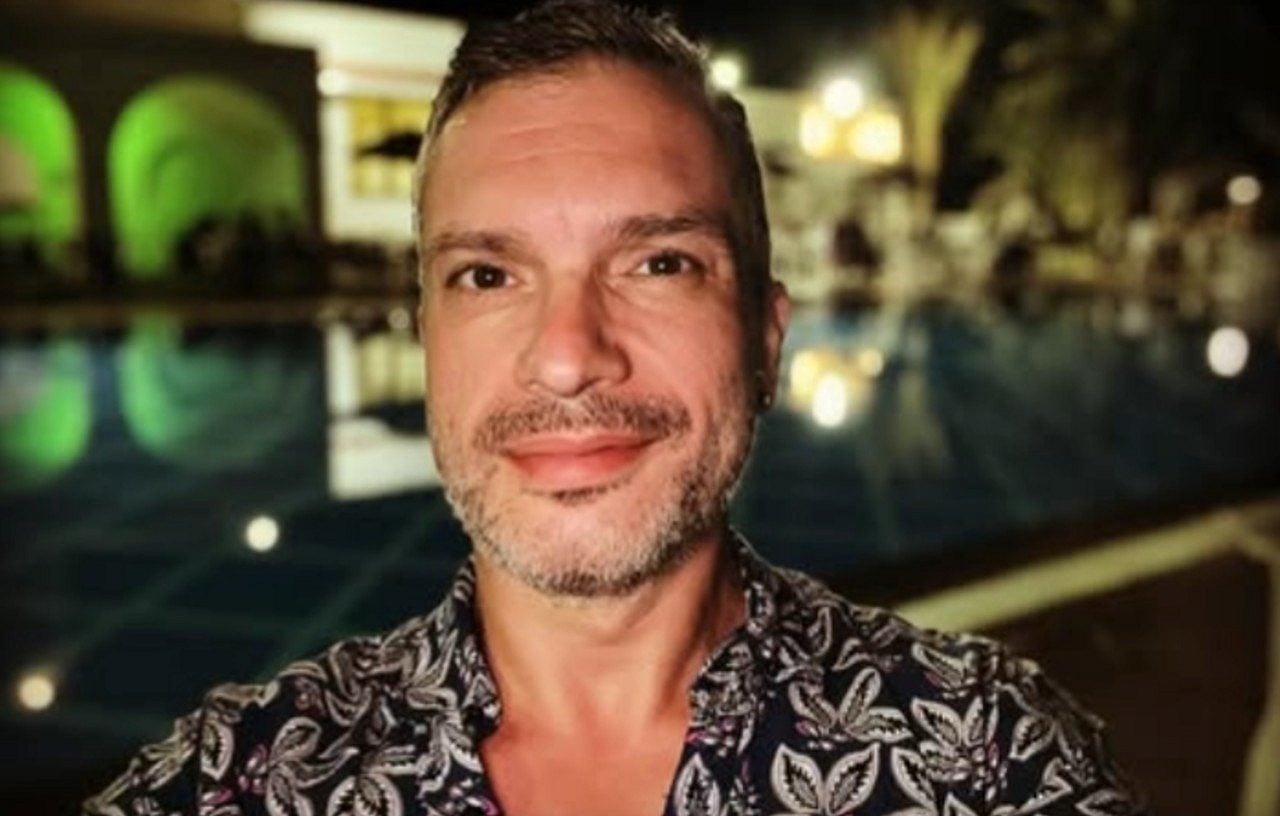
Alex Larke, member of the British duo Electro Velvet, broke his silence about the campaign of harassment he suffered after representing Reino Unido at Eurovision Song Contest 2015. In an exclusive interview, the singer revealed that he had received death threats and offensive messages through social media, a phenomenon that, according to him, remains practically uncontrollable to this day.
Electro Velvet was also part of Bianca Nicholas and participated in the European competition with the song “Still in Love with You”, winning 24th place among 27 participating countries. Apesar’s modest result, Larke emphasizes that the experience maintains positive aspects, especially the privilege of representing your nation in an event of global reach. Contudo, the emotional impact of the hostile messages left marks that echo more than a decade later.
Ameaças and abuse on digital platforms
Durante’s conversation with GB News, Larke described how the reach of social media allowed direct critics to reach him in ways he couldn’t imagine at the time. “I didn’t realize people could reach him on social media, and, of course, they did,” he said. The artist reported that among the unflattering communications there were a small but significant number of genuinely violent threats directed against him.
Larke’s initial approach to these messages was to treat them with a certain ironic detachment. “There were a few death threats, which I found kind of funny,” he commented, suggesting that he initially sought to deal with the trauma through humor. However, this apparent lightness masks a more disturbing reality: eleven years after the event, the situation has not only persisted but has significantly worsened in scale and intensity.
Piora progressive online environment
The singer offered a grim perspective on the evolution of digital harassment aimed at public performers. Larke warned that social media platforms have consistently failed to protect performers from the avalanche of abusive content they regularly face. The absence of effective moderation mechanisms remains an unresolved structural problem.
“I don’t think things have gotten better, that’s for sure. Acho they’ve probably gotten worse,” he stated confidently. The eleven-year gap since his participation in Eurovision has not brought measurable progress in protecting artists from systematic abuse. Larke notes that even in this day and age, “there are still no real ways to stop people from sending you really, really uncomfortable things.”
The situation Larke describes reflects a broader crisis on social media: the chronic inability of major platforms to implement effective filters against hateful language, violent threats and targeted harassment. Apesar From decades of public debate and regulatory pressure, the problem remains virtually identical, if not worse.
Personal Educação and transmitted values
Apesar faced hostility, Larke maintains a firm stance based on traditional values he learned during childhood. Ele follows the principle that “if you don’t have anything nice to say, then don’t say anything at all”, a maxim that he has incorporated into his own behavior and that he tries to pass on to future generations. Essa’s simple philosophy contrasts dramatically with the culture of aggression that permeates contemporary platforms.
The singer evokes this moral principle not as naivety, but as a conscious positioning in the face of a toxic digital environment. Sua’s personal adherence to this ancient norm of courtesy highlights how far public discourse has moved away from basic standards of respect and decency. The education Larke received has equipped him with tools to deal with aggression, even if those tools are increasingly proving insufficient.
Continuidade as a fan of the competition
Apesar of the traumatic experiences associated with Eurovision, Larke remains passionate about the event and continues to follow the annual editions. Ele insists that the competition represents “a huge amount of fun” and maintains his position as an enthusiastic spectator of the music contest. Sua loyalty to the event survived intact, even after the severe test of 2015.
Larke’s family also joined him in this passion for Eurovision. Seus’s children developed genuine enthusiasm for the competition, becoming regular spectators and active participants in the family traditions of annual follow-through. Essa intergenerational transmission of interest demonstrates that your participation, despite its negative aspects, has left a positive legacy in your family circle.
A notable detail: Larke will not be able to attend this year’s edition of Eurovision, prevented by unspecified professional or personal commitments. Ainda thus remains constructive in its attitude toward the event that, a decade ago, became the catalyst for massive online abuse.
Evolução of digital harassment in public competitions
Alex Larke’s trajectory illustrates a broader pattern: artists and public figures who receive criticism, however harsh, often face escalation to physical threats and coordinated harassment. Eurovision, as a highly visible and participatory competition, particularly attracts this type of aggressive behavior from audience segments that use anonymity as a shield.
The phenomenon is not exclusive to Eurovision nor Reino Unido. Artistas of various nationalities who receive negative reviews of their performances report similar patterns of online harassment. Social networks have exponentially amplified the ability of groups to coordinate campaigns of intimidation against specific individuals, creating a hostile environment that transcends any traditional self-defense mechanism.
Platforms, in turn, face conflicting pressures between allowing free speech and moderating harmful content. In the case of Larke and similar artists, the algorithms that amplify engagement often prioritize controversial and emotional content, unintentionally funneling more traffic to aggressive posts. Essa structural dynamics perpetuates cycles of harassment without there being any break or effective mediation.
Perspectiva historical about social change
Larke’s positioning is particularly relevant because it offers a rare historical perspective. Onze years are a considerable time in terms of technological and social evolution, especially in digital networks. If an artist who participated in Eurovision in 2015 reports that conditions have worsened, this suggests that the technical and regulatory solutions implemented thus far have proven inadequate.
The question remains open: what would be the appropriate solution? A more aggressive Moderação would face criticism over freedom of expression. Educação on digital civics would advance slowly. Government Regulação would encounter international implementation challenges. Larke offers no answers, just testimony from someone who has experienced the problem firsthand and has observed its persistence over the years.
Seu’s report contributes to a growing body of evidence that online harassment is not a marginal or transient phenomenon, but a structural feature of contemporary social media that disproportionately affects public figures, artists, and visible personalities. The lack of measurable progress after a decade raises serious questions about the viability of current approaches.





