
Accuracy of 0.2 mm per second marks tracking of the Green Bank Telescope on the Artemis 2 mission

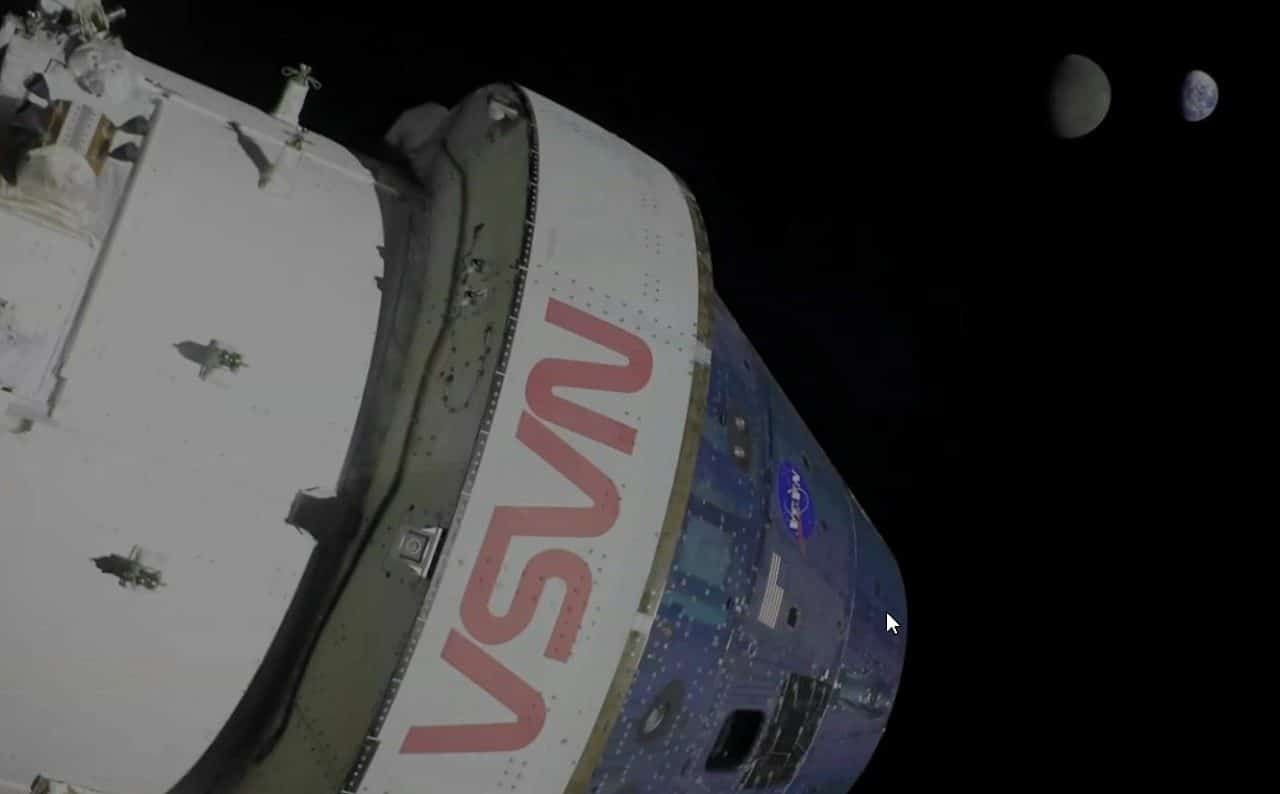
The US Green Bank Telescope (NSF GBT) tracked the Orion spacecraft from the Artemis 2 mission on its journey around Lua. The observations took place over five days, collecting movement data with high precision. The spacecraft was more than 343,000 kilometers from Terra during this historic monitoring, setting a new standard for tracking manned vehicles on distant flights.
Essa feat demonstrates the observatory’s advanced capability in supporting long-distance space missions, providing a level of detail rarely seen. The tracking accuracy achieved exceeded the expectations of the scientific community, offering valuable information about the trajectory and dynamics of Orion. The technology involved even made it possible to identify the presence of the crew of four astronauts on board the capsule, even from a considerable distance.
Unprecedented Precisão elevates spatial monitoring
The Green Bank Telescope team’s tracking of Orion achieved extraordinary accuracy, measuring the spacecraft’s motion to within 0.2 millimeters per second. Essa’s capability is comparable to a car speedometer that can monitor speed with a margin of error of 0.0004 decimal places per hour, as highlighted by Anthony Remijan, director of the observatory site. The measure highlights the sensitivity and robustness of the instruments used.
Data collected by the NSF GBT surpassed NASA projections for Orion’s motion, providing critical external validation for the agency’s trajectory calculations. Este type of detailed observation is critical to the safety and success of complex space missions, especially those involving human crew. Accuracy allows for real-time adjustments and a deeper understanding of the forces acting in the space environment.
The ability to monitor such a distant and fast-moving object in space with such accuracy represents a significant milestone. Garante that any anomaly or deviation can be quickly detected. Essa’s technological prowess is a testament to the continued innovations in the field of radio astronomy, opening new frontiers for exploration and supporting future interplanetary journeys. Accurate information is vital for route planning and fuel consumption.
Amazing to see pictures of the Artemis II Orion spacecraft taken by the @GreenBankObserv radio telescope.
— Shelley Moore Capito (@SenCapito) May 18, 2026
Green Bank has been a pioneer in radio astronomy since the 1950’s thanks to its 140-foot telescope, which remains the largest equatorially mounted telescope in the world.…
Dimensões imposing and cutting-edge technology
Green Bank Telescope (GBT) is a marvel of modern engineering, rising 148 meters into the sky. Sua colossal structure weighs 7.7 million kilograms, with a satellite dish covering approximately 0.9 hectares. Estas’s dimensions make it the largest mobile structure on land, capable of orienting itself precisely to any point in the visible sky, a remarkable feat for its size and weight.
The design of the GBT is unique in that it does not have a central blocking tower, which minimizes obstruction and maximizes the signal collection area. Essa feature allows the telescope to capture radio data from vast regions of the cosmos with unparalleled sensitivity. Sua’s construction in a “radio quiet zone” area on West Virginia minimizes terrestrial electromagnetic interference, optimizing its cosmic listening capabilities.
Essa’s combination of size, mobility and non-blocking design makes the GBT an indispensable tool for a wide range of scientific research. Inclui ranges from observing pulsars and searching for complex molecules in interstellar space to tracking spacecraft. Its versatility positions it at the forefront of modern astronomy, driving discoveries and technological advances.
Pixelated Imagens reveals human crew
The observatory released a remarkable pixelated image of the Orion capsule, captured when the spacecraft was more than 343,000 kilometers from Terra. The image, although not sharp, shows a small white blur on a grainy black background, with the vertical axis indicating increasing distance from the capsule. Esta visual representation, although simple, carries a deep meaning.
NSF GBO scientist Will Armentrout presented the image to colleagues at the observatory, stating, “There are four people in these pixels.” The statement highlights the telescope’s ability to detect the signature of a manned spacecraft at such a distance. The Orion capsule, named by the Artemis 2 crew as “Integrity”, contained the astronauts who were part of the historic lunar circumnavigation mission.
The relevance of the pixelated image lies not in its visual clarity, but in confirming that such a distant and small structure, containing human life, could be successfully identified and monitored. Isso sets precedents for future missions where the ability to track and recognize manned objects over long distances will be crucial for safety and planning.
Characteristics of this observation include:
- Capture Distância:The Orion spacecraft was 343,000 km from Terra at the time of imaging.
- Objeto observed:The Orion capsule (named “Integrity”) from the Artemis 2 mission.
- Identificação:The presence of the crew of four astronauts was identified in the pixelated data.
- Tipo data:Pixelated Imagem obtained by radio, complemented by motion telemetry.
- Tempo tracking:The high-precision observations were carried out over five days.
NSF support for future space exploration
NSF’s National Radio Astronomy Observatory emphasized that these observations demonstrated the radio telescope’s potential to aid future space missions. Este support extends to both NASA and commercial aerospace companies seeking high-precision tracking and communications capabilities. Collaboration between agencies and private sectors can optimize resources and drive innovation.
Linnea Avallone, chief director of research facilities at NSF, commented on the excitement generated by projects that put Fundação’s facilities in national headlines. Ela highlighted the importance of providing interagency support to NASA colleagues, maximizing the use of all existing capabilities. Essa synergy strengthens Estados Unidos’s space exploration infrastructure.
The versatility of the Green Bank Telescope as a tracking and communications resource is an invaluable asset. In a scenario of increasing space exploration and private initiatives in space, the demand for robust and precise terrestrial infrastructure is increasing. GBT is positioned to be a key partner in achieving these ambitious goals. The ability to provide reliable, real-time data is critical for decision-making on complex missions.
Histórico of Green Bank’s Crucial Contributions
Green Bank Telescope already has a proven track record of making significant contributions to NASA space missions. One notable example was its role in radar support for the Double Asteroid Redirection Test (DART) mission in 2022. Essa’s pioneering mission saw NASA intentionally crash a spacecraft into the asteroid Dimorphos, in a successful demonstration of planetary defense.
Durante the DART mission, the GBT provided crucial radar data that helped monitor the asteroid’s trajectory and the effects of the impact. Essa’s accurate tracking capability was vital to evaluating the effectiveness of the experiment and confirming that Dimorphos was deflected from its orbit. DART’s success demonstrated that humanity has the technology to divert a dangerous asteroid should it one day head for Terra, and GBT was an integral part of that feat.
The telescope’s participation in such diverse projects, from fundamental astronomy to planetary defense and tracking manned missions, reflects its adaptability and scientific value. The observatory continues to push the boundaries of what is possible in terms of observation and support for space activities. Sua versatility makes it a pillar for space exploration and security, contributing to the advancement of science and technology on multiple fronts.
The Artemis 2 mission and the manned return to Lua
The Artemis 2 mission represents a crucial step in NASA’s Artemis program, the ultimate goal of which is the return of humanity to the lunar surface. Esta mission in particular is a crewed test flight that takes astronauts around Lua, but without landing. The Artemis 2 crew became the first to view the hidden side of Lua with human eyes, a milestone not achieved since the Apollo missions.
The Orion capsule completed a record-breaking lunar circumnavigation flight, testing the spacecraft’s life support systems and operations in a deep space environment. The accurate tracking information provided by Green Bank Telescope is vital for validating these systems and planning subsequent phases of the Artemis program. The journey served as a dress rehearsal for future lunar landings.
The success of Artemis 2, supported by infrastructure like the GBT, paves the way for Artemis 3 and future missions, which plan to send the first woman and first person of color to the surface of Lua. Essas missions seek to establish a sustainable human presence on Lua, as a springboard for future explorations of Marte. Collaboration between different agencies and ground facilities is critical to making these goals a reality.



