
Launch of Forza Horizon 6 adapts map of Japan with a focus on cultural and historical details


The long-awaited Forza Horizon 6 hits the market on May 19th with an unprecedented visual proposal focused on Japanese territory. The title will be available for Xbox Series X|S consoles, computers and cloud systems, integrating the Xbox Game Pass catalog from the first day of sale. Developer Playground Games dedicated months of research to mapping real tourist spots. The main objective was to transform these areas into interactive racing scenarios with high architectural fidelity.
The creative team chose not to make an exact copy of the Asian country in full scale. Directors Torben Ellert and Don Arceta prioritized capturing the essence of historical sites to create the virtual map. Essa decision required a complex balance during software development. The designers needed to adapt roads close to sacred areas to maintain the fluidity of vehicles at high speeds without disrespecting the local cultural heritage.
Preservação of national shrines and monuments
Cachoeira Nachi illustrates the philosophy applied to the game’s topographic design. The site is home to a 133-meter-high waterfall and Grande Santuário Kumano Nachi Taisha, a historic red structure. Developers have created specific routes that allow players to park their cars and observe the landscape from angles similar to those found in real tour guides. An experience collectible item was strategically positioned behind the water curtain. Essa inclusion rewards users’ curiosity during free exploration.
Outros national treasures received rigorous treatment under the direct guidance of cultural consultant Kyoko Yamashita. Ruriko-ji temple displays its traditional five-story pagoda surrounded by dense vegetation. Já o Castelo by Hirosaki features a dark silhouette contrasting with the famous cherry trees surrounding the property. The programming team made an unusual technical decision to protect the monument. Hirosaki’s flowering trees were configured as indestructible objects during vehicular collisions.
The technical restriction reflects the symbolic value of the plant for Japanese society and prevents the virtual depredation of the space. Ambos the historical sites are part of a mission route called Descubra or Japão. The path includes specific tasks called Viagem and Um Dia. The structure of these missions mirrors the traditional itineraries that real tourists usually follow when visiting Asian provinces.
Dinâmica climate in traditional villages
The game’s rural areas reproduce historical architecture adapted to the geographic conditions of each region. The coastal village of Ine highlights the houseboats known as Funaya lined up along the bay. The setting includes traditional fish-shaped decorations and a network of streets that make it easy to observe the sea from the asphalt. Players find properties available for purchase in the coastal region. Missões specific narratives also take place around the fishing village to move the campaign along.
In the mountainous region, the community of Shirakawa-go features buildings with thatched roofs designed to withstand the extreme weight of snow. The game uses a dynamic seasonal system that changes the environment in weekly cycles. Durante the virtual winter, large accumulations of ice form on houses, replicating real weather behavior. Races held on the Circuito from Shirakawa change mechanics depending on the active weather. Tire grip and pilot visibility are directly impacted by weather conditions.
The art team used videos of people walking through real villages as primary reference for the 3D modeling. The designers introduced plausible infrastructure elements to make gameplay viable. The installation of gas stations on the outskirts of historic villages exemplifies this adaptation. The choice maintains the visual authenticity of the environment without sacrificing the mechanical needs of the racing vehicles.
Escala geographic between mountains and urban centers
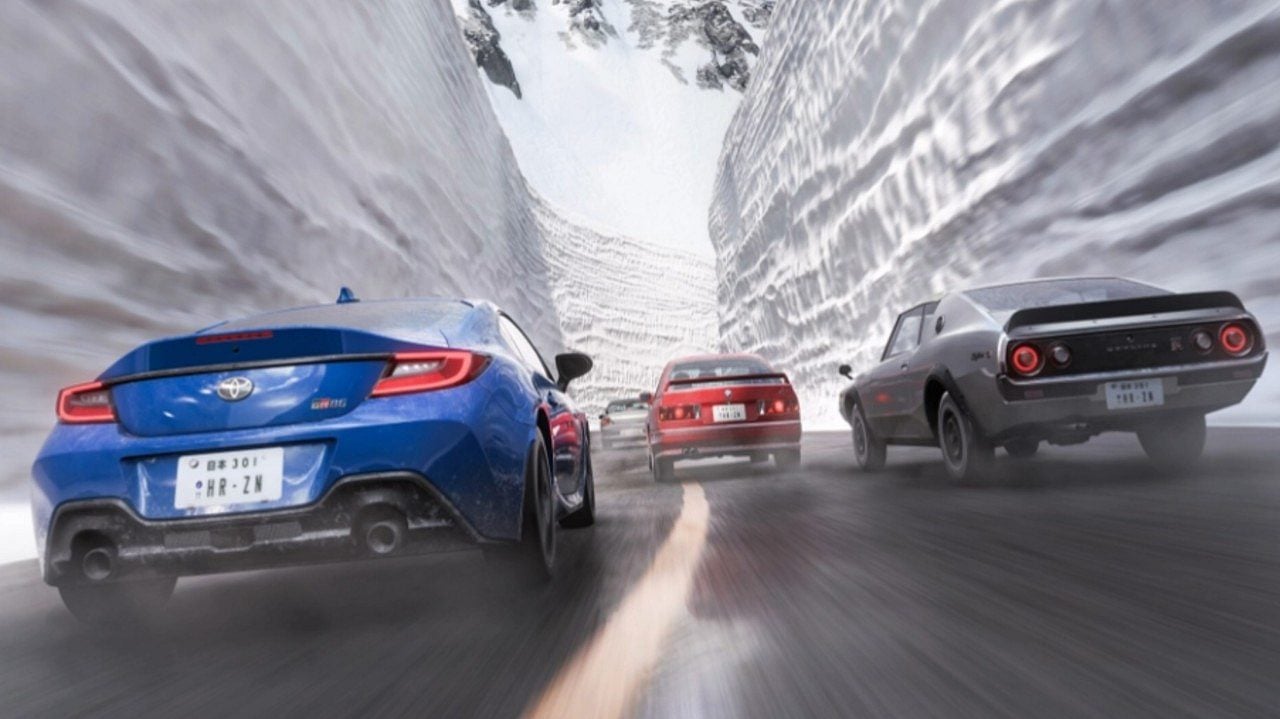
The map condenses real distances to create a quick and fluid transition between different biomes. The Monte Haruna offers roads full of sharp curves that require extreme precision in sporty driving. The top of the mountain reveals a wide panoramic view that encompasses forests, beaches and snow-capped peaks on the same screen. Tateyama Kurobe’s alpine route has vehicles racing between immense walls of solid snow. The constant change of landscape increases the perception of size of the virtual world and compensates for the reduction in linear distance.
Tóquio serves as the asphalt and concrete core of the entire motoring experience. The metropolis was designed with great verticality, complex viaducts and overlapping expressways. The famous Cruzamento, Shibuya and Avenida Ginkgo appear close together on the urban layout to facilitate movement. The representation of the Japanese capital divides the space into different visual and sound atmospheres:
- The Akihabara district features bright lights, digital signs and a focus on technology.
- The Daikoku area offers a nightlife environment geared towards automobile gatherings.
- Avenida Ginkgo functions as a green, tree-lined corridor in the middle of the buildings.
- Modern skyscrapers share space with small, silent parks and urban temples.
Essa mix of architectural elements reinforces the credibility of driving in the big city. Urban corridors require quick reflexes from players due to the density of buildings, virtual pedestrian traffic and multitude of alternative routes.
Sistema exploration and local circuits
Japanese car culture is highlighted in specific events spread across the open world map. The Circuito Temporal by Hokobu simulates racing on old, worn tracks located in remote valleys. The activity focuses on breaking personal records and direct competitions against the time of friends connected on the network. The format pays homage to the community experience of local drivers who use country roads to test the limits of their engines.
Centro Espacial Urakawa serves as a starting point for the development of the main campaign. The site mixes high-tech aerospace technology facilities with older civil constructions in the surrounding area. The space center’s courtyard hosts straight-line drag racing events and connects several smooth asphalt tracks. The choice of setting symbolizes the technological contrast that defines contemporary Japão.
A new interface feature called Diário changes the way users interact with the virtual environment. The system uses a dark fog over the map to hide areas that have not yet been visited by the player’s tires. The tool encourages continuous navigation on secondary roads in search of new points of interest. The integrated camera allows you to record monuments and natural wonders in your own catalogue. Mechanics transform simple driving into a structured geographic documentation activity.





