
NASA Observatory captures X-rays and unravels the mystery of black holes on the Webb telescope

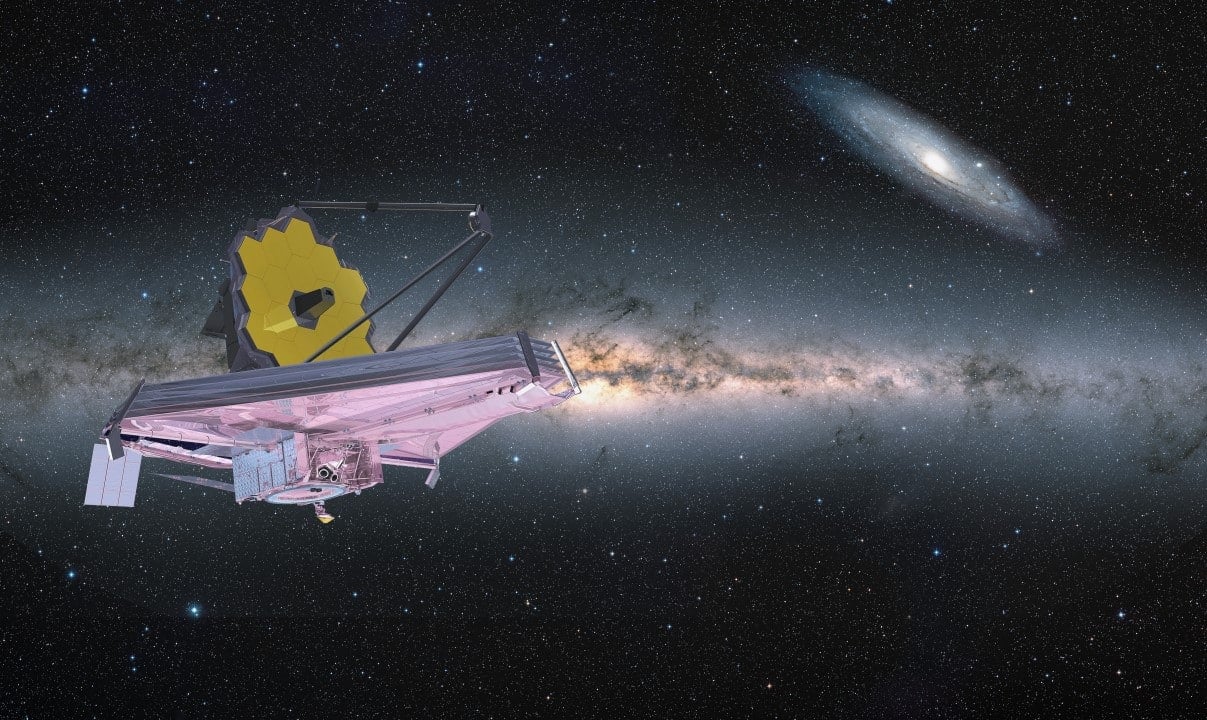
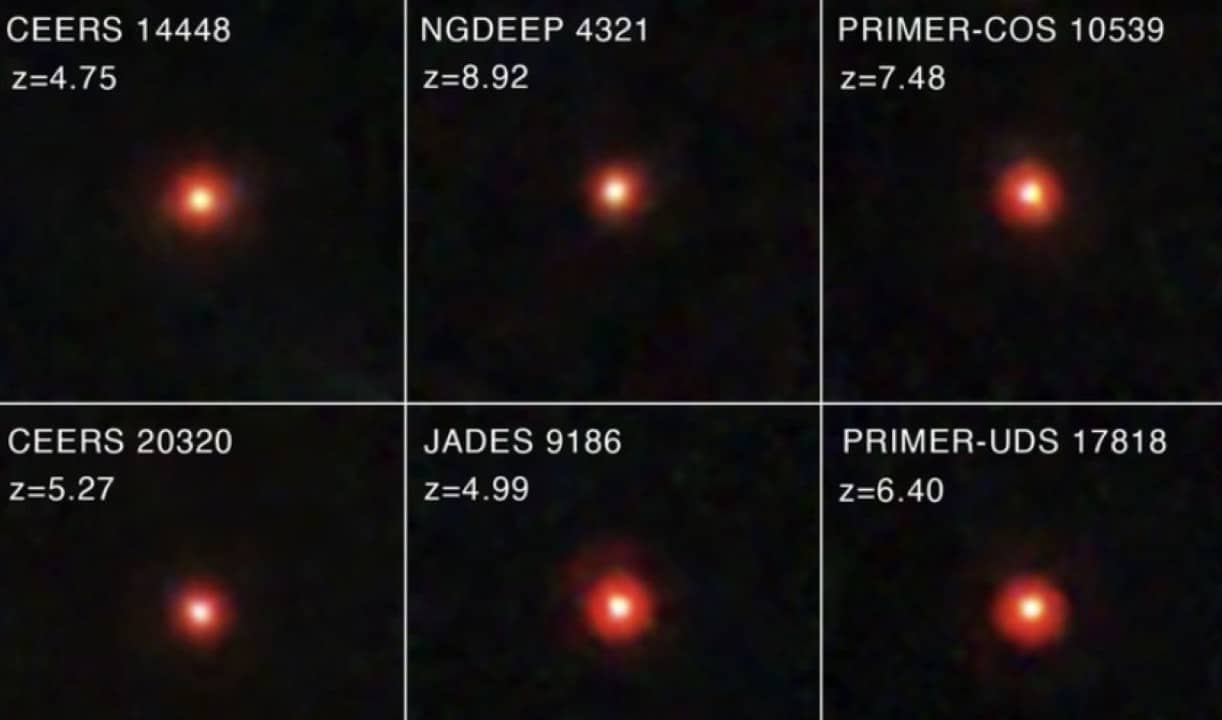
Pesquisadores identified an X-ray emission that exactly coincides with the position of a red dot captured by Telescópio Espacial James Webb. Detection occurred through data from Observatório of Raios X Chandra of Nasa. The astronomical find offers a new perspective on the structure of these distant objects. Cientistas now evaluates the presence of supermassive black holes within these formations.
Confirmation of this structure could represent one of the biggest recent cosmological milestones. The phenomenon rivals historic discoveries in modern astronomy. If the dynamics are proven, the red dots will act as a centerpiece for understanding the origin of galaxies. The early universe harbored gigantic black holes within the first billion years after Big Bang. The scientific community is looking for answers to this rapid evolution.
Descoberta in files reveals cosmic coincidence
The X-ray signal cataloged under the name 3DHST-AEGIS-12014 remained hidden in Chandra’s records for more than a decade. The equipment mapped millions of light sources across the sky during its period of operation. Specific information has gained relevance only recently. Pesquisadores noticed a perfect overlap with one of the structures mapped by the infrared equipment.
Astronomer Andy Goulding, researcher of Universidade of Princeton, pointed out the uniqueness of the record. Ele was unaware of the magnitude of that old annotation until data crossing. The telescope observed the same space field and located the small red dot at the exact coordinate. The accuracy of the alignment ruled out the possibility of a calibration error.
The intensity of the energy emitted by the X-ray signal is similar to the radiation from quasars. Essas galaxies harbor black holes with extreme activity at their centers. The process results from violent mergers that move large volumes of gas. The material ends up directed towards the gravitational core. The force of the impact generates an unmistakable light signature for terrestrial and orbital instruments.
Propriedades physics challenge traditional models
The small red dots exhibit characteristics that deviate from the expected pattern for primitive galactic formations. Astronomers analyze the following aspects:
- Tamanho extremely compact with a diameter restricted to a few hundred light years.
- Coloração intense red indicating relatively low surface temperatures.
- Presença confirmed water vapor pointing heat between 1,700 and 3,700 degrees Celsius.
- Extreme Distância that places objects about 11.8 billion years in the past.
- Níveis of density and activity incompatible with classical theories of star formation.
Esses celestial bodies have temperatures lower than Sol and most cataloged stars. The exception is low-mass red dwarfs. Water vapor identification delivers essential data about the local physical environment. The chemical composition of the structure also becomes clearer with this reading. Complementary Medições of the Hubble telescope attest to the age of the 3DHST-AEGIS-12014 formation. Scientists observe the object exactly as it existed more than 11 billion years ago.
Impasse on the formation at the beginning of the universe
The origin of supermassive black holes remains one of the great obstacles in contemporary astrophysics. Specialists work with two main lines of investigation. The first hypothesis suggests a gradual formation, where smaller stellar black holes merge over time. The second theory proposes a direct collapse of gigantic gas clouds. Essas structures would contain the equivalent of hundreds of thousands of solar masses.
Ambos theoretical models run into a mathematical temporal issue. Supermassive black holes emerge very early in the universe’s timeline. The period that has passed since Big Bang would be insufficient to complete any of the known processes. The small red dots appear as the missing piece to solve the equation. Direct observation of the ongoing phenomenon offers unprecedented empirical data.
Nuvens of gas hide supermassive cores
The most accepted thesis currently defines the small red dots as dense clouds of gas. Essas thick barriers hide a supermassive black hole in the midst of its formation. The gravitational core consumes the cloud material from the inside out. The feeding process releases massive amounts of energy into space. The heat generated heats the surrounding gas and causes the intense glow captured by the lenses.
The active consumption mechanism justifies the emission of radiation similar to that of quasars by the 3DHST-AEGIS-12014 source. The visible characteristics differ, but the energy signature remains identical. Jatos of charged particles can break through the gas barrier. The magnetic field channels this material away from the central region. Propagation occurs in opposite directions through the vacuum of space. The growing black hole produces radiation at multiple wavelengths.
Trabalho space observatory suite
Investigating cosmic origins is on James Webb’s list of priorities. The American space agency built the equipment with the purpose of seeing the ends of the universe. Engineers calibrated the mirrors to capture light from the oldest objects ever documented. The goal involves tracing the evolution of modern structures from the primitive setting. Crossing the X-ray signal with the red dot confirms the effectiveness of the project.
The simultaneous work of Webb and Chandra illustrates the power of multiwavelength astronomy. The infrared telescope records the light from distant, cold bodies with millimeter precision. The X-ray observatory focuses on high-energy radiation generated by dynamic events. The union of the two technologies delivers a complete panorama of celestial phenomena. The active nuclei gain defined contours under this double observation.
Validating the nature of small red dots directly affects studies on cosmic evolution. Gas clumps act as nurseries for supermassive black holes. Physical confirmation of the process changes decades of academic literature on galaxy formation. The data collected by the two observatories remains under analysis in astrophysics laboratories. Novas scans in the same sector of space seek to identify other sources with similar behavior.





