Asian automaker defines debut of Omoda 4 utility vehicle in the national market starting at R$ 120 thousand

Asian manufacturer Chery has defined the official launch schedule for the Omoda 4 sports utility vehicle on the national market for the last quarter of 2026. The new vehicle will arrive at Brazilian dealerships equipped with a full hybrid propulsion system and prices set in the range between R$120,000 and R$140,000. The company’s commercial strategy aims to attract consumers who seek advanced energy efficiency without the need to pay the high amounts charged by traditional brands in the automotive sector.
The aggressive price positioning puts the model on a direct collision course with competitors already established on the country’s streets. The automaker plans to utilize local in-state production of Rio from Janeiro to ensure the project’s long-term financial competitiveness. The company’s move changes the dynamics of the compact utility vehicle segment by democratizing access to complete electrification, forcing a move by rival companies that operate in the same market niche.
Estratégia pricing pressures traditional brands
The value table defined for the new vehicle represents a break with the current standard of the Brazilian automotive market. The main rivals in the segment operate with considerably higher figures, even delivering less complex mechanical sets and based only on combustion or light hybridization. The Fiat Pulse in the Impetus mild hybrid configuration costs R$151,490 in stores. The Renault Kardian Iconic reaches the mark of R$ 149,990. The Volkswagen Tera Highline requires an investment of R$146,190 from the buyer.
The financial difference can reach a margin of R$30 thousand in favor of the Chinese model at the time of billing. The Toyota Corolla Cross, which also has a similar full hybrid system in operation, surpasses the R$160,000 barrier in the official tables. The savings at the time of acquisition attract customers who are sensitive to the initial price of the item. Competing manufacturers will need to reevaluate their profit margins or add new standard equipment to justify the extra charge in the coming years.
Mechanical Conjunto delivers superior pulling force
The brand’s engineering team developed a propulsion system focused on dynamic performance and fuel economy in urban cycles. The utility combines a 1.0-liter three-cylinder turbo combustion engine with a high-capacity auxiliary electric drive. The combined power of the set reaches 130 horsepower. The most significant technical difference lies in the delivery of instantaneous power to the front wheels. The estimated torque reaches 225 Nm, equivalent to 22.9 kgfm.
Esse torque number guarantees the vehicle leadership in this specific aspect within its operating category. The extra strength makes overtaking easier on single-lane highways and improves acceleration capacity with the trunk fully loaded with luggage. The full hybrid system operates autonomously and does not require connection to external sockets to recharge the batteries. The on-board computer manages the alternation between burning fuel and using electricity according to the pressure on the accelerator pedal.
Dimensões extended and internal equipment package
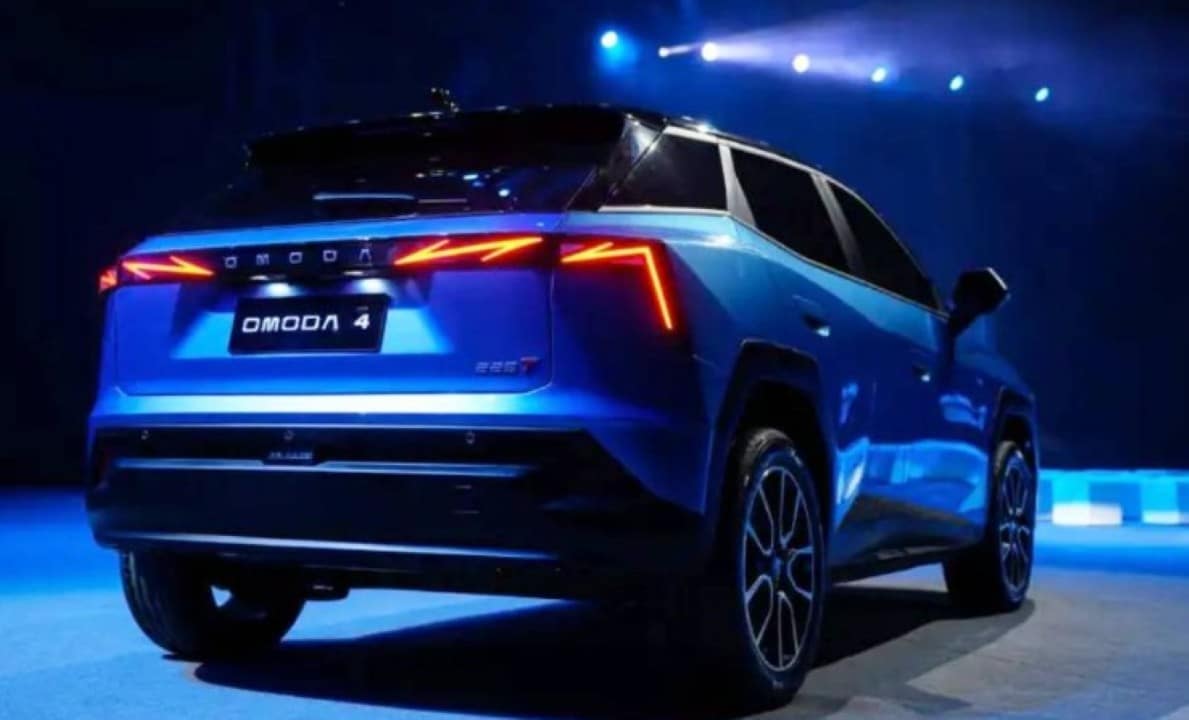
The car’s structural design deviates from the conventional standards of compact utility vehicles currently sold in the country. The body measures 4.40 meters in total length. Essa dimensions bring the vehicle closer to mid-range models and expand the space available for the rear seat occupants’ legs. The external design sought visual references in high-luxury products from the European industry, specifically in the Lamborghini Urus lines.
The cabin received covering materials superior to those found in the hard plastics of direct competitors. The instrument panel adopts horizontal lines that increase the feeling of interior space for the driver and passenger. The list of standard equipment for the more expensive versions includes several comfort items and onboard technology focused on connectivity.



- Central multimedia with vertical screen integrated into the main panel.
- Quadro fully digital instrumentation and configurable by the driver.
- Sistema parking brake with electronic button activation.
- Bancos ergonomics with high resistance synthetic leather covering.
- Conjunto optical front and rear lights interconnected with LED technology.
The offer of these components brings the model’s perception of quality closer to vehicles in higher and more expensive segments. The automaker is betting on a bold visual package and a rich list of convenience items to win over a younger audience connected to technological trends.
Linha assembled in Rio de Janeiro guarantees tax advantages
The financial viability of the project directly depends on the nationalization of manufacturing of the units that will be sold at Brasil. The company confirmed the assembly of the utility in the Itatiaia industrial complex, located in the southern region of the state of Rio and Janeiro. The factory belonged to the Jaguar Land Rover group and will undergo a structural transition to house the Asian company’s operations. The industrial process will adopt the CKD format, an acronym in English for completely disassembled vehicles that arrive in kits for final assembly.
The use of an already established manufacturing infrastructure speeds up the schedule for adapting production lines and reduces implementation costs. Manufacturing in the national territory exempts the product from various import taxes that make vehicles brought ready from abroad more expensive. The car also falls under the rules of government incentive programs for local industry, guaranteeing important tax exemptions for determining the final price.
Facilitated access to credit lines with reduced interest represents another benefit of domestic production for the end consumer. The strategy of establishing production bases at Brasil has become a standard among large Asian corporations in the automotive sector in recent years. The measure protects operations from abrupt exchange rate fluctuations in the dollar and guarantees a constant flow of supply to the network of dealerships spread across the national territory.
Impacto trading and market reconfiguration
The introduction of a vehicle with complete electrification in the R$120,000 range changes sales prospects for the year 2026. The compact sports utility vehicle segment accounts for a significant share of total registrations in the country, moving billions of reais annually. The presence of a cheaper and more efficient option forces consumers to rethink the purchase of models powered exclusively by combustion. The savings generated by the reduction in gasoline consumption offset the amount invested in purchasing the item in a short period of time of daily use.
Dealers of rival brands will need to train their sales teams to justify the absence of full hybrid systems in their entry-level products. The fight for market share will require aggressive advertising campaigns and possible factory bonuses so that competing models do not lose space in Brazilian garages. The new scenario directly benefits the end buyer with a greater supply of clean technologies and fairer prices. The Asian utility establishes a new level of technical and financial requirements for the next launches of the national automotive industry.
Veja Tambem em Latest News (EN)

James Webb Observatory reveals unprecedented details of the Helix Nebula and end of stellar cycle

Summer Sonic 2026 Festival confirms performances by Jennie, Jon Spencer and Ave Mujica in Japan

Free RPG TBH Task Bar Hero reaches a peak of 143 thousand players on Steam and leads rankings

NASA allocates 20 billion dollars for lunar base and nuclear reactor in new space phase

Vivo sets the launch of the 200 MP X300 Ultra smartphone and Pad 6 Pro tablet for April 30

Apple changes supply chain planning and triples production of iPhone Air over iPhone 16 Plus

Xiaomi advances with global testing of the HyperOS 3.1 system based on Android 16 for cell phones

Native operating system HarmonyOS from Chinese giant Huawei surpasses one billion active devices in 2026

New Huawei Pura 90 brings 200 megapixel camera and unprecedented sensor for advanced photography

New Samsung software package fixes One UI 8 system flaws in Galaxy Watch 4 line

New series Cape Fear premieres this Friday with Amy Adams and Javier Bardem on Apple TV