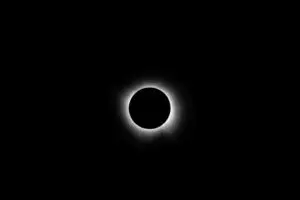
Coronal mass ejection from the Sun approaches Earth and may generate auroras

The impact of a coronal mass ejection (CME) launched by the sun on May 16 began to reach Terra this Monday, May 19, 2026, with clear signatures of a tangential hit. Velocidades of the solar wind rose to moderate-high levels around 5:30 UTC, while the interplanetary magnetic field also registered a slight increase about half an hour later. Esses signals indicate that the glancing effects of the ejection are materializing, with the Bz component pointed predominantly southward, a condition that favors auroral displays at high latitudes.
Previsores from space had been expecting exactly this scenario since the weekend. The CME left the sun three days ago with a trajectory that did not point directly towards our planet, but simulations indicated that the solar plasma wave would pass close enough to generate measurable disturbances in the Earth’s magnetosphere. An isolated G1 (minor) geomagnetic storm is possible as ejecta material sweeps past Terra throughout the day.
Vento solar and magnetic field arrive in escalation
The first 18 hours of Monday brought clear confirmation of the warning issued by forecasting centers. The solar wind began to gradually accelerate from the early hours of the morning, exceeding the 400 kilometers per second speed characteristic of coronal mass ejection events. Instrumentos on board satellites such as DSCOVR, positioned at the Lagrange L1 point between the sun and Terra, captured in real time the increase in density of charged particles approaching the Earth’s magnetic field.
Simultaneamente, the total interplanetary magnetic field began to gain strength. Leituras oscillated between weak and moderate levels as different solar plasma structures passed the monitoring probes. The behavior of the Bz component in the north-south orientation of the field has become particularly relevant. Sustained southward Mergulhos began around 1:00 UTC on May 19 and continued into the morning, creating exactly the conditions that favor intense auroral activity in polar regions.
More on this story: Three solar ejections trigger aurora borealis visible in northern US states
Meteorologistas spacecraft describe a scenario where the impact will not be “frontal”, there is no direct and violent collision, but rather a “glancing blow”, that is, an oblique impact where part of the energy dissipates, but the rest still manages to significantly disturb the magnetosphere.
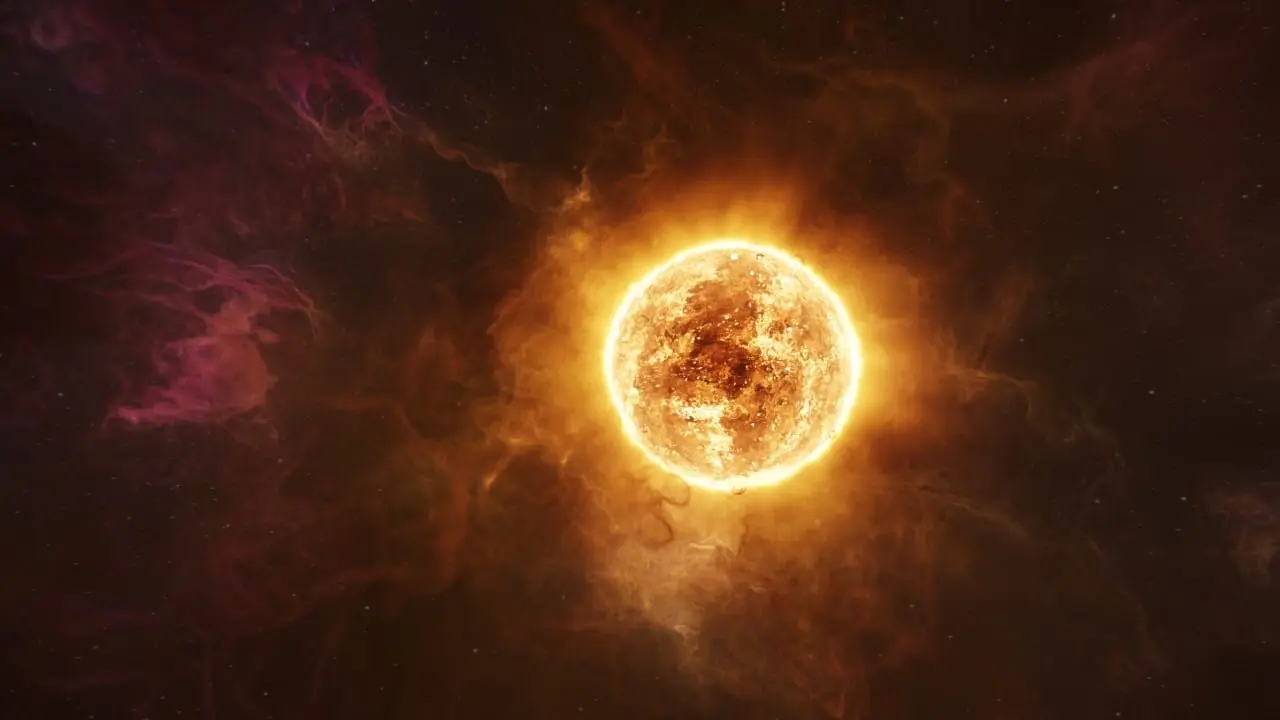
Índice Kp rises, aurora reaches unusual latitudes
The Kp index, which measures the severity of geomagnetic activity on a scale of 0 to 9, began to gradually rise. Leituras which remained at 2-3 throughout Sunday jumped to 3 this Monday morning, with the potential to reach 4-5 as the hours progressed and more CME material arrived. An isolated G1 means that people in the high latitudes of Hemisfério Norte particularly northern Escócia, Islândia and Escandinávia would have real opportunities to observe auroras.
Sob G1 conditions, the aurora borealis are mainly restricted to the primary auroral zone, located between 65 and 72 degrees north latitude. However, under possible G2 peaks (moderate), the displays could extend further south, potentially reaching locations such as Edimburgo, northern Inglaterra and even regions of central Escócia. Aurora Observadores on the European and North American continents have received alerts to monitor night skies after dark.
The forecast did not expect this activity to exceed the G2 level, minimizing risks of damage to satellites or power grids but keeping the window open for visually stunning auroral displays.
See Also

Dibu Martínez could reinforce Juventus after Aston Villa signs Japanese goalkeeper Zion Suzuki

Mackenzie Dern defends strawweight belt with victory over Gillian Robertson at UFC 330
Indonesian earthquake victims reach 53 and government declares emergency
Atividade solar returns to low levels, but AR4436 remains vigilant
Enquanto the geomagnetic storm was approaching, the sun itself showed a paradoxical behavior: activity returned to low levels this Monday. Apenas eight events were recorded in the last 24 hours, two class C flares (the most common among solar storms) and six class B (weak). The most intense flare was a C2.1 originating from AR4436, peaking at 7:40 UTC on May 19.
Full coverage: Latest News (EN)
The AR4436 active region maintained its position as the main event producer, responsible for seven of the eight flares. Essa solar region continues to display a complex energetic configuration and potential for new explosions, albeit on a smaller scale than those of the previous weekend. Não there is an indication of new CMEs directed at Terra in the coming hours, but the region has not been ruled out as a possible source of future events.
Cinco numbered solar regions orbit the side of the solar sphere facing Terra. Todas remain stable with simple magnetic configurations (alpha or beta), which significantly reduces the risk of strong flares emanating from known hotspots. Contudo, the AR4441 region, moving to the geoeffective position, deserves continued attention as it evolves over the next few days.
Previsão for the next few days: gradual slowdown expected
Conforme material from the May 16 CME continues its course through the magnetosphere, space meteorologists project changes in the scenario. Para Tuesday, May 20, return to quiet-choppy conditions expected (Kp 1-3). The effects of the CME should gradually attenuate, although remnants of glancing material may maintain brief intervals of activity in the early hours of the day.
Para Wednesday, May 21, Quiet-choppy conditions are expected to persist as residual effects completely disappear. The solar wind is expected to return to background levels, and geomagnetic activity will stabilize into patterns typical of a moderate solar period.
The solar activity forecast for the next few days points to continued low levels. Existe 40% chance for class M (moderate) flares, with AR4436 as the main candidate despite its continuous decay process. Flares of class X (strong) are not expected, but a residual chance of 5% remains if AR4441 rapidly evolves into a more complex configuration.
Lista expected impacts and observations
- G1 (minor) isolated geomagnetic storm possible during Monday
- Bz southward sustained began at 1am UTC on May 19
- Aurora visible in northern Escócia, Islândia and Escandinávia during activity spikes
- Solar wind Velocidade has escalated to moderate-high levels (above 400 km/s)
- Índice Kp at level 3, with possible rise to 4-5 during the day
- Nenhum new CME targeting Terra expected in the next 24 hours
- Região AR4436 remains the main flare producer despite reduced activity
- Condições gradual return to quiet-choppy patterns expected for Tuesday
Observadores at high latitudes Hemisfério Norte should remain alert, especially after dark. Equipamentos cameras with high ISO sensitivity and large aperture lenses are recommended for capturing auroral displays should they occur. Múltiplos space monitoring centers including NOAA, NASA and European space agencies continue to track the event in real time, with updates every few hours as new data arrives from observation satellites.