
Moon moves away from Earth at 3.8 cm per year and will eliminate total solar eclipses

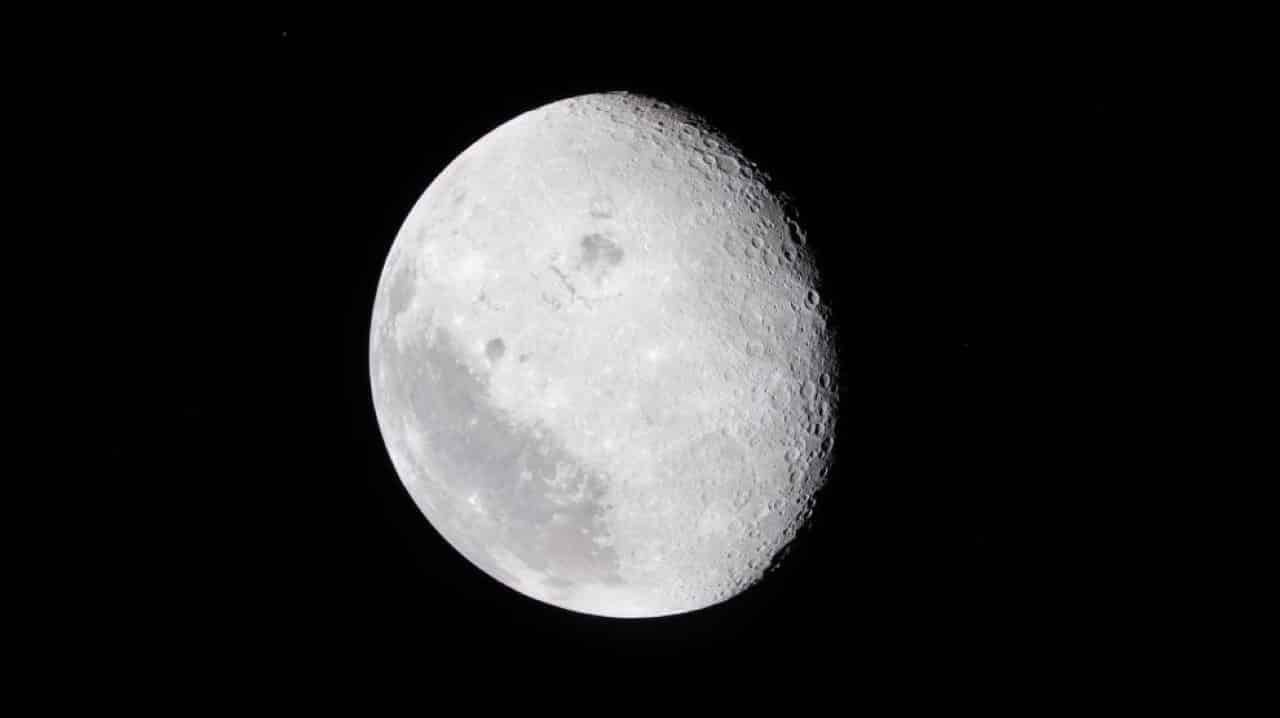
Medições laser beams compiled by global observatories confirmed on Monday, May 18, 2026, that Lua continues to move away from Terra at a constant rate of 3.8 centimeters per year. Esse inexorable cosmic movement will end up eliminating total solar eclipses from Earth’s sky in approximately 600 million years. Pesquisadores from international institutes used millimeter-precision data to confirm the phenomenon that will redefine the planet’s observational astronomy.
Métodos laser tracking confirms lunar drift
Scientists track the Lua-Earth distance by firing laser beams at mirrors left on the lunar surface by the Apollo missions and the Soviet Lunokhod expeditions. The photons emitted from stations such as Apache Point, in Novo México, and Côte d’Azur, in França, return in a matter of picoseconds, providing precision that allows the detection of minimal variations in the orbit. Esse non-invasive method works like a cosmic clock, marking the time elapsed between the emission and return of the light signal.
Ground-based observatories maintain a historical record of measurements going back decades, creating a robust database on lunar orbital evolution. Ultrafast timekeeping technology has transformed human understanding of celestial movements that were previously only theoretical. Observatórios on multiple continents operate simultaneously to validate readings and eliminate any margin of error in quantifications.
Tidal Atrito accelerates Lua’s departure
The gravitational friction of the Earth’s tides works as the driving mechanism for this cosmic drift. The constant interaction between Terra and its oceans transfers angular momentum, causing Lua to expand spirally as the Earth’s day lengthens by 1.7 milliseconds per century. Esse phenomenon represents a transfer of kinetic energy that, although tiny on a human scale, accumulates immeasurable effects on geological scales.
Dados compiled shows that:
- The lunar orbit continually expands at a measurable speed
- The Earth’s rotation period gradually lengthens
- Gravitational interaction remains stable and predictable
- Nenhuma external force interferes with this natural process
- Tidal cycles will continue to drive drift
The dynamics of this system offer astronomers a natural laboratory to study gravitational mechanisms in action. Simulações computational methods based on observational data allow us to project orbital behavior over the next million years with high reliability. The phenomenon illustrates how apparently static systems have deep internal dynamics.
Redução of apparent size and end of visual totality
As Lua moves away, its apparent size in the sky decreases in a slow but inexorable progression. Astronomers estimate that the shrinkage will be critical in approximately 600 million years, when the lunar disk will become too small to completely cover Sol. The current era represents a narrow celestial window where Sol and Lua are approximately equal in size when observed from the Earth’s surface.
Esse geometric alignment has allowed generations of humans to witness the unique visual spectacle of total solar eclipses. The coincidence of apparent sizes is a cosmic fluke that will not last indefinitely. Future Civilizações will witness only annular and partial eclipses, phenomena that are less visually dramatic but still observable and scientifically relevant.
The researchers highlight that this scenario represents a chapter in Earth’s astronomical history. Observadores of the future will have even more precise data on orbital dynamics, allowing us to further refine scientific projections. Current knowledge is based on laser measurements that eliminate speculation and offer numerical certainty about cosmic processes.
Implicações for future observational astronomy
The international scientific community continuously monitors this drift using cutting-edge technology. Institutos research teams on different continents collaborate to maintain uniform measurement standards and exchange raw data. Essa global coordination ensures that information about Lua and its orbit remains transparent and accessible to the academic community.
The predictable progression of this phenomenon allows astronomers to plan eclipse observations decades in advance. Futuras Generations of researchers will use this data to validate theories about gravitational dynamics and orbital evolution of natural satellites in diverse planetary systems. The study of the Terra-Lua system offers insights that transcend merely local knowledge.



