Bus-sized asteroid approaches Earth at 91,600 kilometers

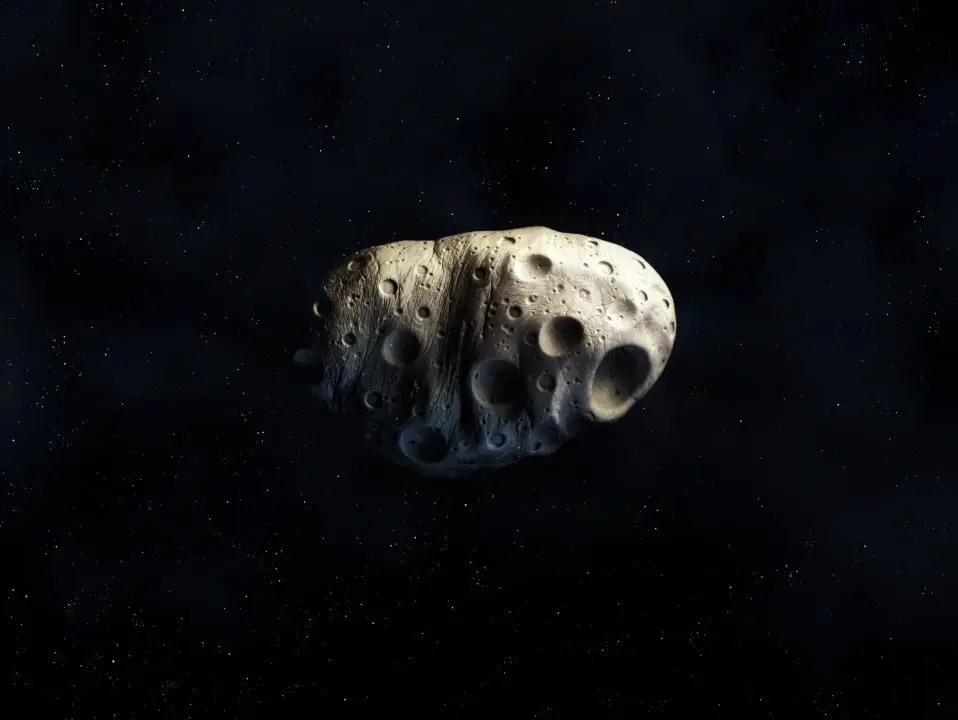
An asteroid named 2026JH2 will pass by Terra this Monday at a distance of approximately 91,600 kilometers, equivalent to a quarter of the average distance between the planet and Lua. The celestial object, discovered on May 10 by astronomers from Mount Lemmon Survey in Tucson, Arizona, has dimensions between one and two buses and does not represent any risk of collision, as confirmed by Agência Espacial Europeia.
The closest crossing will occur just before 11pm Portugal mainland time. At its closest approach, the asteroid will be around 24% of the average distance between Terra and Lua, that is, approximately two and a half times the distance at which hundreds of geostationary satellites responsible for telecommunications and weather forecasts orbit.
Object Características and recent discovery
2026JH2 belongs to the class of asteroids called Apollo, whose trajectories intersect Earth’s orbit. The object has a proven origin in the asteroid belt, a region located between Marte and Júpiter. Astrônomos of Mount Lemmon Survey identified the asteroid using high sensitivity observation systems, equipment developed in recent times to detect small objects in the vicinity of Terra.
More on this story: End of the magnetic shield turned Mars into an arid and lifeless desert
Occasional Colisões within the asteroid belt, combined with the gravitational influence of Júpiter, can send small asteroids into the planet’s vicinity. Este phenomenon has been occurring for many decades and thousands of asteroids have already been cataloged with the ability to pass close to Terra. The exact size of 2026JH2 remains unknown, although estimates are in the range of one to two buses.
Segurança confirmed by experts
Richard Binzel, professor of planetary sciences at Instituto of Tecnologia of Massachusetts (MIT) and creator of Escala of Torino, a tool used to categorize potential collisions of space objects with Terra, assured that 2026JH2 will pass safely. “This is a fairly normal occurrence; objects the size of a car pass between Terra and Lua every week,” said the expert.
Segundo Binzel, objects the size of a bus cross Earth’s neighborhood several times a year. The recent detection capacity through more sensitive observation systems has made it possible to identify these celestial bodies, which previously went completely unnoticed. Antes of the development of this equipment, asteroids of this magnitude crossed the vicinity of Terra without being registered by astronomers.
See Also

David Jolly secures Democratic seat to run for governor of Florida in 2026
Jolly wins Democratic nomination for governor of Florida in the USA

Meta (WhatsApp, Instagram and Facebook) is subject to trial in the USA for damaging the mental health of young people with fines of US$ 1.4 trillion
Approach Dados and scientific context
NASA’s Laboratório database of small celestial bodies from Propulsão to Jato (JPL) confirms the parameters of the passage:
- Approach Distância: 91.6 thousand kilometers
- Percentual from Terra-Moon distance: about 24%
- Comparativo with geostationary satellites: approximately two and a half times the distance of these satellites
- Horário closest: Monday, just before 11pm (mainland Portugal)
- Asteroid Classe: Apollo
- Origem: asteroid belt between Marte and Júpiter
The cataloging system for objects close to Terra, known as Near-Earth Objects (NEOs), maintains an updated record of all asteroids with potential approach. 2026JH2 has been monitored by the main international space observatories since its discovery, ensuring continuous monitoring of its trajectory.
Learn more: Asteroid 2026 JH2 passes close to Earth with zero risk, astronomer confirms
Fenômeno recurring in astronomy
The passage of 2026JH2 represents an astronomical event of scientific interest, but part of a pattern known for decades. The survey of asteroids close to Terra has intensified in the last two decades thanks to the improvement of telescopes and automatic detection systems. Agências Space agencies such as NASA, Agência Espacial Europeia and research institutions such as MIT maintain permanent surveillance over these objects, with protocols established for public communication when events of this type occur.
The relatively recent discovery of 2026JH2, in May this year, demonstrates that medium-sized asteroids continue to be identified regularly. Cada discovery adds information to the global astronomical database, allowing refinement of trajectory prediction models and analysis of future impact risks. The asteroid, despite its relative proximity to Terra, remains beyond the reach of the naked eye, requiring telescopes for viewing.