
Honda overcomes profit drop in 2026 with the strength of hybrid and sports models in the global market

Honda recorded a significant reduction in its profits during the release of financial results for the third quarter of fiscal year 2026. The corporate balance sheet reflected the direct impacts of currency fluctuations and high operating costs in the international market. The Japanese automaker, however, has managed to maintain a strong competitive position in the global automotive sector. The company’s commercial performance continues to be supported by a diverse line-up that ranges from high-performance sports vehicles to spacious family models.
The manufacturer’s strategic planning involves the continuous improvement of its hybrid systems and the optimization of the internal space of its cars. The brand has established a direct rivalry with specific Toyota models, offering alternatives that balance energy efficiency and comfort. Analistas notes that global acceptance of Honda’s e:HEV technology has been instrumental in offsetting recent financial losses. Maintaining sales volume demonstrates the resilience of the current portfolio in the face of economic uncertainties that affect the supply chain.

Desempenho mechanics and aerodynamics define the Civic Type R
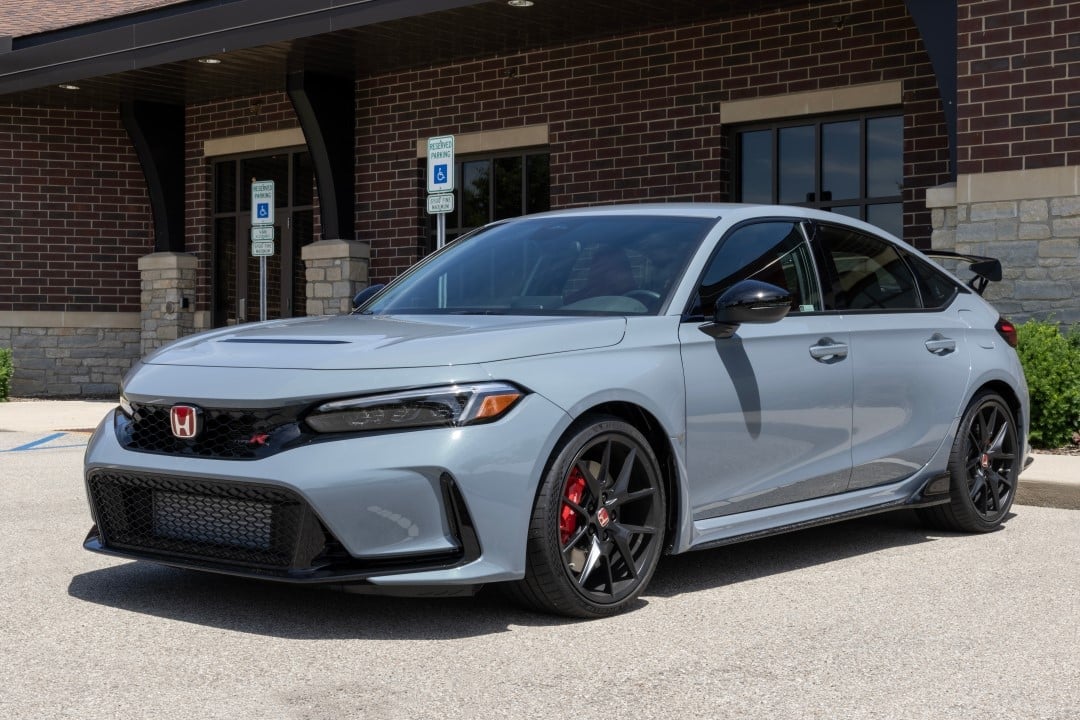
The Civic Type R represents the automaker’s main bet in the front-wheel drive sports car segment. The vehicle is equipped with a 2.0 four-cylinder turbo engine, designed to deliver quick responses and high power across different speed ranges. The engineering applied to the model prioritizes the purist driving experience, maintaining the traditional six-speed manual transmission. The short and precise coupling system attracts consumers who seek greater mechanical interaction with the car when driving on circuits or highways.
The chassis structure has a wheelbase of 2735 millimeters, a dimension that favors directional stability at high speeds. The aerodynamic design includes deflectors and a functional rear spoiler, elements that generate downward force to keep the car glued to the asphalt. The model competes directly with the Toyota GR86, offering a different approach by using front-wheel drive instead of rear-wheel drive. Suspension calibration allows daily use of the vehicle without severely compromising occupant comfort on bumpy urban roads.
Odyssey bets on a low center of gravity to attract families
In the minivan segment, the Odyssey adopts an architecture focused on accessibility and the use of space in the cabin. The designers implemented a completely flat floor, a feature that makes it easier for passengers to move between the rows of seats. The vehicle’s total height reaches 1695 millimeters, lower than the category average, resulting in a center of gravity closer to the ground. Esta structural configuration reduces body roll in curves and improves vehicle dynamics during long journeys with maximum capacity.
The market positioning of the Odyssey aims to offer a viable alternative to the Toyota Alphard, which has a substantially taller body measuring 1935 millimeters. The Honda minivan appeals to families who need a lot of transport capacity, but prefer sedan-like drivability. The interior of the vehicle has individual seats in the second row, equipped with arm and leg rests. Acoustic insulation has been reinforced to minimize the intrusion of engine and wind noise into the cabin, providing a quiet environment.
Estrutura’s internal Vezel expands space in the utility segment
The Vezel compact sports utility vehicle, known in several international markets, presents engineering solutions aimed at maximizing internal volume. The model measures around 160 millimeters longer in length when compared to its main competitor, the Toyota Yaris Cross. The development team positioned the fuel tank below the front seats, freeing up a considerable area at the rear of the floor. The mechanical arrangement allows four adults of average height to travel in comfort suitable for long road trips.
The versatility of the cargo compartment is increased by the rear seat folding system, which creates a level surface for transporting long objects. The interior finish uses soft-touch materials in areas of greatest contact, elevating the perception of quality in the cabin. The SUV’s hybrid engine uses the combustion engine mainly as an energy generator for the batteries, while traction is predominantly provided by the electric motor at low speeds.
- The centralized fuel tank on the Vezel optimizes weight distribution and expands rear seat legroom.
- The Civic Type R’s manual transmission preserves the mechanical connection demanded by sporty driving enthusiasts.
- The e:HEV hybrid system uses electric propulsion most of the time in high-traffic urban environments.
- The reduced height of the Odyssey makes it easier for children and the elderly to board without the need for auxiliary steps.
- Improved noise insulation in the wheel arches reduces tire rolling noise on paved roads.
The integration of these technologies reflects the automaker’s intention to standardize the level of comfort and efficiency across different vehicle categories. Engineers work to ensure that control interfaces and entertainment systems are intuitive for drivers of varying ages. The market’s response to these innovations has maintained the volume of registrations at consistent levels over the last few months, ensuring the brand’s presence on the streets.
Hybrid Estratégia sustains operations in the face of electric transition
The global automotive scenario in 2026 is going through a phase of reassessment of the goals of total fleet electrification. Honda has adjusted its pure electric vehicle launch schedule in response to unstable demand for this technology in América’s key markets of Norte and Europa. The company focused its investments on expanding the line of hybrid models, which offer greater autonomy and do not depend on external charging infrastructure. The continued acceptance of e:HEV systems proves that consumers still seek the security of combustion combined with fuel savings. Dealers report a constant demand for cars that deliver superior thermal efficiency without the need for drastic adaptations to drivers’ routines.
Financial reports indicate that hybrid vehicle profit margins helped cushion the decline in overall revenue for the quarter. The automaker maintains production at a fast pace to meet the orders accumulated at dealerships, especially for the SUV and sports models that top the sales charts. The manufacturer’s long-term strategy involves the gradual transition to zero emissions, respecting the pace of technological adoption in each global region. The balance between mechanical innovation and economic viability remains the central pillar of the brand’s operations in the contemporary market. The ability to quickly adapt to economic fluctuations ensures continued investment in research and development for the next generations of automobiles.





