
Honda sustains competitiveness of sports and family vehicles after drop in quarterly profit

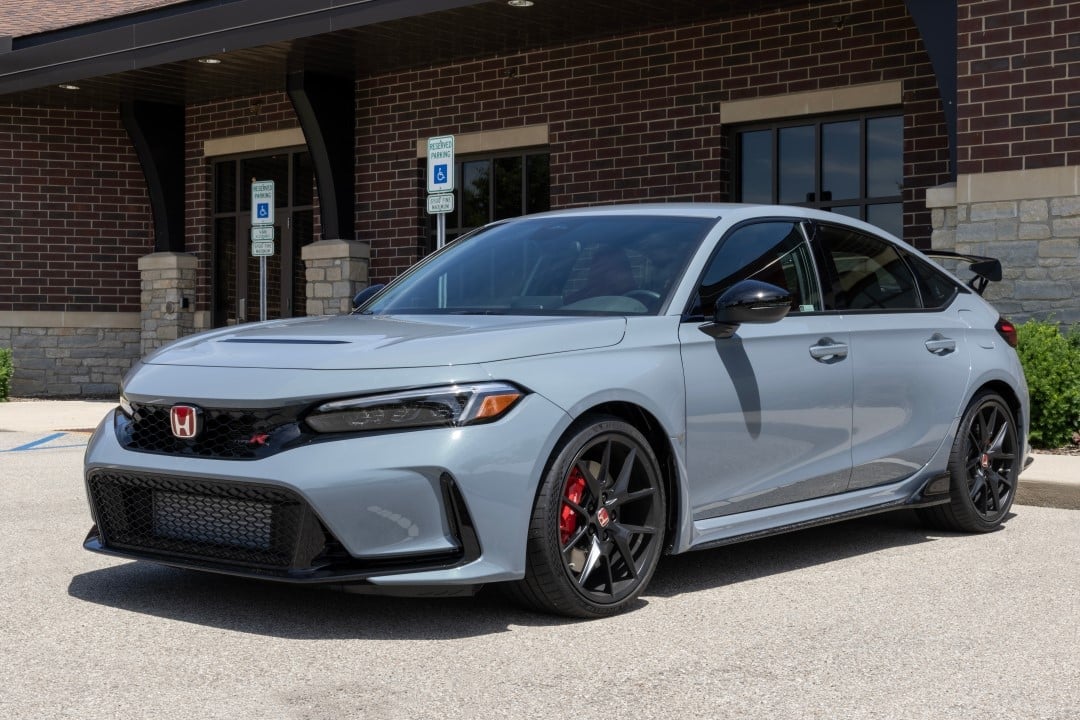
Japanese manufacturer Honda recorded a significant retraction in its profits during the presentation of the third quarter results of the fiscal year in February 2026. The financial statement reflected external market pressures and high operating costs. A detailed technical analysis published in March demonstrated that the automaker maintains strong competitiveness in its product portfolio. The evaluation compared specific models of the brand with direct rivals of the Toyota.
The global economic scenario required adjustments to the company’s electrification strategy. International tariffs have directly impacted recent profit margins. Apesar faced with occasional financial difficulties, the brand’s vehicles preserve solid construction and comfort attributes. The automotive market observes how the automaker’s traditional engineering supports global sales in a year of technological transition.

Dynamic Desempenho and interior space mark front-wheel drive sports car
The Honda Civic Type R uses a high-capacity 2.0 turbo engine. Mechanical calibration delivers power equivalent to that of larger displacement aspirated engines. The vehicle has a long wheelbase of 2735 millimeters. Essa structural dimension ensures greater stability during high-speed cornering and severe braking on varied tracks.
The model’s engineering preserves the traditional front-wheel drive system. The chassis responds with extreme precision even on wet or slippery surfaces. The body configured with five doors provides considerable usable space in the rear seat. The mechanical assembly manages to balance the rigidity necessary for sports performance with the ability to absorb impacts from irregularities in the asphalt.
The rivalry with the Toyota GR86 highlights different automotive proposals. The competitor focuses on pure agility through rear-wheel drive on winding routes. The Civic Type R brings together features aimed at daily functionality. The exciting driving experience is present in both designs. The Honda model adds versatility to everyday use due to its smart layout and cabin volume.
Maintaining front-wheel drive requires detailed adjustment of the entire suspension system. The engineers’ work results in consistent directional stability under adverse weather conditions. The sports car combines the performance required on racetracks with the docility necessary for urban traffic without severe sacrifices for the occupants.
Lowered Arquitetura facilitates access and improves family transport
The Honda Odyssey minivan adopts a completely flat floor concept and reduced height from the ground. The design decision simplifies boarding and disembarking for passengers of all ages. The total height of the vehicle sits at the 1695 millimeter mark. The body design ensures a center of gravity closer to the ground and optimizes directional stability when the car is in motion.
The cabin offers a third seat with adequate vertical space to accommodate adults during long journeys. The ergonomics of the driving position feel natural to the driver. The large glass area reduces blind spots on the sides of the car. The complete structure prioritizes convenience in routine family tasks.
The Toyota Alphard takes the opposite path with the use of a higher floor. The elevated platform generates a feeling of external grandeur and provides superior visibility for the driver. The total height of the competitor reaches 1935 millimeters. The Toyota’s design favors robust aesthetics and maximum capacity for transporting people.
The March assessment pointed out that Odyssey focuses its efforts on ease of daily operation. The Alphard attracts consumers interested in an image of differentiated status. Both vehicles perform excellently for transporting large families. Cada manufacturer chose to emphasize completely different structural features to dominate the segment.
The contained height of the Honda model facilitates access to underground garages with ceiling restrictions. The level floor makes loading heavy luggage and bulky purchases quicker. The last row of seats welcomes occupants with a level of comfort that is quite competitive by current market standards.
Compact Utilitários deliver superior finish and quiet cabin
The Honda Vezel sports utility vehicle exceeds the length of its rival Toyota Yaris Cross by approximately 160 millimeters. The dimensional advantage is directly reflected in the space available for the rear seat occupants’ legs. Quatro adults of average height can travel comfortably in the cabin.
The automaker positioned the fuel tank just below the front seats to free up useful space in the rear. The back seat folds extremely compactly against the floor. Intelligent modularity allows the transport of tall objects without the need to remove the seats from the vehicle structure.
The level of assembly and panel materials convey a feeling of superior quality within the compact category. The four-cylinder engine integrated into the main hybrid system operates with a very restrained noise. The Yaris Cross uses a three-cylinder engine in its hybrid variant. The Toyota model emits a more noticeable mechanical sound inside the cabin during intense acceleration.
The Vezel proposal combines generous internal volume with a build quality that is noticeable to the touch. The Yaris Cross focuses on its small size to facilitate maneuvering and energy efficiency. The two automakers seek to serve consumers who divide their time between urban traffic and highways.
- Centralized fuel Tanque intelligently expands trunk space.
- Sistema folding seats facilitate the transport of tall and irregular loads.
- Motorização four-cylinder hybrid reduces internal vibration during operation.
- Acabamento’s panel uses soft-touch materials to raise the visual standard.
- Distância elongated wheelbase improves rear passengers’ comfort when traveling.
The automaker’s interior engineering focuses on maximizing usable space without excessively increasing external dimensions. Improved sound insulation contributes to reducing driver fatigue on long journeys. The strategy meets the demands of an increasingly demanding public regarding comfort on board.
Ajuste in electrification strategy reflects global economic scenario
Honda management modified its plan for electric vehicles after reviewing financial results. The decision was strategic. The company maintained the offering of hybrid and combustion engines as central pillars of the global line. Technical analysis confirmed the strength of the products. Current mechanical attributes remain highly competitive at dealerships.
The drop in profits reported in February is directly linked to the restructuring costs of electric car factories. The impact of import and export tariffs also reduced the company’s operating margins. The automaker managed to maintain cash generation at levels very close to those recorded in the previous year when extraordinary expenses are excluded from the account. The rigor with assembly quality remains evident in direct comparison with Japanese competitors.
Odyssey maintains its commercial relevance through low center of gravity architecture. The Civic Type R proves that it is possible to deliver extremely high performance without eliminating useful space for passengers. The Vezel raises the standard of interior refinement expected for the compact SUV category in 2026.
Automotive market data indicates that the manufacturer continues to invest heavily in practical and dynamic solutions. The corporation faces an increasingly fierce and complex global business environment. Cars equipped with efficient hybrid systems remain the main choice for consumers in most major international markets.





