

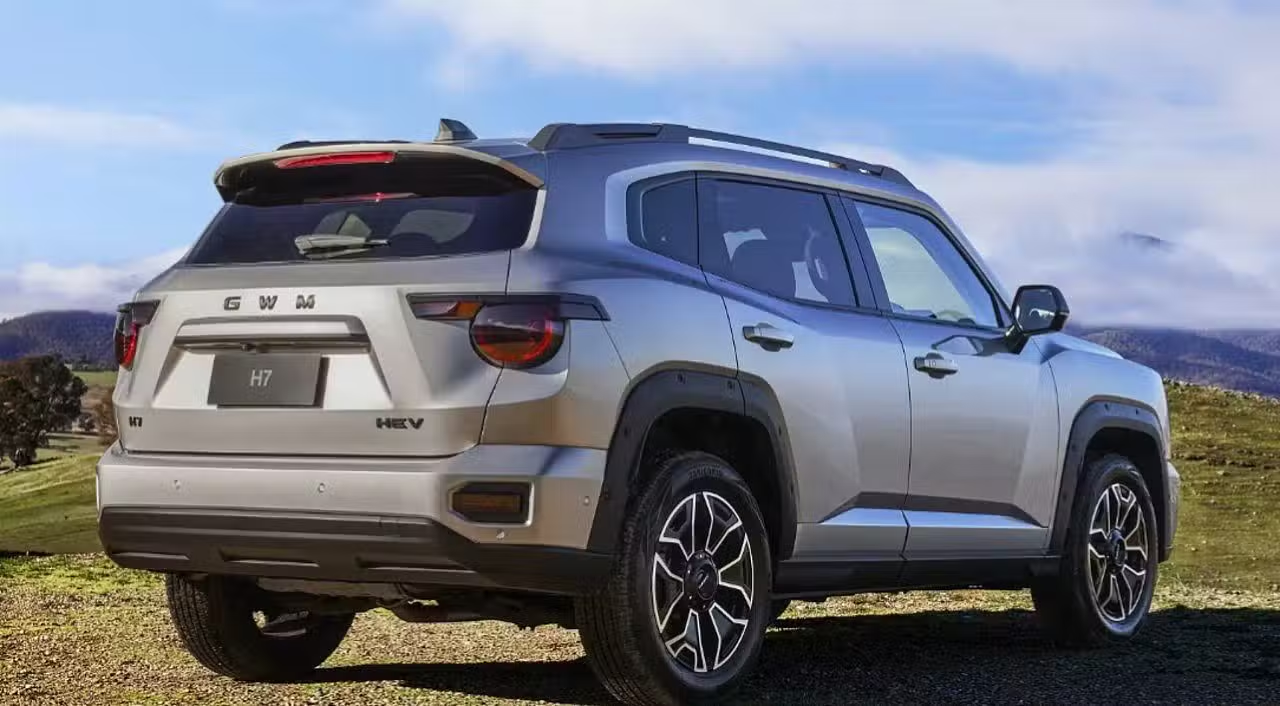
Chinese manufacturer GWM confirmed the introduction of the Haval H7 sports utility vehicle in the Brasil for the year 2026. The vehicle features a plug-in hybrid engine and focuses on a market segment with greater added value. The company seeks to change its initial image as a provider of economic options only. The new model delivers robust technical specifications to attract demanding consumers seeking innovation. The arrival of the automobile moves the national automotive sector and demands quick responses from competing brands.
The arrival of the sports utility vehicle establishes direct competition with names already established in Brazilian dealerships. Modelos as BYD Song Plus, Toyota Corolla Cross and Jeep Compass represent the Asian automaker’s main commercial targets. The strategy involves offering a superior technological package at a competitive cost. Especialistas in the industry note that this movement forces traditional brands to review their offerings. The end consumer gains new purchasing alternatives with a high level of electrification.

Vehicle Dimensões and strategic financial positioning
The Haval H7 displays generous proportions for the category of medium sports utility vehicles available in the country. The total length of the body reaches an impressive 4.8 meters. The luggage compartment has a volumetric capacity of 586 liters, ideal for long trips. Essas measures place the launch at a higher physical level than the current Haval H6. The vertical expansion of the catalog caters to large families who require ample internal space and comfort for all occupants.
The manufacturer’s pricing policy establishes a clear financial ceiling for the launch. The amount charged at dealerships will be below the R$300,000 range. Essa commercial decision positions the vehicle in an intermediate zone between traditional combustion vehicles and luxury electrified ones. The family proposal gains strength in the face of competitors who focus only on the tradition of their logos. The customer finds a favorable relationship between the amount invested and the product delivered in terms of finish and space.
Conjunto mechanical and hybrid system power numbers
GWM engineering developed a propulsion system that efficiently combines combustion and electricity. The main block uses a 1.5 turbo engine powered by gasoline. The plug-in hybrid configuration adds high-capacity electric motors. The combined power of the set ranges between 326 hp and 364 hp. Esse performance easily surpasses most direct rivals currently available on the national market.
Power management allows for different driving modes during everyday use. The driver can make short urban journeys using exclusively battery power. The combustion engine comes into operation during long journeys or when the driver demands vigorous acceleration. Essa mechanical flexibility solves range anxiety common among all-electric car owners. The car perfectly meets different usage profiles in Brazilian traffic, combining economy and performance.
Mechanical superiority creates a strong sales argument against models of Asian and Western origin. The BYD Song Plus and Jaecoo 7 bet on electrification, but deliver inferior cavalry numbers. Consumers who value safe overtaking and agile restarts will find the H7 a more suitable option. The automaker calibrated the suspension and steering to handle the extra weight of the batteries and the brute force of the powertrain.
Pacote embedded technology and driving features
The interior of the sports utility vehicle features high-resolution screens and state-of-the-art connectivity systems. The central panel houses a 14.7-inch diameter multimedia center. The driver views driving information on a 10.2-inch digital instrument panel. The system displays accurate data on fuel consumption and the remaining charge in the batteries. The graphical interface responds quickly to passengers’ touch commands.
- Central touch-sensitive multimedia with 14.7-inch screen.
- 10.2-inch all-digital instrument Quadro.
- Integrated LiDAR sensor for three-dimensional traffic mapping.
- Sistema camera with 360 degree vision for maneuvers.
- Controle adaptive cruise and autonomous emergency braking.
The launch’s biggest technological difference lies in the adoption of the LiDAR sensor. Esse equipment uses light beams to map the environment around the car with millimeter precision. The technology enables advanced semi-autonomous driving features on highways and expressways. The inclusion of this hardware puts the Chinese model at a technical advantage against vehicles that only use conventional cameras and radars. Equipamentos, previously restricted to premium brands, now appears in the mid-range segment.
Impacto commercial and reactions from competing brands
The inclusion of the new SUV profoundly changes the dynamics of prices and equipment in the medium category. Volkswagen Taos, Jeep Compass and Toyota Corolla Cross dominate sales through the capillarity of their extensive dealership networks spread across the country. GWM’s product attacks this historical hegemony by offering factory hybridization and superior power for a similar final value. Traditional manufacturers need to accelerate the technological update of their catalogs to avoid the accelerated loss of market share.
The rivalry with compatriot BYD takes on a new chapter with the arrival of the H7. The Song Plus leads sales among plug-in hybrids due to its focus on energy efficiency and acquisition cost. The new competitor adds the variable of high sports performance and autonomous driving technology to the purchasing equation. The direct clash between the two Chinese giants raises the Brazilian consumer’s standards of demand at dealerships.
Estruturação from the catalog and national presence of the brand
GWM’s launch schedule demonstrates long-term planning for the Brazilian territory. The Haval H6 maintains its position as the gateway to the company’s midsize SUV lineup. The H7 occupies a higher gap, attracting customers with greater purchasing power who seek sophistication and extra space. Essa product ladder facilitates consumer loyalty within the brand itself over years of use.
The acceptance of electrified vehicles is growing consistently in the country’s main capitals. The public charging infrastructure is gradually advancing, reducing the fears of new buyers regarding supply. The automaker takes advantage of this favorable scenario to diversify its body and engine options. The consolidation of the brand depends on maintaining the supply of parts and the quality of after-sales service. The service network is undergoing continuous expansion to support the projected increase in the volume of registrations from 2026 onwards.