
Max Verstappen tries to react in F1 with the Canadian GP after driving Mercedes in the Nürburgring race

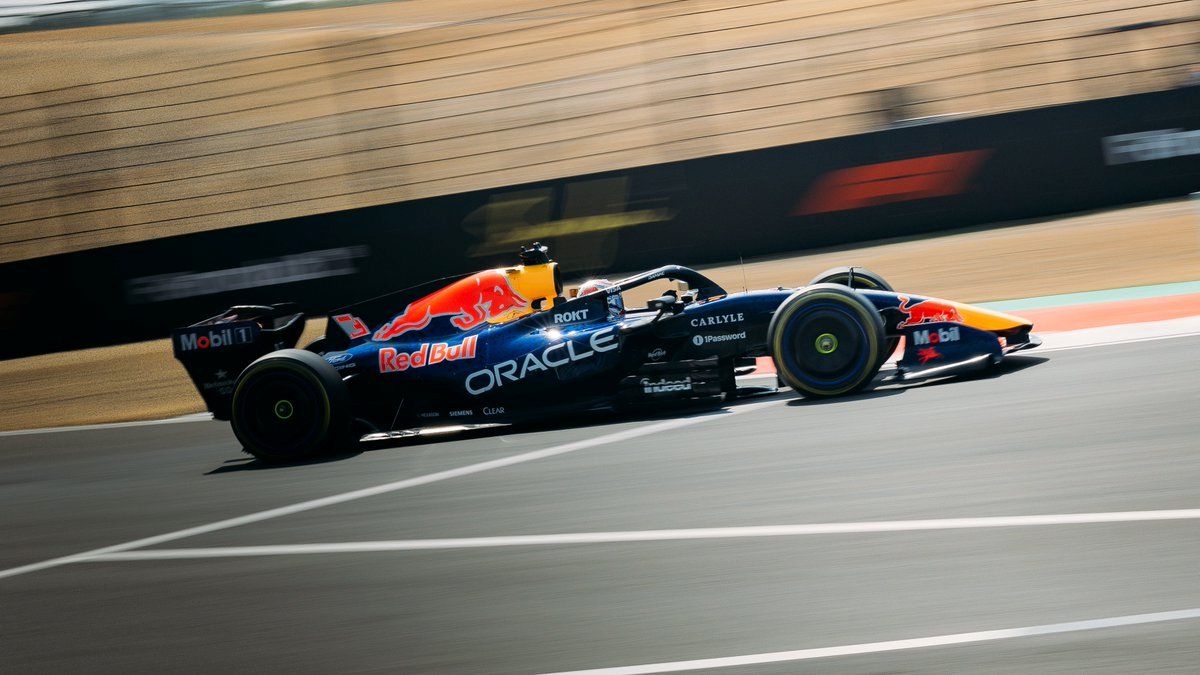
The Max Verstappen pilot begins work on the Grande Prêmio of the Canadá of Fórmula 1 focused on readjusting his riding style to the single-seater of the Red Bull. The four-time world champion competed in the 24 Horas Nürburgring last weekend in an Mercedes GT3, finishing out of the main race due to mechanical failures in the vehicle. The sudden change of category requires the competitor to make an immediate transition to the dynamic reactions of the main automobile competition on the planet.
Participation in the Nordschleife circuit represented a period of less external pressure for the 28-year-old athlete. Fora from the strict paddock commitments, the driver shared driving the German car with Daniel Juncadella, Jules Gounon and Lucas Auer. The competitor’s presence attracted a historic audience of 352 thousand spectators to the European event, moving the pits of the long-term race. Contudo, the satisfactory performance in the lead ended up being interrupted by breakdowns that forced the equipment to be recalled early.
Automobilismo’s return to the Federação Internacional championship puts the Dutchman back under intense sporting pressure. Ele occupies seventh place in the points table and has a significant disadvantage in relation to the points in the current dispute. The poor performance arises directly from the dynamic behavior of the RB22 model, a project that presents serious balance and tire management flaws.

Red Bull seeks to resolve chronic problems with the RB22 model for the remainder of the year
The performance of the Milton Keynes team in the first four stages of 2026 exposed severe technical limitations in aerodynamic development. The current car demonstrates chronic instability when taking low-speed curves and struggles to reach the ideal temperature window for the rubber compounds. Essa characteristic pushed Verstappen to secondary disputes in the intermediate field, generating public dissatisfaction on the part of the current title holder.
The adverse scenario became evident during the activities carried out in the Japão stage, held at the end of March. At the time, the driver ended up being eliminated in the second phase of the qualifying session, needing to perform a recovery test to cross the finish line in eighth place. Após the end of that journey, the athlete signaled that the course of the year would directly influence his future career decisions.
The critical stance towards the recently introduced technical regulations also weighs on the driver’s assessment of the sport. The dependence on complex electrical systems displeases competitors, who prefer purist driving and the traditional mechanical challenges of touring categories. Sem has a real chance of fighting for the fifth consecutive championship at this point in the calendar, the athlete’s focus has partially shifted to parallel endurance projects.
Desempenho technician on the German track proved the Dutch driver’s versatility
Mesmo without achieving the desired end result in Alemanha, Verstappen’s performance reaffirmed its ability to adapt to different platforms. Ele set the third best time in free practice and secured fourth place on the overall starting grid. Durante spent his regulation period behind the wheel, the Dutchman took control in tenth position and climbed through the field under unstable weather conditions.
- The driver handed over the vehicle to his teammate with an advantage of more than 20 seconds over second place.
- Overtaking in heavy traffic on Nordschleife required risk management in narrow sections.
- The strong pace was maintained throughout the night, a period considered the most critical of the German marathon.
- The direct dispute with Maro Engel included a side collision at around 3 am local time.
The high-profile display served as a public display of talent at a time of stagnation in the top category. The ease of finding the limit of grip on slippery asphalt impressed regular opponents in the GT3 competition. The relaxed environment worked as a relief from the routine of internal demands faced by the athlete within his current team.
Transição to Montreal circuit requires severe changes in piloting parameters
The semi-permanent Montreal track imposes demands completely different from those found on the Nürburgring layout. The Canadian track is characterized by strong braking, high curbs and walls very close to the racing line. Pilotos who move between touring cars and formulas point out that reaction time needs to be readjusted almost instantly. The braking of a single-seater occurs over much shorter distances compared to the behavior of a gran turismo model.
The RB22’s aerodynamic load generates levels of pressure that require superior thinking speed in fast corners. On the other hand, the high weight of current cars in the maximum category makes agility in low-speed chicanes difficult. Verstappen will need to use Friday’s free practice to erase the braking references used in Stuttgart’s car. Qualquer Miscalculation when approaching Canadian curves can result in severe damage to the chassis.
The driver’s record on the Gilles Villeneuve circuit is largely favorable, a factor that can help in the search for rehabilitation. Contudo, the 2026 technical outlook indicates that favoritism is shifting towards competing teams that have better understood the current engineering guidelines. Resta asked the Austrian team’s technical staff to introduce updates capable of mitigating the grip problems that hamper the four-time champion.
Cronograma and driver goals for the next stages of the world championship
The immediate goal established by the team focuses on achieving the first podium of the year for the number one car. The championship presents a changed dynamic of forces, requiring extreme regularity to reduce the distance in relation to the competition leaders. General classification leader Kimi Antonelli opened a comfortable margin of 74 points after demonstrating consistency in the first four rounds of the competition.
The team’s engineers plan to analyze telemetry data collected in previous steps to reconfigure the suspension systems. The main objective is to offer a more predictable platform so that the competitor can extract maximum performance in the qualifying sessions. The starting grid in Montreal is of crucial importance, given that overtaking points are limited in specific sections of the circuit. The progress made in this round will dictate the organization’s level of competitiveness for the European sequence of the official calendar.





