
Port of Itajaí signs contract to study the removal of the ship Pallas, the Titanic of SC

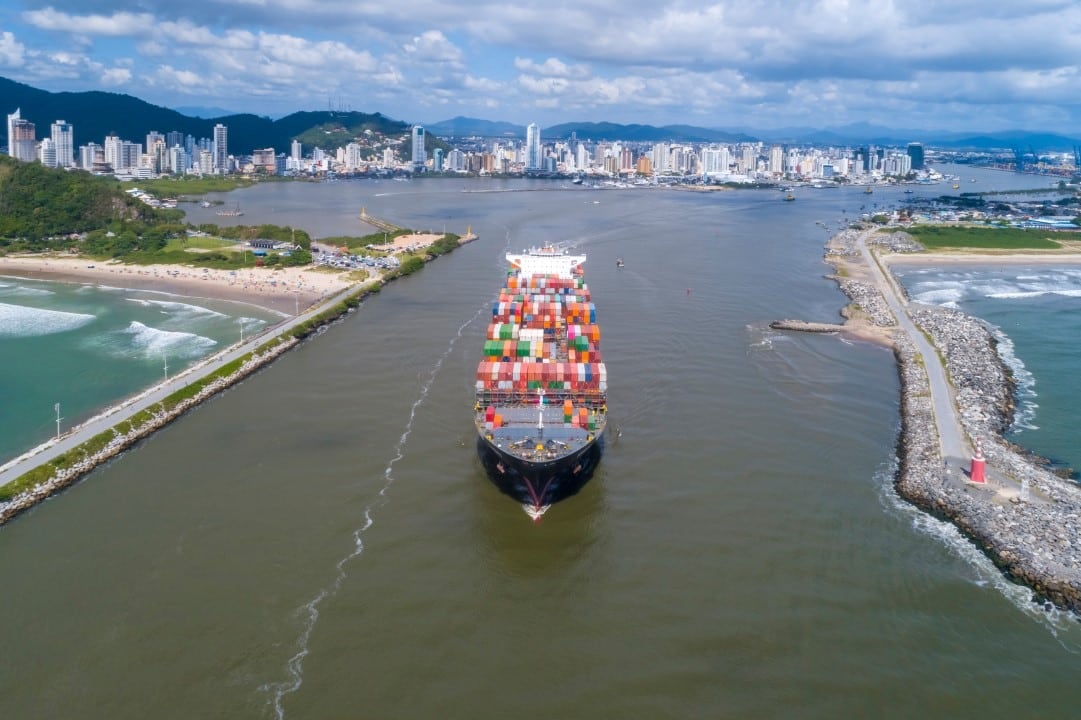
Porto of Itajaí will advance its port modernization plan with the removal of the historic ship Pallas, which has been sunk for more than 130 years at the mouth of the Itajaí-Açu river. The signing of the contract to carry out the technical study to remove the vessel will take place next Monday, March 25th, at an event scheduled at Marina Itajaí. Este step is considered fundamental for the future of the port complex.
The action will make it possible to increase the navigability of the access channel, allowing the entry of larger ships and boosting the region’s competitiveness. The decision to remove the Pallas, popularly known as the “Titanic of SC”, is part of a set of strategic initiatives aimed at strengthening Santa Catarina’s maritime infrastructure, seeking greater efficiency and operational capacity to meet the demands of foreign trade.
Plano port infrastructure modernization Itajaí
Artur Antunes Pereira, superintendent of Porto of Itajaí, highlighted the strategic importance of the initiative during the official announcement. Ele highlighted that the vessel has been submerged in the access channel for more than a century, representing an obstacle to the port’s full capacity. Hull removal is a crucial element within a comprehensive revitalization and expansion plan.
With the “doors of the Porto and Itajaí complex open to larger vessels”, the expectation is of a significant increase in the volume of cargo handled. Isso will not only optimize port operations, but will also have a positive impact on the local and state economy. The ability to receive vessels with deeper drafts is an invaluable competitive advantage for modern ports.
Origens and trajectory of the ship Pallas before the sinking
The Pallas, a refrigerated steamship, was built in 1891, in the Inglaterra, marking the naval engineering of the time. Sua’s primary function was the transport of meat and various cargo, establishing a vital trade route between Buenos Aires, in Argentina, and the Rio of Janeiro. The vessel was an integral part of turn-of-the-century supply chains.
Registros histories indicate that the ship also made regular calls at Itajaí. Nessas stopped, Pallas carried out coal shipping operations, an essential fuel for steam engines at the time. Essa’s connection to Itajaí since the late 19th century lends an additional layer of historical relevance to its presence on the riverbed.
The vessel gained notoriety for its use during Revolta of Armada, a military conflict between sectors of Marinha of Brasil and the government of Floriano Peixoto, in 1893. Apesar of its involvement in this troubled period, researchers point out that Pallas did not directly participate in combat. Sua function, in those days, was more linked to the transport of supplies and cargo, supporting the logistical movements of the time. Esta distinction is crucial to understanding his role in the historical setting.
The enigmatic 1893 shipwreck and its rediscovery in 2017
The sinking of the Pallas occurred on October 25, 1893, in an area of the Porto bar of Itajaí. The vessel sank near the beach of Navegantes, at a time when the northern jetty of the port structure did not yet exist. Este geographic detail is relevant to understanding navigation conditions in the region at that time.
Over the following decades, the ship’s hull was gradually forgotten beneath the river waters. Somente in 2017, during dredging works to deepen the port channel, the submerged structure was rediscovered. A Chinese dredger, which was carrying out work to increase the depth of the Itajaí-Açu river, hit the hull.
Esse incident resulted in the momentary stoppage of dredging operations. Rapidamente, an extensive historical and technical investigation began to identify the vessel and assess its condition. Pesquisadores and divers dedicated themselves to surveys in several archives.
- Documentos from Marinha from Brasil
- Registros’s Lloyd’s Register
- Materiais of Museu Histórico of Itajaí
- Arquivos historical sites
Inicialmente, the hull was estimated to be around 110 meters long. However, later studies concluded that the ship was approximately 67 meters long. Acredita is believed to be split in half at the bottom of the river, with the two parts separated by about 40 meters. Essa fragmentation adds complexity to the removal process.
Desafios operational and bureaucratic procedures for hull removal
Removing Pallas’s hull presents a notable set of challenges. Federação of Indústrias of Santa Catarina (Fiesc) has already pointed out some of the technical difficulties surrounding the operation. The wreck area is characterized by a series of adverse conditions.
- Baixa underwater visibility.
- Fundo muddy, making it difficult to anchor equipment.
- Água contaminated, requiring special security protocols.
- Fortes currents, increasing risks for divers and machines.
- Intenso flow of large vessels, requiring interruptions in maritime traffic.
Além technical obstacles, the process faced years of bureaucratic obstacles. The lack of adequate financial resources delayed the project’s progress for a long time. The need to obtain approvals from different federal and state agencies also complicated the timeline. Essa administrative complexity required meticulous coordination between multiple government entities.
Importância historical and archaeological vessel for Santa Catarina
The historical relevance of the ship Pallas transcends its mere presence as an obstacle to navigation. Ele is considered one of the most emblematic shipwrecks on the coast of Santa Catarina, a true testament to Brazilian maritime history. The vessel carries with it an invaluable cultural legacy, representing a period of profound economic and political transformations in the country.
Dada its importance, the Instituto of Patrimônio Histórico and Artístico Nacional (IPHAN) issued a specific terms of reference. Este document aims to guarantee the archaeological salvage of the vessel throughout the removal process. The intention is to ensure that submerged cultural heritage is properly recorded, studied and, if possible, preserved.
The team responsible for the technical study will need to consider not only the feasibility of removal, but also the implications for the historical collection. Underwater archeology will be a fundamental component of the work, seeking to recover information and artifacts. Preservation of Pallas’s legacy is a central concern, balancing port development with memory protection.
Impacto from Pallas withdrawal in port navigation capacity
Removing Pallas promises to significantly transform the operational dynamics of Porto from Itajaí. With the unblocking of the channel, the port will be able to receive ships of greater draft and size, optimizing the transport of goods. Cargo handling capacity will be substantially expanded, aligning the port complex with the demands of contemporary international trade.
Essa change will directly impact the port’s competitiveness on the national and international scene. Itajaí could consolidate itself as an even more relevant logistics hub, attracting investments and generating economic opportunities for the region. The modernization of port infrastructure is a catalyst for regional development.
The expectation is that the technical studies, now contracted, will indicate the safest and most efficient way to remove the hull. The ultimate goal is to complete this crucial step for the future of Porto and Itajaí. The solution found must balance the safety of navigation with the historical preservation of the ship, guaranteeing a favorable result in all aspects involved.





