Researchers identify possible traces of bacteria in the Martian meteorite ALH-77005

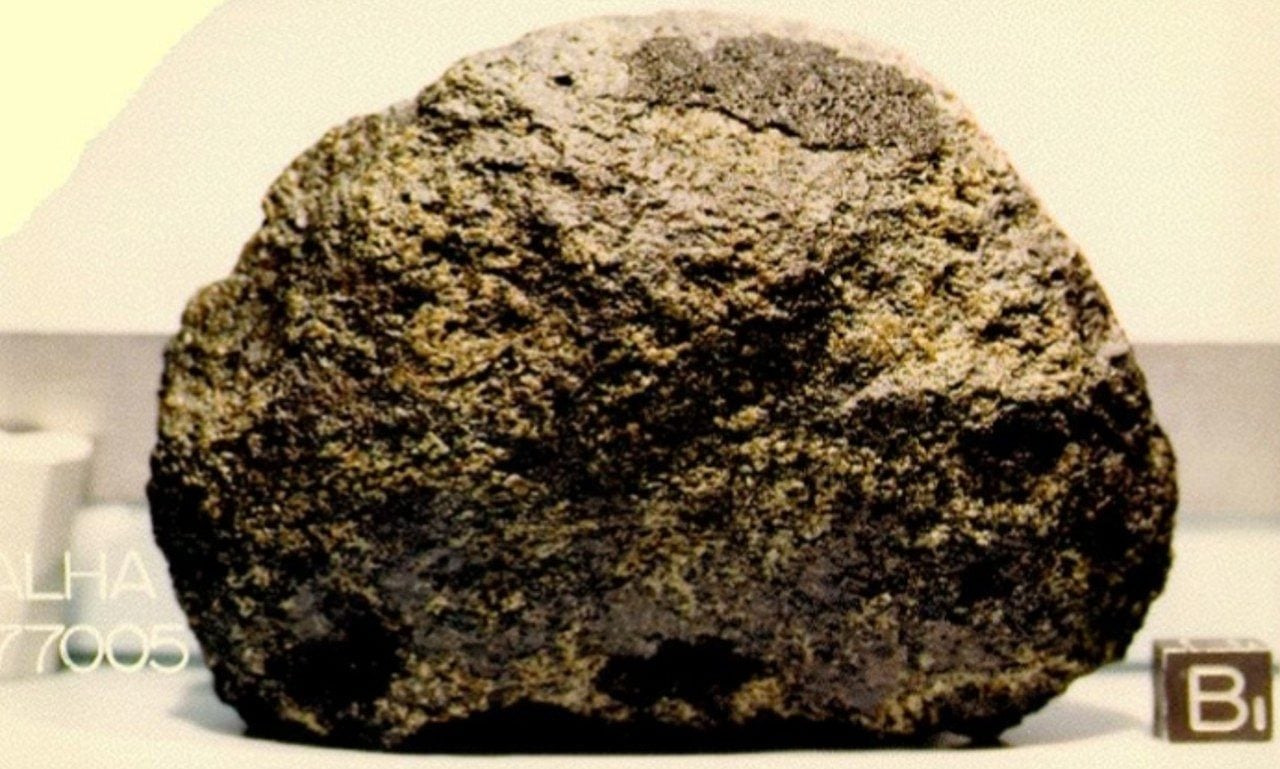
Cientistas of Hungria published a detailed survey that points to the possible existence of primitive biological signatures in a space rock of Martian origin. The analyzed material was collected in the Antártida region more than 40 years ago by polar exploration teams. The research detected internal formations that have direct similarities with the behavior of terrestrial iron-oxidizing bacteria. The find highlights discussions about the red planet’s ability to harbor living organisms in its geological past.
The study focuses on the analysis of the meteorite cataloged as ALH-77005. The rock carries evidence of mineralized microbes and chemical changes that suggest ancient metabolic activity. The discovery moves the international scientific community and revives a historical debate about the search for extraterrestrial life. The data obtained by the Hungarian researchers offers a new perspective on the limits of biology outside Terra and calls for the development of increasingly accurate verification methods in astrobiology laboratories.
Análise structural and space rock investigation levels
The ALH-77005 meteorite was located on the Antarctic continent in the late 1970s. Desde Upon its discovery, the rocky fragment underwent several stages of scientific scrutiny. The Hungria team applied high-resolution optical microscopy techniques and carbon isotope-based dating methods to map the interior of the sample. The results showed morphological patterns that mimic the action of terrestrial microorganisms capable of processing iron to obtain energy.
Para substantiated the biogenicity hypothesis, scientists established a rigorous observation protocol. The methodology divided the analysis of rock characteristics into five distinct verification categories. Essa multi-layer approach serves to reduce the margin of error in the interpretation of data collected by precision equipment.
The characteristics observed in Martian material were classified into the following hierarchical levels:
- Isopic Nível: mapping the distribution and proportion of carbon isotopes.
- Nível elemental: identification of the chemical composition and primary elements.
- Molecular Nível: detection of consolidated complex chemical structures.
- Nível mineral: cataloging the types of minerals formed in rock.
- Textural Nível: evaluation of the physical organization patterns of structures.
The simultaneous correspondence of these five levels with the known biogenicity patterns in Terra strengthened the research group’s thesis. The convergence of information at different scales of observation serves as an indication that the formations are not mere geological coincidences. The study authors compared these signatures with samples from other Martian meteorites and found similarities that reinforce the possibility of past biological activity.
Contexto history and the impact of previous announcements
The investigation into biological traces in rocks from Marte has a history of great public repercussion and academic divisions. The main milestone of this discussion occurred in 1996. The then president of Estados Unidos, Bill Clinton, made an official statement suggesting that NASA had found possible microscopic fossils in another meteorite of Martian origin. The declaration generated an immediate mobilization of resources and attention for astrobiology.
The 1990s announcement exposed the complexity of attesting to the existence of extraterrestrial life. The scientific community was quickly divided after the release of the space agency’s data. A number of experts defended the validity of the morphological evidence presented. Outro group of researchers took a skeptical stance and demonstrated that common chemical processes could create the same shapes observed under the microscope without any biological intervention.
The ALH-77005 meteorite now emerges as the central focus of this ongoing scientific narrative. The material studied by the Hungarians shows an even stricter alignment with terrestrial biological patterns than the rock analyzed in 1996. The evolution of laboratory equipment over the last three decades has allowed much deeper dissection of the samples. The current precision of the instruments provides more robust data, although interpretative caution remains the general rule among research institutes.
NASA’s Posição and the barrier of abiotic processes
NASA maintains active programs to investigate the ancestral habitability of Marte. The American space agency treats the Martian meteorites that fell into Terra as fundamental pieces for understanding the geological evolution of the neighboring planet. Apesar of the relevance of the study on ALH-77005, the institution adopts a reserved stance and avoids endorsing definitive conclusions about the discovery of the Hungria researchers.
The caution of large space agencies has solid technical justifications. The biggest challenge in astrobiology is to differentiate a fossilized biological structure from a mineral formation generated by abiotic processes. Reações Natural chemicals involving carbon, water and iron can crystallize minerals into shapes that perfectly mimic the appearance of bacteria. Esse phenomenon of inorganic mimicry creates an ambiguity that terrestrial laboratories still have difficulty resolving absolutely.
Irrefutable proof of extraterrestrial life requires the complete elimination of any alternative chemical explanation. Muitos Scientists argue that the visual shape of a microscopic structure does not serve as isolated proof of biology. The need to replicate the results of the Hungarian study in independent laboratories is the next mandatory step. Diferentes teams around the world will need to subject ALH-77005 fragments to their own testing protocols to validate or refute initial conclusions.
Implicações for astrobiology and future interplanetary missions
Advances in analysis of the ALH-77005 meteorite directly affect space exploration planning. Confirming that bacteria inhabited Marte billions of years ago would change the paradigms of biology. The existence of life on two planets in the same solar system would indicate that the emergence of microbial organisms is a common process in the universe, depending only on basic environmental conditions to thrive.
The opposite hypothesis also carries great scientific value. If future revisions of the study prove that the meteorite’s structures are the results of non-biological chemical reactions, science will gain a new understanding of Martian geochemistry. Exactly mapping how minerals form and organize themselves in Marte helps calibrate the instruments of exploratory robots currently operating on the planet’s surface.
The next orbital and landing missions scheduled for the current decade are aimed at collecting soil samples directly from Marte. The collected material will be stored and sent to Terra for future return missions. Essas rocks untouched by the terrestrial environment will provide much clearer answers than meteorites, which suffer contamination when entering the atmosphere and remaining in the Antártida ice.
The five-level methodology applied by Hungria scientists establishes an analytical roadmap for the future. Laboratórios from several countries are working on improving mass spectrometry and molecular analysis to deal with the samples that will arrive from Marte. The debate over ALH-77005 drives the technological development necessary for humanity to eventually be able to definitively answer the existence of life outside Terra.
Luís Henrique Costa é jornalista formado pela FMU, editor-chefe e fundador do Mix Vale, portal de notícias em atividade desde 2013. Responde pela direção editorial do veículo, que cobre Brasil e mundo em economia, benefícios sociais, esportes, tecnologia, ciência e entretenimento. Atua na área há mais de 15 anos e lidera uma equipe de cerca de 15 colaboradores.