

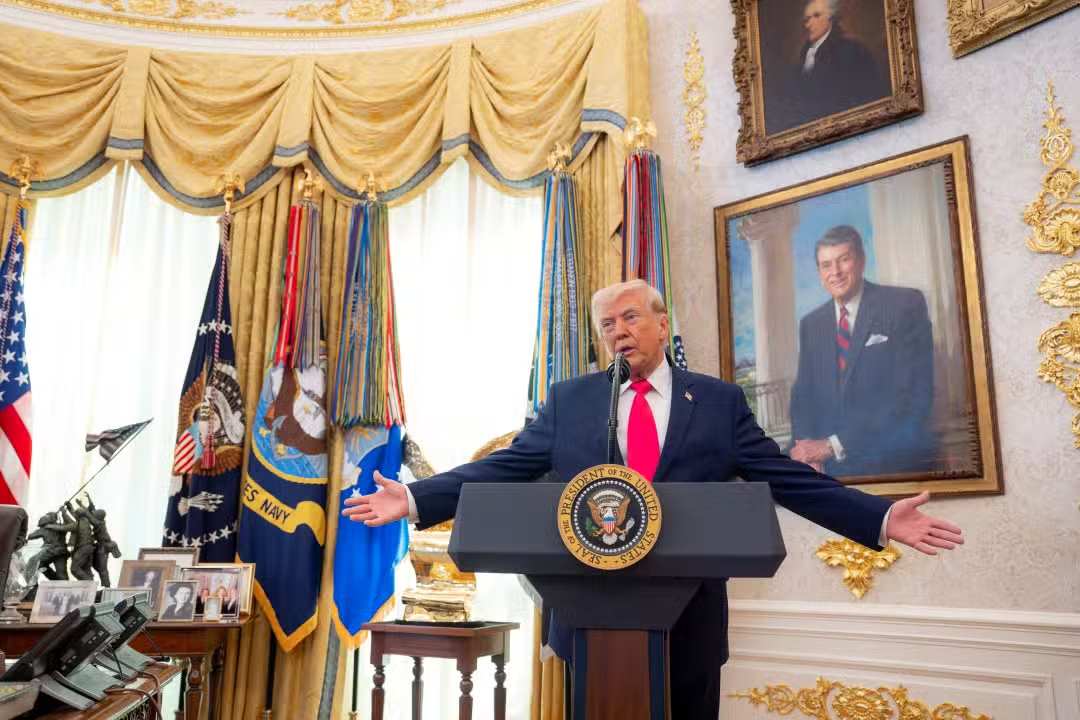
President Donald Trump signed a new executive order on Tuesday directing regulators to require banks to collect more information about their customers’ immigration status. The measure is part of an effort by the administration to restrict the access of undocumented immigrants to the Estados Unidos banking system.
The order mandates a reevaluation of “know your customer” (KYC) rules, traditionally aimed at preventing money laundering and terrorist financing. A person’s immigration status will become an explicit component in the risk assessment that banks carry out on whether a customer is involved in money laundering activities.
Nova guideline redefines risk assessment for institutions
Know your customer (KYC) rules are a set of mandatory guidelines and processes for financial institutions. Elas aim to identify and verify the identity of its customers, understand the nature of their financial activities and assess the associated risk profile. Originalmente, these measures were implemented to protect the global financial system against misuse for money laundering, terrorist financing and other illicit activities.
Trump’s executive order represents a significant change by explicitly introducing immigration status as a mandatory risk factor. Antes, KYC rules focused on aspects such as sources of income, suspicious transactions and financial history. Including immigration status can direct banks to a new layer of due diligence.
Imigração undocumented and access to the financial system
The Trump administration has stepped up efforts to control irregular immigration, and this new executive order reflects this priority in the financial sphere. The administration seeks to limit the ability of individuals without legal status to fully utilize banking services in the country. Esta action aims to prevent resources obtained by illegal means from being moved through the system.
Para many undocumented immigrants, accessing basic banking services is already a considerable challenge. The new guidance could create additional barriers for individuals trying to open accounts or conduct financial transactions. Esta policy aligns with other government initiatives to strengthen border security and monitor the presence of unauthorized immigrants.
Desafios operational and ethical for banks in the country
Implementing this executive order will present several challenges for North American financial institutions. Bancos will have to adapt their compliance systems and operational procedures to collect and verify immigration status. Isso may require significant investments in technology and personnel training. Financial regulators, such as FinCEN and Gabinete Controlador Moeda (OCC), will be responsible for issuing detailed guidance on how banks should proceed.
Adicionalmente, institutions will need to balance new compliance requirements with the need to avoid discriminatory practices. Há concerns that checking immigration status could lead to inadvertent discrimination or the closure of legitimate customer accounts. The banking sector, already highly regulated, will face a new layer of complexity and oversight.
- Banks may have to request a variety of documents or information to meet the new requirements. Estes may include:
- Comprovação valid visa or residence permit.
- Número of Seguro Social (SSN) or Número of Identificação of Contribuinte Individual (ITIN).
- Documentos ID issued by federal agencies.
- Histórico stay in the country.
- Informações about the origin of the funds and their legality.
The future of verification policies and broad impacts
Trump’s executive order could spark intense debates about privacy, financial inclusion, and the role of financial institutions in enforcing immigration policies. Grupos civil rights advocacy and banking associations may express concerns about the practical and ethical implications of the measure. The decision raises questions about the extent to which banks should act as immigration enforcement agents.
In the bigger picture, policy can redefine the boundaries between national security and individual freedoms in the financial context. Discute It is unclear whether the measure will strengthen security or create an environment of distrust and exclusion for large portions of the population. The full impact and extent of application of the order will depend on guidelines to be developed by regulatory bodies in the coming months.