BYD automaker launches 2026 Qin Plus DM-i hybrid sedan with expanded battery and range of more than two thousand kilometers


Chinese manufacturer BYD announced the arrival of the Qin Plus DM-i 2026 sedan to the Asian market in early January. The updated model consolidates the automaker’s strategy in the plug-in hybrid vehicle segment, offering direct improvements in energy storage capacity and overall autonomy. The official presentation detailed the car’s new specifications. The car promises to travel longer distances without the need to run the combustion engine. The vehicle arrives at dealerships with the mission of maintaining the company’s leadership in electrified vehicle sales volume.
The launch takes place at a time of high competitiveness in the global automotive sector. Energy efficiency determines the preference of modern consumers. The new sedan achieves a range of up to 210 kilometers operating exclusively in electric mode, in accordance with CLTC test cycle standards. Quando combined with a full fuel tank, the vehicle surpasses the mark of 2,110 kilometers of total autonomy. The number sets a new level for the category. The strategy seeks to democratize access to cutting-edge technologies with lower maintenance costs.
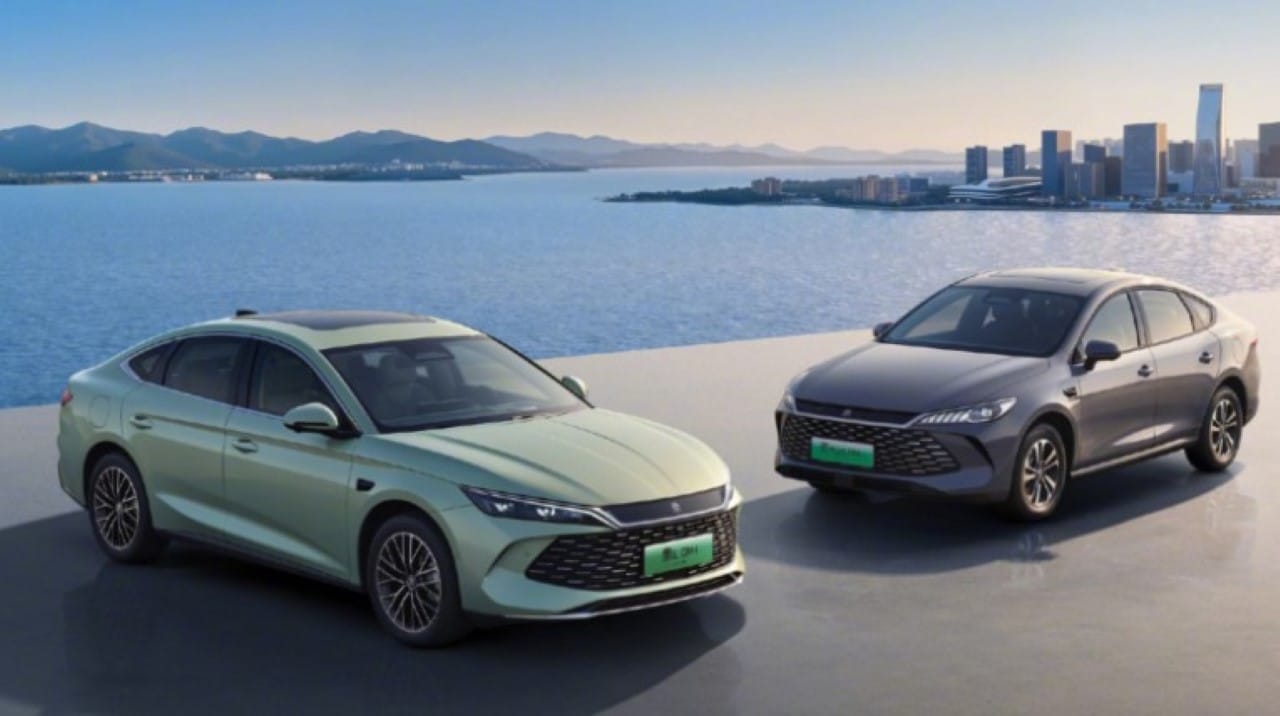
Desempenho and upgraded hybrid system efficiency
The mechanical architecture of the Qin Plus DM-i 2026 is based on the fifth generation of the automaker’s hybrid system. The powertrain integrates a 1.5-liter gasoline engine with a high-efficiency electric drive. The two components were designed to work synchronously. The combustion engine acts mainly as a power generator. The main traction of the wheels is the responsibility of the electrical system. Essa configuration ensures fast throttle responses. The driver experiences a smooth and quiet ride.
The big technical difference of this update lies in the implementation of the Blade LFP battery. The component is recognized for puncture safety and thermal stability. The most complete versions of the sedan receive a battery pack with a capacity of up to 25.28 kWh. The volume is enough to enable 210 kilometers of emission-free range. Essa capacity perfectly meets the daily urban commuting routine of most drivers. The use of the combustion engine is restricted to long journeys or situations with extreme power demands.
The model’s energy efficiency is highlighted in the official consumption figures released by the manufacturer. Mesmo when the battery charge reaches minimum levels, the hybrid system can record a consumption of just 2.79 liters of fuel for every 100 kilometers driven. Esse index represents substantial savings in vehicle operating costs throughout its useful life. Electronic energy management constantly monitors the power flow to optimize the overall performance of the mechanical assembly.
Estrutura pricing and trading positioning on Ásia
The pricing policy adopted by BYD to