
Mercedes driver Kimi Antonelli seeks to correct flaws in starts to lead Formula 1

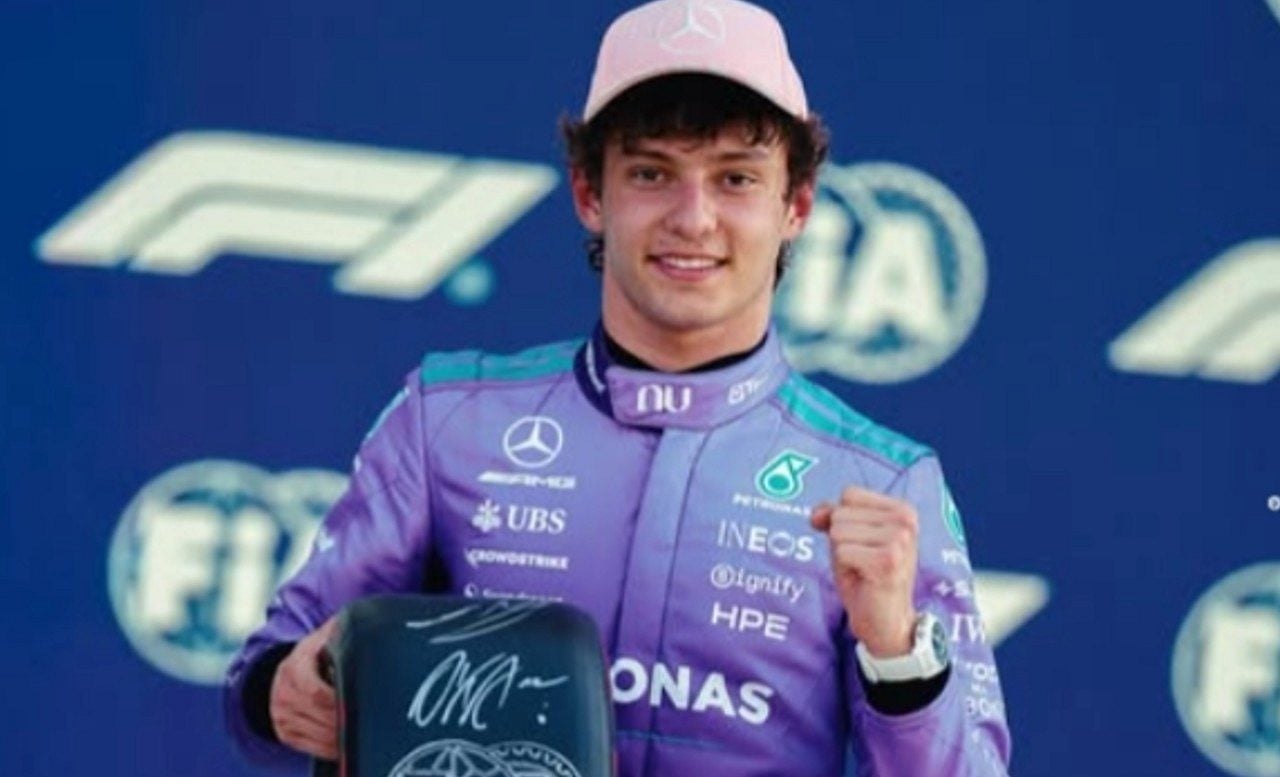
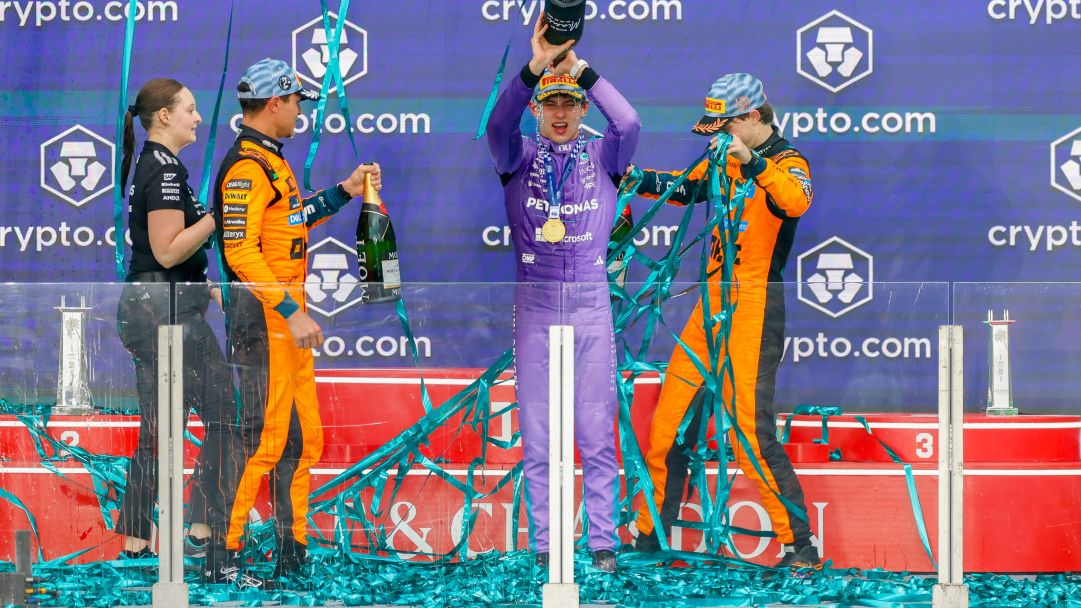
The Italian driver Kimi Antonelli, representative of the Mercedes team, experiences a scenario of striking contrasts during the 2026 Fórmula 1 season. The young competitor, just 19 years old, took first place on the world championship leaderboard with a surprising performance in the qualifying sessions and at the race pace. The European athlete has already recorded three pole positions and reached the highest place on the podium in three of the four main stages held this year. The success on the tracks of the China, Japão and Miami, however, camouflages a severe technical deficiency that affects the performance of the silver car in the initial moments of each race.
The chronic difficulty faced by the championship leader focuses specifically on the starting procedure and traction during the first meters after the red lights go out. Kimi Antonelli has constant problems maintaining the position of honor achieved on Saturdays, allowing direct opponents to immediately approach even before the first corner of the circuits. The lower-than-expected performance compromises the tactical planning of the Mercedes team, which frequently needs to change its pit stop strategy to compensate for time lost in traffic during the opening laps of international competitions.
The impact of initial numbers and direct comparison on the grid
Detailed data from the first laps exposes a worrying situation for the British team Mercedes in the current stage of development of the single-seater. Somadas the four main races on the calendar and the two sprint format races held in China and Miami, Kimi Antonelli accumulated a significant loss of 20 positions. Esse calculation considers the exact difference between the place occupied by the car on the starting grid and the position recorded by the timing system at the end of the first lap. The volume of overtakes suffered at the beginning of the competition requires additional effort from the equipment to recover lost ground throughout the race.
Esse negative statistical index leaves the Italian driver in the penultimate overall position on the starting grid in this specific aspect of performance evaluation. The representative of Mercedes only surpasses the veteran Nico Hulkenberg, driver of the Audi team, who faces even greater difficulties and accumulates a negative balance of 33 lost places at the beginning of the race in the current season. The performance discrepancy becomes evident when engineers compare telemetry data with the other side of the garage. George Russell, Kimi Antonelli’s teammate in Mercedes, lost only four positions in the same period evaluated, demonstrating a slightly better adaptation to the initial procedures.
The loss of positions at the start generates a cascade effect on the aerodynamic behavior and the wear of the rubber compounds supplied to the category. Quando a driver falls into the field, he starts to receive the dirty air generated by the turbulence of the cars ahead. Essa condition reduces downforce, decreases grip in high-speed corners and causes premature overheating of the tire surface. The technical team must constantly monitor the temperatures of the braking system and power unit as the driver attempts to perform overtaking maneuvers to return to the top of the field.
Mudanças in Federação Internacional regulation of Automobilismo
The profound change in technical rules and engine specifications promoted by Federação Internacional from Automobilismo caused severe changes in the dynamic behavior of single-seaters in 2026. The main structural change implemented by the highest motorsport entity was the definitive exclusion of the component known as MGU-H. Essa complex piece recovered thermal energy from cars’ exhaust gases until the end of last year’s championship, converting the heat into electrical energy to power the hybrid system and maintain turbine rotation at ideal levels.
Sem the presence of this technological thermal recovery device, the turbocharger response time increased considerably on the race tracks. Esse unwanted technical effect is called turbo lag in the international motorsport environment, characterized by a noticeable delay between the moment the driver presses the accelerator pedal and the effective delivery of maximum power to the rear wheels. The absence of electrical assistance in the turbine requires a new approach in modulating the accelerator during reacceleration when exiting slow curves and, mainly, at the critical moment of starting with the car stationary.
Pilots need to raise the internal combustion engine’s speed much more aggressively so that the mechanical assembly reaches the ideal operating window before releasing the clutch. Esse calibration process requires more time from competitors lined up on the starting grid before the green light is activated. Para To avoid reliability issues, the Federação Internacional of Automobilismo added an extra five seconds to the standard waiting time after completing the formation lap. The regulatory measure is so that pilots can achieve the necessary speeds in the engines without causing sudden breakdowns in the transmission systems or overheating in the internal components.
The contrast in performance between rival teams
The practical impact of the new engine regulations varies drastically according to the engineering design adopted by each Fórmula 1 team. Ferrari, for example, adopted a different design philosophy and installed a smaller turbocharger in its power block for the 2026 championship race. Como is a direct result of this mechanical efficiency, the Ferrari team has the second best starting performance of the year, with 21 positions gained by its drivers in the initial meters.
Dominance on this particular foundation, however, belongs to a traditional Inglaterra-based team. The Italian team is only behind Williams, which leads the efficiency ranking with 22 places achieved by its pilots at the start of the races. The statistical survey of the first stages of the world calendar highlights the disparity between the power units and the mechanical traction capacity of the different chassis built for the new era of the category.
- Williams: 22 positions gained in the first laps of the races.
- Ferrari: 21 positions gained in the first laps with its new engine design.
- Mercedes: negative balance accumulated with pilots Kimi Antonelli and George Russell.
- Audi: last place in the ranking with a significant negative balance from the German Nico Hulkenberg.
The advantage gained by rival teams in the first seconds of the race completely changes the dynamics of the races. Ganhar starting positions allow Williams and Ferrari drivers to manage race pace in clean air, controlling tire wear more efficiently. Enquanto therefore, cars that lose ground are vulnerable to attacks using the moving wing on the main straights, turning the first laps into an exercise in defending position rather than attacking the leaders.
Mercedes’s search for solutions in the electronic system
Mercedes works hard in its factory to adjust the electronic clutch system provided for Kimi Antonelli’s car. The Italian driver complained about the activation of the device on the steering wheel on two separate occasions this season, reporting an inconsistency in the friction point of the part. Vehicle dynamics engineers thoroughly analyze the telemetry data collected during the Austrália GP, where the European competitor lost five positions immediately after the start and had to perform a grueling recovery race on the street layout.
The team’s technology department seeks to develop alternative software mappings to reduce turbo response time and improve torque delivery to the rear axle. Accurate calibration of electronic systems is essential to ensure that power reaches the asphalt without causing excessive spinning of the rear tires. The team runs constant virtual simulations to find the perfect balance between engine speed and the drivers’ gradual release of the clutch.
Apesar despite the technical adversities faced at the start, the leadership of the drivers’ world championship remains under the control of Kimi Antonelli. The privileged position in the leaderboard is sustained exclusively by his resounding triumphs in China, Japão and Miami after starting in pole position. The superior race pace of the Mercedes model in high-speed sections compensates for the initial losses, but the team recognizes that resolving the problem at the start is vital to guaranteeing the title at the end of the season.





