
Unexpected trajectory of Comet 3I/ATLAS breaks gravitational laws and drives new global research


The international astronomical community has detected a significant anomaly in the orbit of Cometa 3I/ATLAS. The celestial body presents a displacement that diverges from mathematical calculations based on the attraction exerted by Sol and the planets. Telescópios on land and in space have recorded the continuous change in the object’s path over the past few weeks. The discovery requires a detailed analysis of the physical parameters that govern the movement of rock and ice structures in deep space.
The identified deviation compromises the direct application of Terceira Lei of Kepler for this specific case. The proportional relationship between the orbital period and the semi-major axis of the orbit does not correspond to the data captured by observation instruments. Pesquisadores now seek to understand the exact causes of this structural divergence. The phenomenon drives the formulation of new theses about the dynamics of Sistema Solar and the interaction of invisible forces in the space vacuum.
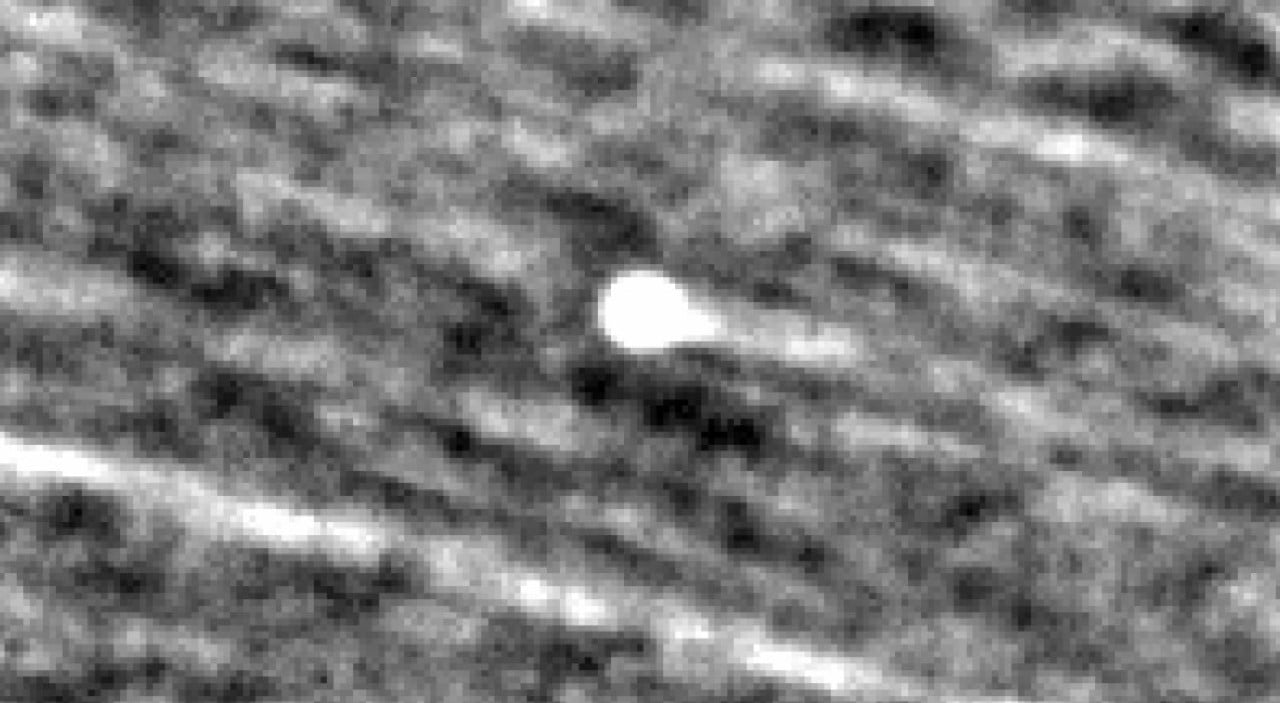
Divergência orbital moves object away from traditional routes
Cometa 3I/ATLAS initially caught the attention of experts due to its above-average luminosity rate for objects of similar proportions. The primary classification placed the body in the category of periodic comets. Essa definition establishes the expectation of a regular and predictable transit around the central star of our system. Astronomers mapped the trajectory based on equations consolidated over centuries of astronomical observation.
Subsequent measurements demonstrated a break in the regularity of the route. The comet began to accelerate and change its angle of inclination independently of the gravitational force of nearby massive bodies. The magnitude of the deviation eliminates the possibility of specific failures in the calibration equipment. Human Erros reading data were also discarded. The precision of modern telescopes confirms that the anomaly belongs to the intrinsic behavior of the celestial object itself.
Gravity acts as the primary force in organizing planetary orbits. The identification of a body that ignores this force generates a turning point in astrophysics. The scenario has changed. The research centers had to discard the initial predictive models created for the Cometa 3I/ATLAS. The need to rewrite the route in real time demonstrates the complexity of the event recorded by space agencies.
Fatores physicists and chemists explain atypical behavior
The absence of a direct gravitational explanation forces the scientific community to investigate alternative propulsion mechanisms. The internal structure of comets houses volatile elements that react intensely to solar radiation. The progressive heating of the surface generates large-scale sublimation processes. Astrophysics teams work with multiple variables to account for the sudden course change.
The researchers established specific lines of investigation to map the forces acting on the celestial body:
- Liberação asymmetric gas jets from the comet’s frozen nucleus.
- Interação directly from the surface with magnetic fields or charged particles of solar plasma.
- Distribuição heterogeneous internal mass with irregular pockets of rock and ice.
- Ação of non-gravitational forces and particles not yet cataloged by modern physics.
The gas release hypothesis emerges as the most well-founded line of research among specialists in space fluid dynamics. The violent ejection of volatile material functions as a natural propulsion engine. Esse mechanism creates a directional thrust capable of overcoming inertia. The object’s cruising speed undergoes direct changes. Confirmation of this theory depends on capturing high-resolution spectroscopic images during the comet’s closest approach.
Impacto on formation theories of early Sistema Solar
The Cometa 3I/ATLAS study goes beyond the isolated analysis of a single wandering celestial body. Comets function as time capsules that preserve the chemical composition of the original solar nebula. Current theories determine that these structures formed in the coldest and most distant regions of the system. Nuvem of Oort and Cinturão of Kuiper house most of these bodies. The structural stability of these objects over billions of years supports models of planetary evolution.
The instability demonstrated by the current object suggests chaotic internal dynamics. The core houses highly reactive elements. Essa mix of materials does not align with the homogeneity expected by scientists. The researchers evaluate the extreme thermal conditions of the system’s genesis. The answer affects our understanding of the distribution of water on rocky planets.
Revision of cometary formation concepts requires a coordinated effort between theorists and observers. Long-term computational modeling needs to incorporate newly discovered variables to simulate Sistema Solar’s past. The comet’s behavior indicates that the boundaries of our system harbor objects with yet unexplored physical characteristics. Cataloging similar anomalies on other celestial bodies becomes a priority for upcoming deep-mapping space missions.
Mobilização global telescope and data processing
Agências space and university consortia have aimed their main observing instruments at the quadrant occupied by Cometa 3I/ATLAS. Telescópio Espacial Hubble and terrestrial radio observatory networks operate together. The objective is to track every millimeter change in the trajectory. The uninterrupted collection of photometric and astrometric data guarantees the construction of a robust information bank. The volume of records requires the use of supercomputers to process coordinates in real time.
Equipes multidisciplinary teams divide the analysis of the information received to accelerate the validation of the proposed hypotheses. Especialistas in thermodynamics evaluate sublimation rates. Físicos theorists calculate the error margins of gravitational interactions. The publication of preliminary results will take place on open access platforms. Cross-referencing data from different observatories eliminates the risk of instrumental bias and consolidates the precision of the findings.
Continuous monitoring of the object will remain active until it passes the line of visibility of ground equipment. The restricted observation window imposes an accelerated pace on image capture and spectrometry work. The data consolidated in this campaign will serve as a basis for the development of new spatial navigation algorithms. The improvement of orbital prediction tools represents a direct technological advancement derived from this deep space-focused scientific investigation.





