
Chery’s new hybrid SUV debuts on the national market with an aggressive price to beat rivals


The Chinese manufacturer Chery confirmed the arrival of the Omoda 4 model on the Brazilian market for the last quarter of 2026. The compact sports utility vehicle features a hybrid engine and will be sold at prices between R$120,000 and R$140,000. The automaker is betting on an aggressive pricing strategy to compete directly with models already established in the country. The segment represents one of the most profitable and disputed parts of the national automotive industry today.
The introduction of this new product changes the competitive dynamics between traditional brands and Asian newcomers. Brazilian consumers show growing interest in electrified vehicles. The cost of acquisition, however, still represents a significant barrier for most buyers. The company’s proposal seeks to fill this commercial gap with a high-volume product. Local production is also part of the strategic planning to enable operations in the national territory in the long term.
Disputa prices with consolidated models in the country
The financial positioning of the Omoda 4 places the vehicle with a numerical advantage over the main competitors in the category. The Fiat Pulse in the Impetus hybrid version requires an outlay of R$151,490 at dealerships. Renault Kardian Iconic presents a price list of R$ 149,990. The Volkswagen Tera Highline costs R$146,190 for the final buyer. The difference in values reaches the R$30,000 mark in some direct market comparisons.
Toyota Corolla Cross operates in a higher range, exceeding R$160 thousand in stores. Essa cost discrepancy forces veteran manufacturers to rethink their profit margins. The arrival of a utility vehicle with electrification technology for a price equivalent to that of combustion cars creates immediate pressure on the sales sector. Rival automakers’ commercial departments will need to adjust equipment packages or offer factory bonuses to maintain the attractiveness of their catalogs.
The strategy of reducing the financial barrier facilitates the technological transition for a larger portion of the population. The mass market tends to respond quickly to price stimuli in categories with a high volume of registrations. Especialistas from the automotive sector observe that brand loyalty loses strength when the monetary difference becomes too significant. Today’s consumer evaluates cost-benefit more rationally during the purchasing journey at dealerships.
Especificações technical and electrified mechanical assembly
The powertrain of the sports utility vehicle integrates a 1.0 three-cylinder turbo engine with an auxiliary electric drive. The combined system power reaches 130 horsepower. The highlight of the technical sheet lies in the maximum torque delivered by the mechanical assembly. The vehicle develops 225 Nm, equivalent to 22.9 kgfm of force. Esse number guarantees the model leadership in traction capacity within its specific market niche.
Superior strength at low revs substantially improves agility in daily urban traffic. The driver notices faster responses when pressing the accelerator pedal when overtaking or speeding up on highways. The car’s load capacity also benefits from this technical characteristic of the electric motor. The full hybrid system operates autonomously, without direct intervention from the driver to manage the energy stored in the car’s batteries.
- Sistema with electrified traction eliminates the need for sockets or external chargers.
- Electronic Módulo manages the switching between the combustion engine and the electric drive.
- Tecnologia focuses on reducing fossil fuel consumption in the urban cycle.
- Proprietário does not need to install charging infrastructure at home.
The full hybrid architecture differs fundamentally from plug-in models available in higher price ranges. The vehicle uses the kinetic energy generated during braking and deceleration to power the electrical accumulators. The combustion engine also acts as a generator at specific moments during driving. Essa independence from external infrastructure eliminates range anxiety, one of the main fears of buyers of electrified cars in the Brasil.
Dimensões bodywork and equipment package
The external structure of the Omoda 4 measures 4.40 meters in total length. Essa dimensions surpass the average of compact utility vehicles currently sold in the Brazilian market. The lengthened wheelbase results in a more spacious cabin for passengers in the rear seat. The volume of the trunk follows the family proposal of the project, offering adequate capacity for long trips. Onboard comfort represents a central selling point for the SUV category.
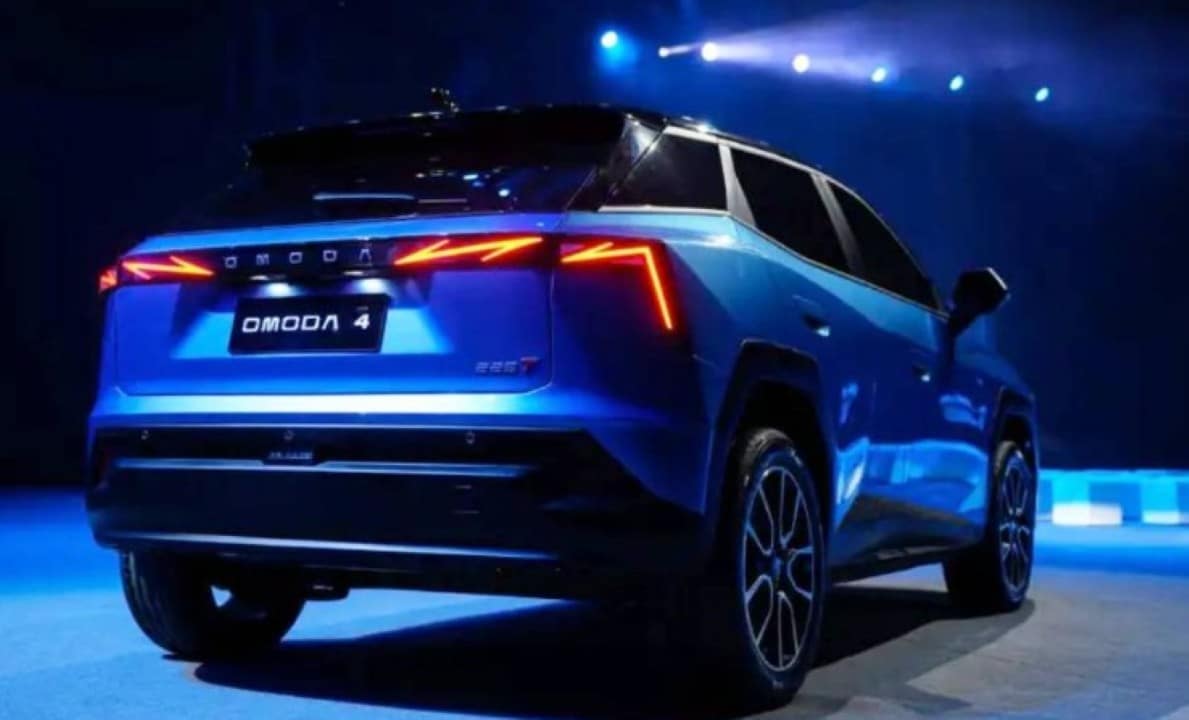
The brand’s styling department sought inspiration in the lines of the Lamborghini Urus to design the body of the new utility vehicle. The front features headlights with LED technology and pointed cutouts that convey visual aggressiveness. The rear has taillights interconnected by a horizontal light bar, an aesthetic feature widely used by contemporary industry. The front panel adopts wide proportions to increase the occupants’ sense of security while traveling.
The cabin features elements of connectivity and convenience required by the modern car consumer. A multimedia center with a vertical screen dominates the central portion of the dashboard, positioned next to the fully digital instrument panel. The top-of-the-line versions receive an electronically activated parking brake and seats with leather upholstery as standard. The internal finishing uses touch-sensitive materials to increase the perception of quality of the final product delivered to the customer.
Nationally assembled Linha and tax impacts
The financial viability of the project directly depends on the manufacturing strategy adopted by the Asian company. The automaker chose the CKD regime, an acronym in English for completely disassembled vehicles, to begin manufacturing operations. The parts arrive imported and final assembly takes place at the JLR factory, located in the municipality of Itatiaia, in the state of Rio and Janeiro. The nationalization of the industrial process drastically reduces the tax burden on consumer goods.
The use of an already established manufacturing complex accelerates the vehicle launch schedule. The brand saves resources that would be used to build its own plant from scratch. The Rio de Janeiro factory has modern machinery and qualified labor for assembling passenger cars. Production in the national territory guarantees access to specific credit lines and government incentive programs for the automotive industry.
The Chery movement consolidates a trend towards Chinese brands taking root in the Brazilian economy. Exclusive dependence on imports makes operations vulnerable to exchange rate fluctuations and international logistics costs. Local manufacturing protects the price list against unforeseen external shocks in the global market. The establishment of a regional supply chain should occur gradually over the next few years of operation.
Transformação from the automotive competitive landscape
The introduction of a hybrid sports utility vehicle priced at R$120,000 changes the level of demand in the national market. Automakers installed in the country for decades will need to accelerate their own electrification programs to avoid losing space. The offer of vehicles equipped only with traditional combustion engines loses appeal compared to more efficient alternatives for the same price. The compact segment serves as the gateway to new automotive technologies in the Brasil.
The gain of scale in the production of electrical components allows for this reduction in prices for the final consumer at dealerships. The savings generated by lower consumption of gasoline or ethanol compensate for the amount invested in purchasing the car in just a few years of daily use. The Brazilian buyer evaluates the total cost of ownership, which includes fueling expenses, periodic maintenance and annual insurance. Energy efficiency has become a decisive factor when choosing a new car.
The fight for market share in the Brasil is entering a phase of intense portfolio renewal by manufacturers. Companies that do not keep up with the pace of launches risk losing commercial relevance quickly in the coming months. The Asian manufacturer’s strategy demonstrates an accurate reading of local demands for accessible innovation. Consumers gain power of choice with the diversification of options available in stores across the country.





