
Chinese manufacturer BYD officially launches the 2026 Qin Plus DM-i hybrid sedan with an electric range of 210 km


Asian manufacturer BYD formally presented the Qin Plus DM-i 2026 model to consumers in the Chinese market in early January. The vehicle consolidates the automaker’s position in the plug-in hybrid automobile segment by introducing substantial upgrades to its performance architecture. The new sedan achieves a range of up to 210 kilometers operating exclusively in electric mode. Measurement follows the rigorous standards established by the CLTC test cycle. The commercial proposal positions the automobile as an affordable alternative. Prices start at 79,800 yuan in the entry-level configuration and reach 99,800 yuan in the most complete variant.
The launch reflects the company’s ongoing strategy to democratize access to large-scale vehicle electrification technologies. With a combined range that exceeds the mark of 2,110 kilometers, the car seeks to serve drivers who require long journeys. The constant dependence on charging infrastructure decreases drastically. The portfolio update comes at a time of intense competition in the Asian automotive sector. Energy efficiency has become the main deciding factor for local buyers.
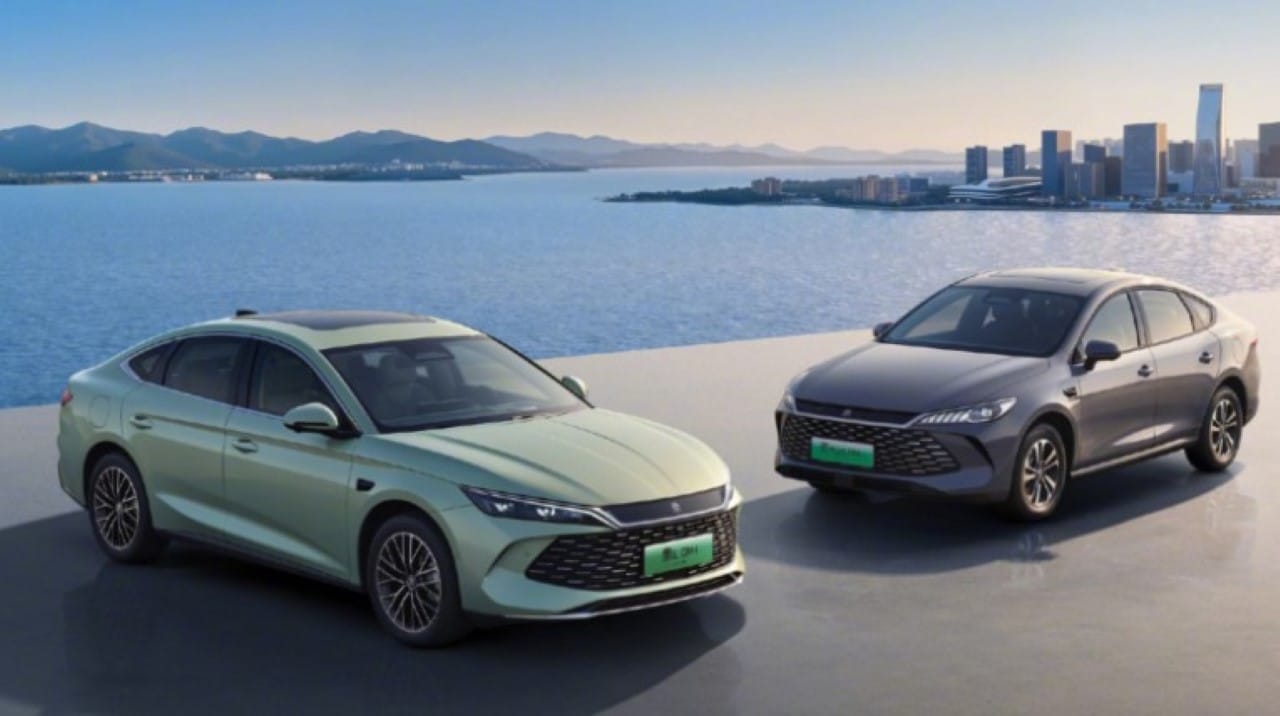
Arquitetura with improved battery and fifth generation engine
The most significant technical advance of the project focuses on the adoption of the Blade LFP battery. The component now offers a storage capacity of up to 25.28 kWh in higher versions. Esse structural element allows a significant jump to 210 kilometers of local emission-free driving. The expansion of energy capacity responds directly to the demands of urban consumers. Eles seek greater daily autonomy. The innovation eliminates the need to activate the combustion engine on routine journeys. LFP technology also guarantees greater thermal stability and safety against accidental punctures.
The efficiency of the mechanical assembly gains special emphasis when the electrical reserve reaches its minimum operating level. Fuel consumption with a discharged battery is just 2.79 liters for every 100 kilometers traveled. Esse index demonstrates the integrated hybrid system’s ability to optimize the use of thermal energy. Operating costs for the owner drop considerably. The environmental impact during prolonged trips is also significantly reduced.
The Qin Plus DM-i 2026 preserves the praised fifth-generation DM-i platform. The architecture combines a 1.5-liter gasoline engine with a high-efficiency electric drive. The combustion block acts predominantly as an energy generator to power the electrical system. The vehicle maintains smooth and responsive dynamic behavior. Avaliações rigorous testing on the CLTC cycle attests to the model’s extended capability. The total range exceeds 2,000 kilometers when the fuel tank is full and the battery is fully charged.
Especificações technical and commercial positioning of the versions
The automaker structured the model’s offering into different equipment levels to cover a diverse customer base. The basic configuration of the sedan delivers 128 kilometers of autonomy in electric mode. The number perfectly meets standard urban commuting needs. The intermediate and top-of-the-line variants concentrate their efforts at the 210 kilometer mark. The driver gains greater flexibility for short intercity trips without using fossil fuel.
The vehicle’s technical data highlights the manufacturer’s focus on maximizing the energy efficiency and durability of the engine’s fundamental components.
- Autonomia electric range of up to 210 kilometers measured by the CLTC cycle.
- Alcance total over 2,110 kilometers with full reservoirs.
- Consumo of 2.79 liters per 100 kilometers in flat battery mode.
- Power Acumulador Blade LFP with up to 25.28 kWh rated capacity.
- Garantia extended structural safety and battery pack longevity.
The price escalation reflects an aggressive market insertion policy. The version called Progressive arrives at dealerships priced at 89,800 yuan. The Superior configuration tops out at 99,800 yuan. Essa strategic pricing allows BYD to maintain robust sales volume. The brand puts pressure on direct competitors that offer vehicles powered exclusively by combustion in the same price range. The Chinese consumer finds an attractive value for money in the transition to hybrid mobility.
Sistemas advanced driving assistance and connectivity
The technological package focused on preventive safety represents another fundamental pillar of the sedan’s update. The level C driving assistance system now appears as standard equipment in the intermediate and upper configurations of the line. Essa electronic suite provides sophisticated features for the driver. Active highway support makes long journeys easier. Automatic parking assist and memory-based navigation optimize frequent urban journeys.
A network of high-precision sensors and monitoring cameras enables L2+ level operations in a wide variety of traffic scenarios. Vital Funções operate in a coordinated manner to mitigate collision risks. Autonomous emergency braking and lane keeping assistant act in real time. The introduction of these devices in a mid-segment model reinforces the trend towards democratization of active safety in the Asian automotive market.
The occupant interaction interface has also received significant improvements through the DiLink entertainment system. The updated platform has touch screens that reach 12.8 inches. The equipment offers fast processing and fluid responses to commands. The set includes voice commands with artificial intelligence and native integration with everyday applications. Controles centrally manages the digital air conditioning and electric front seat adjustments. A premium sound package





