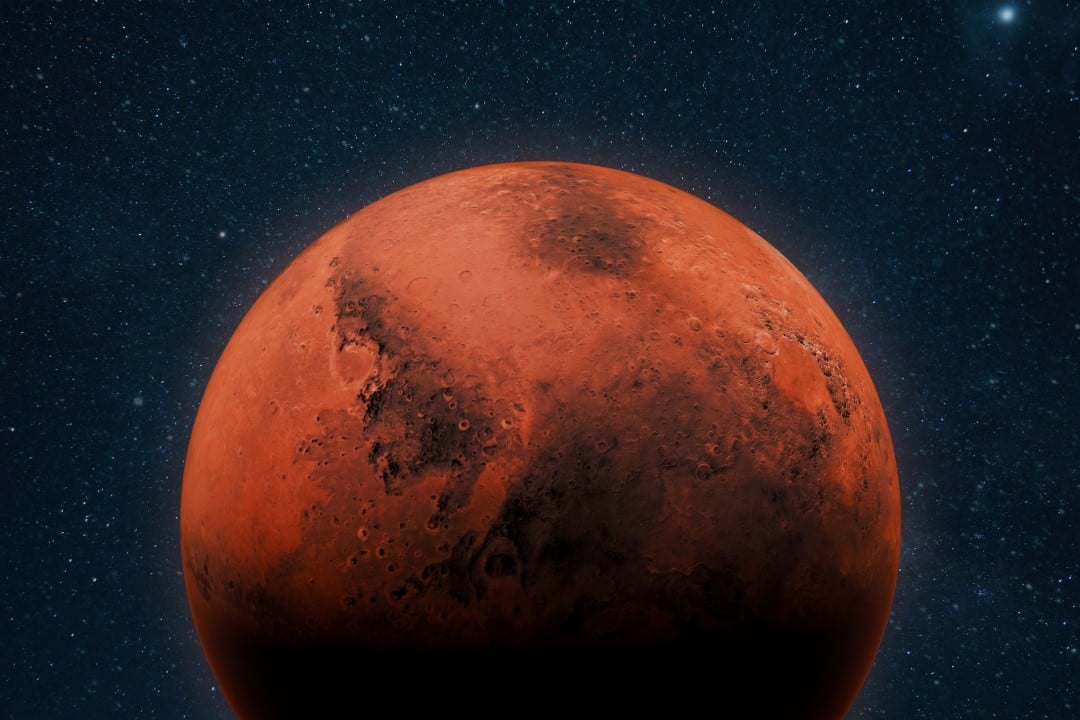
The prospect of establishing permanent colonies outside of Terra raises profound questions about the biological future of our species. The Martian environment presents extreme challenges that are completely different from terrestrial conditions. The reduced gravity and high radiation exposure make for a hostile scenario. Esse set of factors could force a radical adaptation of the human body in the coming decades.
Evolutionary biologist Scott Solomon, researcher at Rice University, explores this transformation in the book Becoming Martian. The work details how prolonged isolation on the red planet would trigger natural processes of evolution. Sem frequent contact with Terra, colonizers would accumulate significant genetic changes. The end result of this geographic distancing would be the emergence of a completely new human lineage.
Impacto straight from microgravity into the physical structure
The red planet has only 38% of the gravitational force we experience daily. Essa drastic difference directly affects the support of the skeleton and the demand on the muscles. Astronautas who spend months on Estação Espacial Internacional already demonstrate accelerated loss of bone mass. The cardiovascular system also undergoes changes to pump blood in an environment with less resistance.
A lifetime under these conditions would generate profound physiological adaptations. Crianças generated and born in the new habitat would grow with bones shaped to support less weight. Bone density would be redistributed throughout the body. The muscles, required in a much milder way, would go through a process of natural atrophy and fiber reconfiguration over time.
The processing of nutrients and the functioning of the immune system would also accompany this physical restructuring. The human body operates based on energy efficiency. Manter dense musculature in a low gravity location represents a waste of biological resources. Natural selection would favor individuals with slimmer body types and adapted to the lightness of the environment.
Cosmic Radiação and the acceleration of genetic mutations
The absence of a global magnetic field and the extremely thin atmosphere leave the Martian surface vulnerable. Níveis very high amounts of solar and cosmic radiation reach the ground constantly. Essa continuous exposure acts as a powerful catalyst for mutations in DNA. The colonizers’ genetic material would undergo changes at a much higher rate than that recorded in Terra.
Mutações genetics represent the raw material of biological evolution. Quando combined with the pressure of a lethal environment, they accelerate the process of natural selection. Traços that guarantee greater cellular resistance to radiation would become an invaluable survival advantage. Indivíduos carriers of these characteristics would be more likely to reach reproductive age.
The lack of a natural biosphere introduces another factor of evolutionary pressure. The human microbiome, made up of trillions of bacteria essential for digestion and immunity, would change drastically.
- Intestinal Microbioma adapts to the restricted diet of agricultural colonies.
- Bactérias’s skin mutates due to confinement in spacesuits.
- Immune Sistema loses contact with common terrestrial pathogens.
- Interações chemicals even alter individuals’ body odor.
Confinement in artificial habitats would limit the diversity of available microorganisms. Essa biological restriction would affect general health and could even influence instinctual mate selection mechanisms. Human biology would come to depend exclusively on the microscopic ecosystem transported and cultivated on space bases.
Geographic Isolamento and the allopatric speciation process
The concept of allopatric speciation explains how new species arise from physical separation. Na Terra, the phenomenon often occurs when populations are isolated on remote islands. Sem gene flow with the mainland, local mutations accumulate independently. The same biological principle would apply on an interplanetary scale.
Durante the first decades of exploration, supply missions would maintain some level of genetic exchange. The constant arrival of new astronauts would mix the colony’s DNA with the terrestrial pattern. However, the ultimate goal of space agencies is to establish fully self-sufficient settlements. An isolated population of approximately 10,000 to 11,000 people would be the ideal number to guarantee initial genetic diversity and avoid genetic drift.
As the centuries passed, dependence on Terra would decrease until it ceased completely. From this breaking point, the two populations would follow different evolutionary paths. The morphological, physiological and cognitive differences would become so pronounced that reproduction between an Earthling and a Martian could become biologically unfeasible. Esse milestone would define the official birth of a new species perfectly adapted to their new world.
Reproductive Desafios and the role of gene editing
The feasibility of safe pregnancies outside of Terra remains one of the greatest mysteries in space science. Experimentos with mammals in microgravity simulators reveals critical flaws in embryonic development. The initial formation of the skeleton, internal organs, and circulatory system depends on physical signals generated by standard gravitational force. Medicine would need to intervene strongly to ensure the success of the first births.
Para To circumvent the barriers imposed by nature, scientists are considering the use of advanced technologies. Gene editing emerges as a potential tool to prepare the human body even before traveling. Alterar DNA to increase bone strength or radiation tolerance would spare generations of adaptive suffering. Essa direct interference would accelerate adaptation, replacing the slow pace of natural evolution with laboratory-designed modifications.
The use of genetic engineering in humans raises complex ethical debates about preserving our biological identity. Modificar the genetic code to make life in space viable means starting speciation artificially. The modern space race, driven by robotic missions and manned exploration projects, makes this discussion increasingly urgent. Humanity’s future beyond the blue planet will require difficult decisions about the limits of biology and technology.