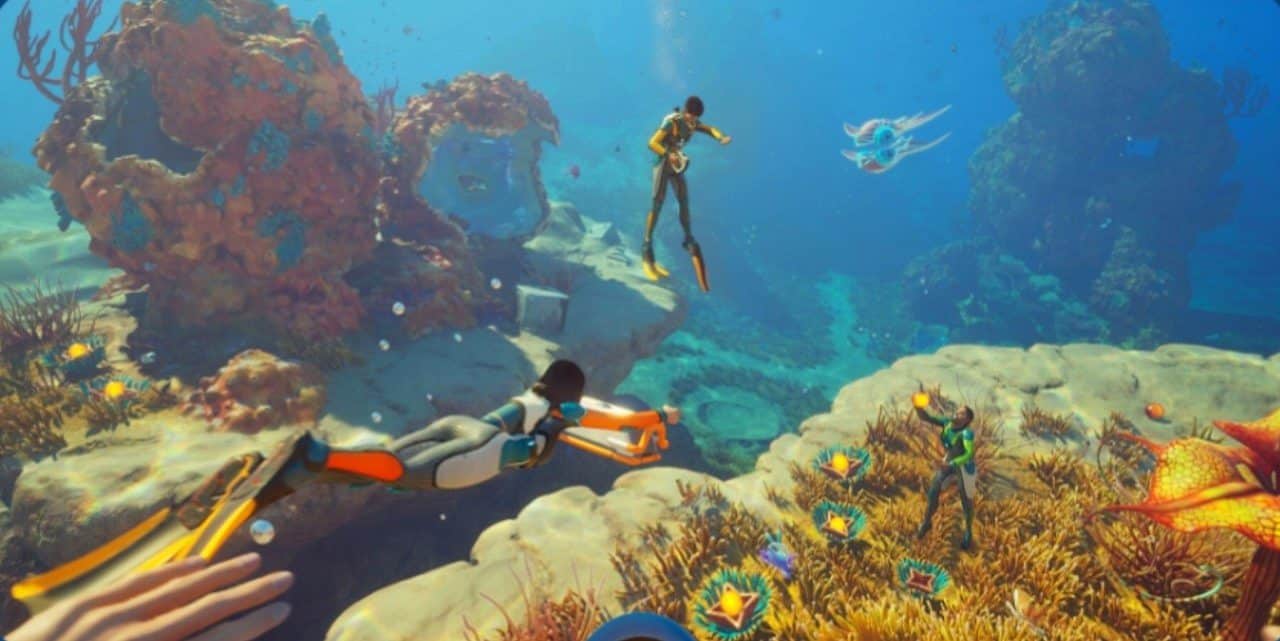
Exploring the alien ocean depths requires tactical preparation and precision in the face of colossal threats. The underwater environment hides gigantic predators that dominate the ecosystem and test the limits of diving technology. Mapping these high-risk areas provides essential information for understanding local biology.
Subnautica 2 players face the challenge of locating and cataloging five leviathans on the planet Zezura during the Acesso Antecipado phase. The title, available for PC via Steam for R$119.99, requires explorers to dive into dangerous biomes to scan these rare creatures and record fundamental data in the system’s encyclopedia. Information collection occurs under imminent risk of death.
Classificação risk and survival mechanics in the alien ocean
The leviathan category defines the most imposing and dangerous life forms that inhabit the open waters of the planet Zezura. The ecosystem is home to both peaceful species and extremely aggressive predators. The hostile animals attack any intruder who invades their hunting territories. The approach to scanning requires rigorous planning, as a calculation error results in the loss of equipment and the failure of the expedition.
The destructive power of these sea monsters poses a constant threat to diving equipment. A direct attack has enough force to destroy the Girino submersible vehicle in a matter of seconds. The pilot is completely vulnerable after the destruction of the transport. Caso the explorer swims unprotected outside the cabin, death occurs instantly when crossing the path of an active predator.
The game’s audio system acts as a vital warning tool for approaching dangers in the depths. The presence of a colossal creature changes the ambient soundtrack, indicating the beginning of a high-intensity confrontation. Immediate recognition of these sound signals allows the player to initiate evasive maneuvers before direct visual contact with the threat.
Mapeamento of the five gigantic species and patrol areas
Subnautica 2’s current biological catalog classifies five leviathan variants, each adapted to specific biomes and with unique behavior patterns. Prior knowledge of the patrol routes and anatomical characteristics of each monster increases the chances of success during data collection missions. Correct identification of the animal dictates the approach strategy.
The official list of colossal creatures present in Acesso Antecipado includes the following specimens cataloged by the developers:
- Leviatã Coletor
- Leviatã-chill
- Macro-jaw
- Asa-funda
- Árvore from Mundo
Leviatã Coletor dominates the region known as Cemitério, a mandatory transition zone for explorers to access new areas of the map. With an anatomy similar to a giant cephalopod or Kraken, the creature emits characteristic sonic pulses before launching a lethal assault. The monster also carries out hunting raids on the Observatório and Cânion of the Raízes, swallowing divers who abandon the safety of the Girino vehicle.
Aggressive Predadores and biological traps in the depths
The borders of the playable map are home to the Leviatã-chill, a ruthless predator that acts as the guardian of the Vazio zone. The species has a complex social structure, where females of gigantic proportions carry smaller males on their fins. The animal has a beak-shaped jaw and bioluminescent organs. Ele aggressively attacks any vehicle that tries to exceed the scene’s limits, swallowing the submersible instantly.
The exploitation of resources comes up against complex natural traps, exemplified by the anatomy of the Macro-jaw. The organism, similar to a colossal shell, houses materials essential for progression, such as Lítio and Gerador of Oxigênio Portátil. The structure rests on the ocean floor, southwest of Cápsula from Sobrevivência. Ela is often camouflaged near areas of metallic debris.
Collecting resources inside the Macro-jaw requires surgical precision to avoid triggering the creature’s defense mechanism. Accidental rupture of the internal tentacles causes the shell to close violently, releasing corrosive toxins into the confined environment. Survival of this event depends on the immediate use of an Bolsa of Ar. The equipment quickly propels the diver to the surface before continued damage causes death.
Espécies peaceful sources of resources for sustaining life
Zezura’s ecosystem also supports colossal life forms that do not exhibit predatory behavior against humans. The Asa-sling travels through ocean currents close to the surface and displays an anatomy that resembles a stingray of gigantic proportions. The lack of aggression allows explorers to swim alongside the creature. Complete scanning occurs without the need for defensive maneuvers or desperate escapes.
Interaction with Asa-funda provides high-value nutritional resources for long journeys of underwater exploration. The creature releases bioluminescent spheres into the ocean, which contain eggs rich in nutrients essential for maintaining vital signs. Players process the Ovos from Asa-slings at the fabricators to cook the Pavlova. Advanced food restores 80 points from Alimento, 70 points from Bebida, and 10 points from Saúde.
Monumental Estruturas and the future of the ecosystem in Xanadu
The abyssal region of Xanadu is home to Árvore of Mundo, classified as the largest living biological entity on the alien planet. The monumental structure rests about 2,400 meters away from Cápsula from Sobrevivência. Access requires a dangerous crossing through waters dominated by the Leviatãs-shiver in the Vazio. Historical records of the Axum civilization indicate the existence of other similar specimens spread across the watery globe.
The integrity of Árvore’s Mundo is compromised by an unknown pathology that threatens to destabilize the entire surrounding biome. The current phase of Acesso Antecipado restricts direct interaction with the biological anomaly. The area is limited to visual observations and preliminary data collection by players. The continued development of the title will expand the investigation mechanics of this sector in the next system updates.