
Federal government releases credit for drivers and automakers confirm vehicles in Move Brasil

In May 2026, the federal government officially created the Move Brasil program, a public policy structured to facilitate the renewal of the national fleet of passenger transport professionals. The initiative allocates an amount of R$30 billion through Banco Nacional of Desenvolvimento Econômico and Social (BNDES), with an exclusive focus on serving taxi drivers, cooperatives and app drivers throughout the national territory. The financial limit established for the acquisition of sustainable zero-kilometer vehicles was set at R$150,000 per unit.
The government measure provoked an immediate response from the automotive sector, which adjusted its portfolios to meet the new market guidelines. The significant reduction in interest rates, which cost half the average charged by traditional financial institutions, boosted the mobilization of manufacturers. Nesse competitive scenario, consolidated brands and new entrants presented their mobility options, aiming to capture a significant share of this professional audience that demands economical and efficient vehicles for daily work on urban roads.
Estratégia of selected manufacturers and vehicles
Fiat adopted an aggressive stance in the market by confirming the inclusion of five of its most sold models in the official list of vehicles eligible for federal financing. The Italian manufacturer structured its offer based on entry-level turboflex configurations. The strategy seeks to deliver a balance between mechanical performance and fuel economy, essential factors for those who use their cars as their main tool for generating daily income.
Professionals registered in the government system will have a variety of the brand’s bodies available, allowing them to choose the model that best adapts to the transport profile carried out in cities. The list of options made available by Fiat covers different segments of the national automotive market:
- Mobi, classified as a subcompact ideal for quick trips.
- Argo, hatchback model that offers versatility in urban traffic.
- Cronos, sedan recognized for its generous volume of trunk space.
- Pulse, compact sports utility vehicle with turboflex engine.
- Fastback, compact sports utility vehicle with a bold design and turboflex engine.
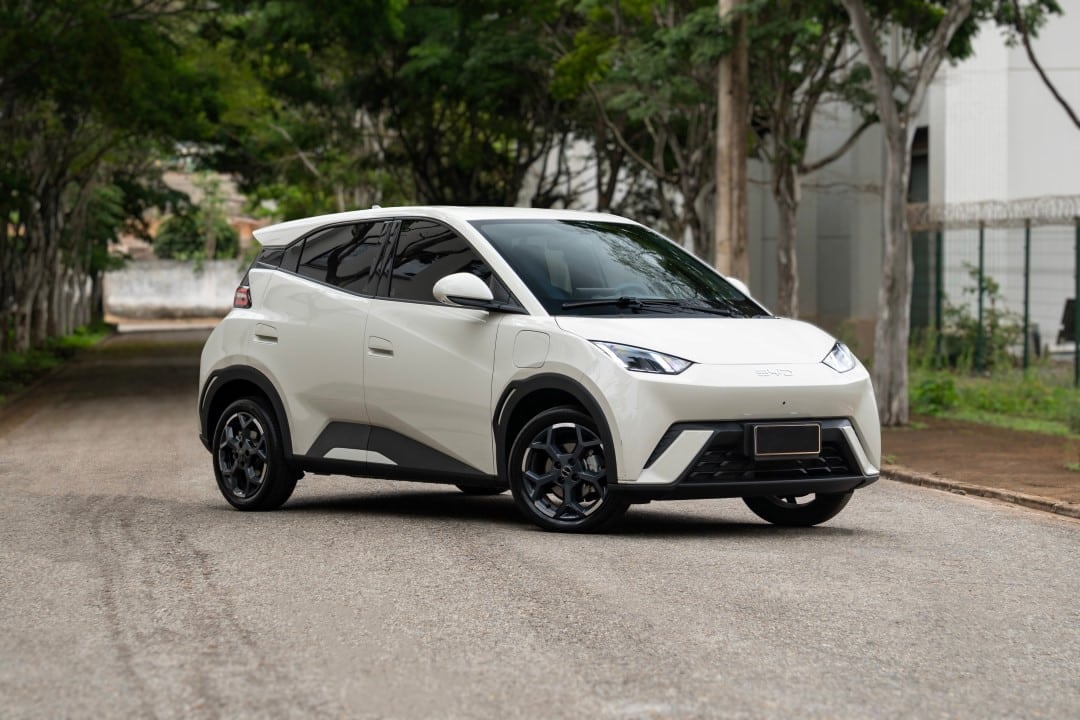
At the same time, BYD also guaranteed its participation in the federal program, focusing exclusively on the fleet’s energy transition. The Chinese giant has introduced two fully electric cars that are highly commercially popular in the country. The traditional BYD Dolphin Mini and BYD Dolphin are part of the options catalog. Ambos models stand out in the market for the large internal space offered to passengers and the reduced cost of recharging per kilometer driven, when compared to vehicles powered by internal combustion.
Condições financial and payment terms
The financial design of the Move Brasil program presents different conditions to facilitate access to automotive credit for self-employed workers. The guidelines establish annual interest rates fixed at 12.6% for men. The percentage represents a cost of 0.99% per month. Para the female public, the government applied an additional reducer, setting the annual rate at 11.5%, resulting in a monthly charge of 0.91%. Essa differentiation seeks to encourage the participation and permanence of women in the passenger transport sector.
Além of subsidized interest rates, the repayment period was extended to provide installments that suit drivers’ cash flow. Financing contracts can be divided into up to 72 months to fully pay off the purchased asset. Para assists in immediate financial planning after purchase, the program offers an initial grace period of six months before the first installment is due. Durante During this period, the driver can now use the new vehicle to generate revenue on the streets.
The structuring of these terms and rates by BNDES reflects an attempt to mitigate the impacts of the natural depreciation of vehicles used in intensive transport services. By ensuring a lower capital cost, the government hopes that professionals will be able to replace old cars with newer, safer models. The fleet renewal takes place without compromising the monthly profitability of operations on digital platforms or at taxi ranks spread across Brazilian municipalities.
Critérios Eligibility and Required Documentation
Access to the resources of the R$30 billion fund requires compliance with strict eligibility rules, designed to ensure that the benefit reaches exclusively to active professionals in the sector. In the case of app drivers, the regulation requires proof of active employment with mobility platforms for at least 12 uninterrupted months. Adicionalmente, the driver must demonstrate the completion of a minimum of 100 trips registered in the system during this one-year period.
Para the category of taxi drivers, the requirements fall on the regularity of the profession with the competent municipal bodies. Interested parties must present an operating license valid in the city where they operate. The professional also needs to prove tax regularity up to date, with no pending issues with Receita Federal or state and municipal finance departments. Strict documentation aims to prevent fraud and misuse of purpose when purchasing vehicles with exemptions and interest subsidized by Estado.
The process of prior data validation is already in operation through the official portal gov.br/movebrasil. Interested workers must access the digital platform, fill out electronic forms and wait for the government to analyze their data. The estimated deadline for returning the candidate’s eligibility is up to five business days. Esta verification step is essential before proceeding with commercial negotiations in stores.
Energy Contracting and Transition Cronograma
With electronic eligibility approval in hand, registered drivers and taxi drivers will be able to begin the second phase of the purchase process. From June 19, 2026, professionals will be able to directly search for partner financial institutions and accredited dealership networks of participating brands, such as Fiat and BYD. Direct contact serves to formalize the choice of the desired vehicle and carry out the final credit analysis with the banks.
Nesta face-to-face stage, the acquisition contracts are signed and the details of delivery of the car to the worker are defined. The federal program imposes restrictions on the propulsion technology of cars financed with public resources. The models selected by buyers must be flex fuel, run 100% on ethanol, have hybrid technology or be fully electric, eliminating options powered exclusively by gasoline or diesel.
Essa technological requirement is aligned with the guidelines of the federal plan to encourage the transition to clean fuels and reduce greenhouse gas emissions in large urban centers. The gradual replacement of the old fleet with more efficient vehicles, such as electric vehicles from BYD and turboflex vehicles from Fiat, represents a step in the modernization of individual passenger transport on the Brasil. The policy combines the category’s economic development with the environmental responsibility required by new global urban mobility standards.



