
James Webb and Hubble Telescopes reveal giant star clusters disperse dust clouds over 5 million years

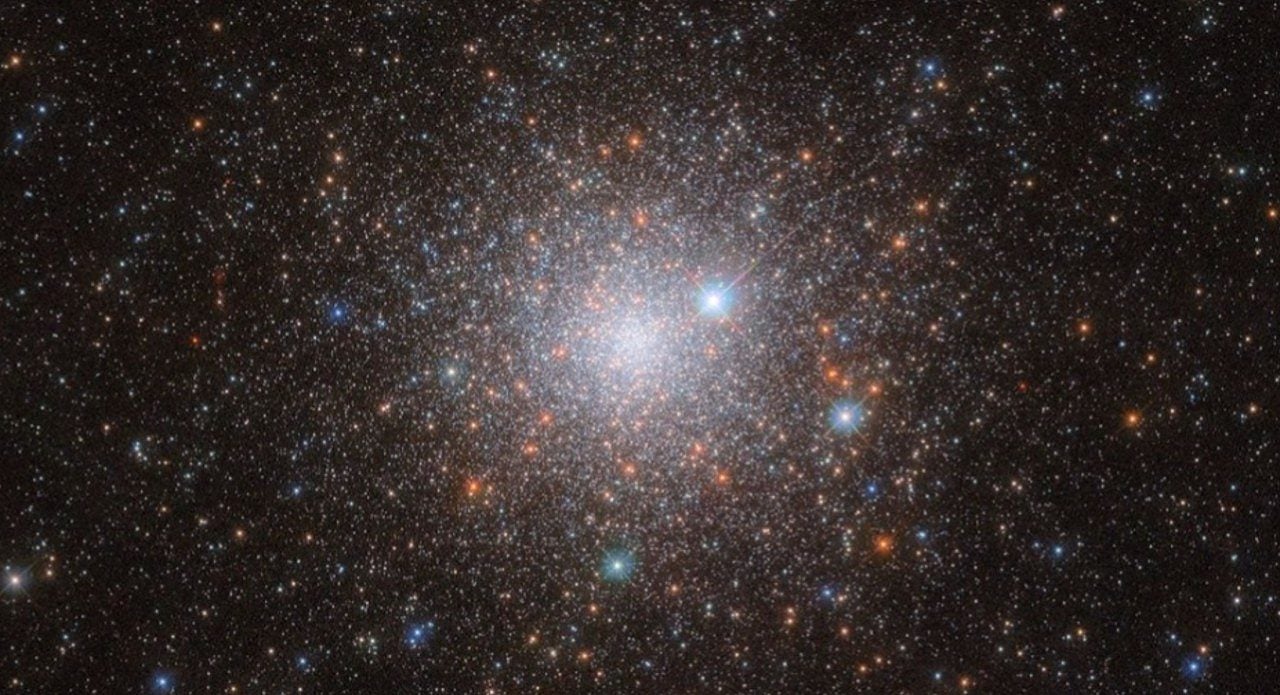
Telescópios spacecraft James Webb and Hubble have revealed an unexpected pattern in the evolution of young star clusters. The data shows that the largest clusters shed their clouds of gas and dust in just 5 million years, a drastically shorter period of time than classical astronomical models predict. The discovery challenges established theories about galaxy formation and reionization of the early universe.
Observação comprehensive 9 thousand clusters
The large-scale survey analyzed almost 9 thousand young star clusters in 4 neighboring galaxies: Messier 51, Messier 83, NGC 628 and NGC 4449. Essas galaxies are at an ideal distance for detailed analysis of individual systems. Mesmo thus allows us to understand large-scale processes that are inaccessible to observations made from within Via Láctea.
The clusters were studied at various stages of formation using two complementary observation strategies. James Webb, with its unprecedented infrared vision, penetrated dense gas clouds that block conventional optical telescopes. Hubble provided unique data in the visible and ultraviolet spectra. The combination of these capabilities has allowed astronomers to map the dispersion of gas and dust with unparalleled precision.
The paradox of stellar cradles
The observations revealed a clear but completely unexpected pattern. Intuitivamente, larger clusters in very dense environments should remain enveloped in gas for much longer. Observational data proved exactly the opposite.
The giant clusters cleared their surroundings completely in about 5 million years. Smaller, lighter Aglomerados took between 7 and 8 million years to shed its gaseous envelope. The difference of 2 to 3 million years represents a critical period in cosmic history.
The reason for this rapid dispersion lies in the properties of massive stars. Aglomerados giants contain supergiants that emit extremely aggressive ultraviolet radiation and generate intense stellar winds. Suas short lives end in spectacular supernova explosions. Toda this colossal energy tears apart the progenitor cloud from the inside out much more effectively than lower-mass stars can do by slowly dispersing the gas.
Implicações for cosmic reionization
Embora a few million years seem like a blink of an eye on the vast scale of the cosmos, this period is critical in the life cycle of massive stars. Quanto sooner a cluster is stripped of its gas, the faster its powerful ionizing radiation reaches the galaxy’s open space.
Esse fact is essential to understanding the era of reionization, a period in the early universe when neutral hydrogen was broken into protons and electrons by intense radiation. The new discovery supports the theory that radiation from early galaxies filled with massive young stars may have been the primary driving force of this era.
If clusters in the early universe cleared their environments in 5 million years instead of 8 million, their radiation escaped into outer space even before the inevitable death of giant stars. Esse’s shorter timeline significantly rewrites the story of how the early universe fundamentally transformed.
Restrições critical for simulation models
The unprecedented new data imposes stringent constraints on computational models of galaxy formation. Anteriormente, it was extremely difficult for computer programs to accurately simulate what is known as stellar feedback, the process by which young stars influence remnant gas and regulate further star formation.
Astronomers now have an accurate cosmic clock derived from direct observations. Até small errors in the time scale can significantly distort estimates of the rate at which new stars form over billions of years. Computer Simulações must be adjusted to reflect these new experimentally determined timings.
Observational Dados impose severe limits on previously poorly understood parameters of numerical models. Computadores must now reconcile theories of galaxy formation with these more stringent space-derived constraints.
Consequências for planetary formation
Essa’s discovery also has direct implications for the formation of planets in dense clusters. Jovens stars are often surrounded by protoplanetary disks composed of gas and dust that fuel planetary growth.
Early disruption of a gas cloud instantly exposes these vulnerable disks to harsh ultraviolet radiation from neighboring giant stars. Esse hostile environment drastically reduces the time available for formation of fully developed planets in dense star clusters.
Aglomerados giantsWith rapid destruction of gaseous envelopes:
- Reduzem the duration of the planetary formation phase
- Expõem protoplanetary disks to intense ultraviolet radiation
- Limitam the amount of material available for planetary growth
- Afetam the final composition of planetary systems
- Alteram the frequency of formation of viable planets
Perspectivas future research
Cientistas now plans to expand the scope of observations, focusing on dwarf galaxies. Essas galaxies offer different environments and scales to test initial findings in new contexts.
James Webb will continue to provide crucial infrared data on obscured star systems. Hubble will remain observing in visible and ultraviolet wavelengths. Futuros space telescopes will further expand understanding of these fundamental processes.
Combining new observational data with improved computer simulations promises to reveal more details about how early galaxies shaped the universe we observe today.



