
Long March 2F rocket launches Shenzhou 23 mission with first astronaut from Hong Kong to Tiangong station

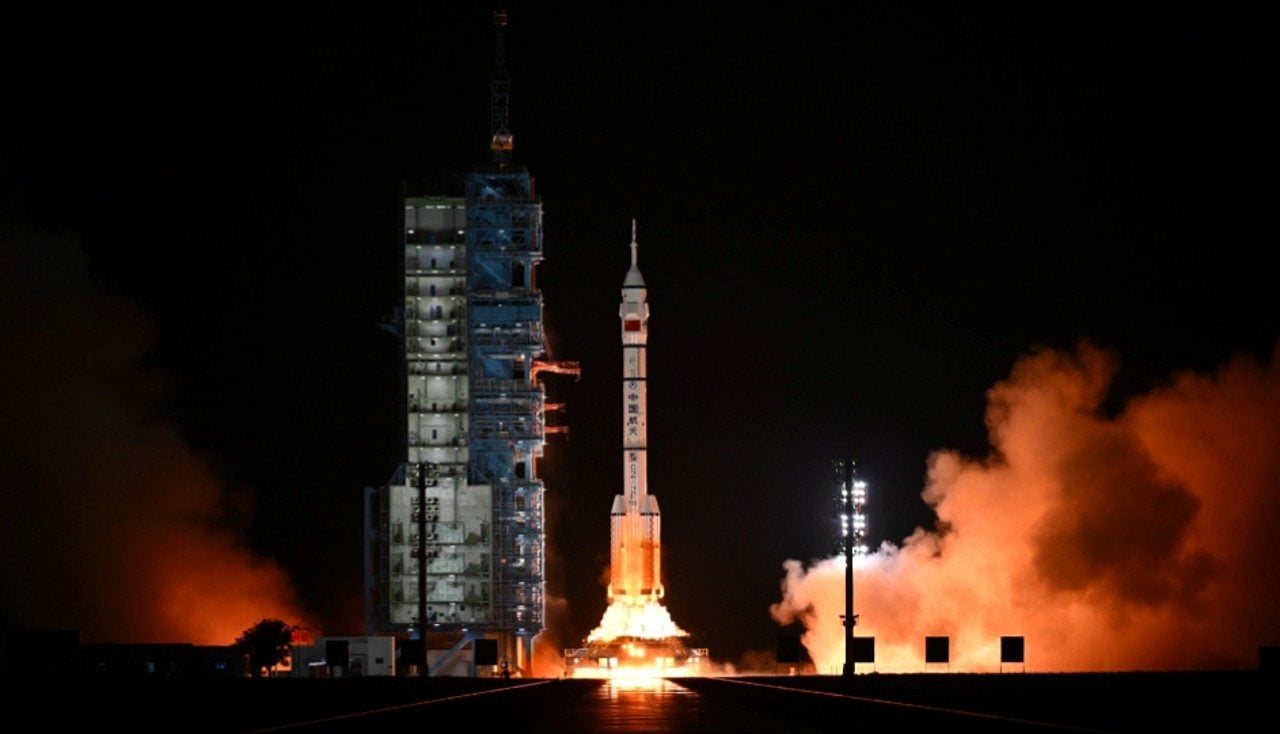
China launched the Shenzhou 23 mission this Sunday, sending three astronauts to the Tiangong space station. The Long March 2F rocket, a 62-meter-high piece of equipment, took off from the platform of Centro, Lançamento, Satélites, and Jiuquan. The military installation is located in the arid region of Deserto of Gobi. The ignition of the engines occurred at exactly 11:08 am, considering the time zone of Brasília. The crew assigned to this expedition is commanded by officer Zhu Yangzhu. The group also includes pilot Zhang Zhiyuan and cargo specialist Lai Ka-ying.
The spaceflight sets a historic milestone for the Chinese aerospace program by including Hong Kong’s first natural astronaut. The team will remain in the orbital complex for an initial period of six months to conduct scientific experiments and maintain the structure’s daily operations. The arrival of the new crew sets the stage for a taikonaut’s first year-long uninterrupted stay in space. The schedule of in-orbit activities requires technical precision to ensure a safe transition between the teams inhabiting the installation.
🚀[Breaking] China launched the Shenzhou XXIII crewed spacecraft on Sunday, sending three astronauts toward the @CNSpaceStation.
👨🚀👨🚀👩🚀The spacecraft blasted into the night sky aboard a Long March 2F rocket from the Jiuquan Satellite Launch Center at 11:08 pm Beijing Time.… pic.twitter.com/B9ZQ5dBeqB
— Chinese Space Station (@CNSpaceStation) May 24, 2026
Resgate orbital and Shenzhou 21 mission extension
The docking of the new spacecraft marks the end of a complex operational cycle for the current crew of the Tiangong station. Astronauts Zhang Lu, Wu Fei and Zhang Hongzhang, members of the Shenzhou 21 mission, had their time in orbit extended. The change occurred due to unforeseen technical circumstances in the transport equipment. The trio’s return to the surface of Terra is definitively scheduled for May 29th.
The delay in the original six-month schedule occurred after the Shenzhou 20 spacecraft suffered structural damage. The damage was caused by the impact of space debris during operation in orbit. Para ensure the absolute safety of the team, the China space agency sent the Shenzhou 22 spacecraft on an emergency basis and without crew on board. The vehicle acts as a rescue capsule attached to the station and will be used exclusively to bring the three astronauts back safely.
The contingency maneuver demonstrated the rapid response capacity of the Asian country’s launch infrastructure. Readiness to dispatch a replacement spacecraft on short notice requires precise coordination between ground teams and orbital monitoring systems. The sending of rescue equipment avoided additional risks during re-entry into the Earth’s atmosphere.
Planejamento for first long-duration flight
The current expedition introduces a significant change in the crew rotation pattern of the Chinese space program. One of the three newly arrived members of Shenzhou 23 will not return to Terra after the regulatory six months. The professional will remain in space to complete a continuous 12-month cycle. The responsible authorities have not yet officially confirmed which of the three astronauts will carry out the extended mission.
The feasibility of this prolonged stay directly depends on the schedule of future launches and transport logistics. Later this year, the Shenzhou 24 spacecraft will travel to the Tiangong station. The vehicle will transport an Paquistão astronaut for a short-duration mission. Durante this international visit, a strategic crew exchange will take place in the orbital complex.
The Pakistani visitor will return to Terra occupying the seat of one of the members of Shenzhou 23. Enquanto therefore, the selected Chinese astronaut will continue on board the station to reach the mark of one year in space. The experiment will provide essential medical and physiological data. Scientists will evaluate the behavior of the human body, the loss of muscle mass and bone density under the prolonged effects of microgravity.
Especificações supply techniques and logistics
Maintaining a continuous human presence in space requires a rigorous logistics chain and constant shipments of supplies. Semanas Prior to crewed launch, station Tiangong received a critical payload to support expanded operations. The Tianzhou 10 cargo ship docked with the orbital complex on May 11.
The resupply vehicle delivered approximately seven tons of materials essential for the crew’s survival and work. The space logistics operation guaranteed the delivery of the following priority items:
- Alimentos dehydrated and drinking water reserves for the next months of operation.
- Sistemas electrolysis system for continuous generation of breathable oxygen within the modules.
- Equipamentos of maintenance and spare parts for the station’s vital systems.
- Instrumentos scientific designed for new experiments in a microgravity environment.
The Long March 2F rocket has a track record of reliability in the manned space program. The launch from Centro of Lançamento of Satélites of Jiuquan occurred within the ideal weather window. The accuracy of the trajectory calculations guaranteed the correct orbital insertion of the Shenzhou 23 spacecraft, allowing the gradual approach and safe docking with the station’s main structure.
Evolução of the orbital complex and international partnerships
The current expedition configures the eleventh manned mission directed to the Tiangong station since the beginning of its assembly in space. Construction of the outpost began in June 2021 with the launch of the Tianhe core module. Logo followed by the arrival of the Shenzhou 12 crew. The Shenzhou 13 and Shenzhou 14 missions were essential for the addition and connection of adjacent scientific laboratories.
The three-module structure reached its final configuration at the end of 2022. The complex has been operating at full capacity since assembly was completed. The inclusion of Lai Ka-ying, a native of Hong Kong, highlights a transition in China’s spatial policy. The program now integrates regional representatives into its routine operations, expanding the scope of astronaut selection beyond the continental territory.
The future participation of an Paquistão astronaut reinforces the program’s international cooperation strategy. The opening of orbital infrastructure for joint missions strengthens the country’s position on the global aerospace scene. The ability to maintain continuous staffing and manage crises in orbit consolidates the Tiangong station as a permanent, self-sufficient research laboratory outside the Earth’s atmosphere. Operations control continues to be monitored uninterruptedly by ground command bases.



