
Playground Games revamps abandoned car and treasure system in the new Forza Horizon 6


Playground Games decided to completely restructure the vehicle exploration and collection dynamics in the long-awaited Forza Horizon 6. The traditional abandoned car system, widely known to long-time players, has undergone a profound overhaul for the new edition of the racing franchise. The developer changed the way users interact with the map and discover rare models hidden throughout the scenes. The change directly affects the progression of the main campaign and the rate of acquisition of new machines.
The studio’s strategy aims to modernize the search experience and avoid repeating exhaustive mechanics seen in previous titles. The game’s map now houses two distinct categories of hidden vehicles, requiring completely different approaches to location and rescue. One part of the system maintains the classic focus on restoring old and weathered automobiles. The other segment introduces a treasure hunt focused on modern and modified cars, ready for immediate use on high-speed virtual tracks.
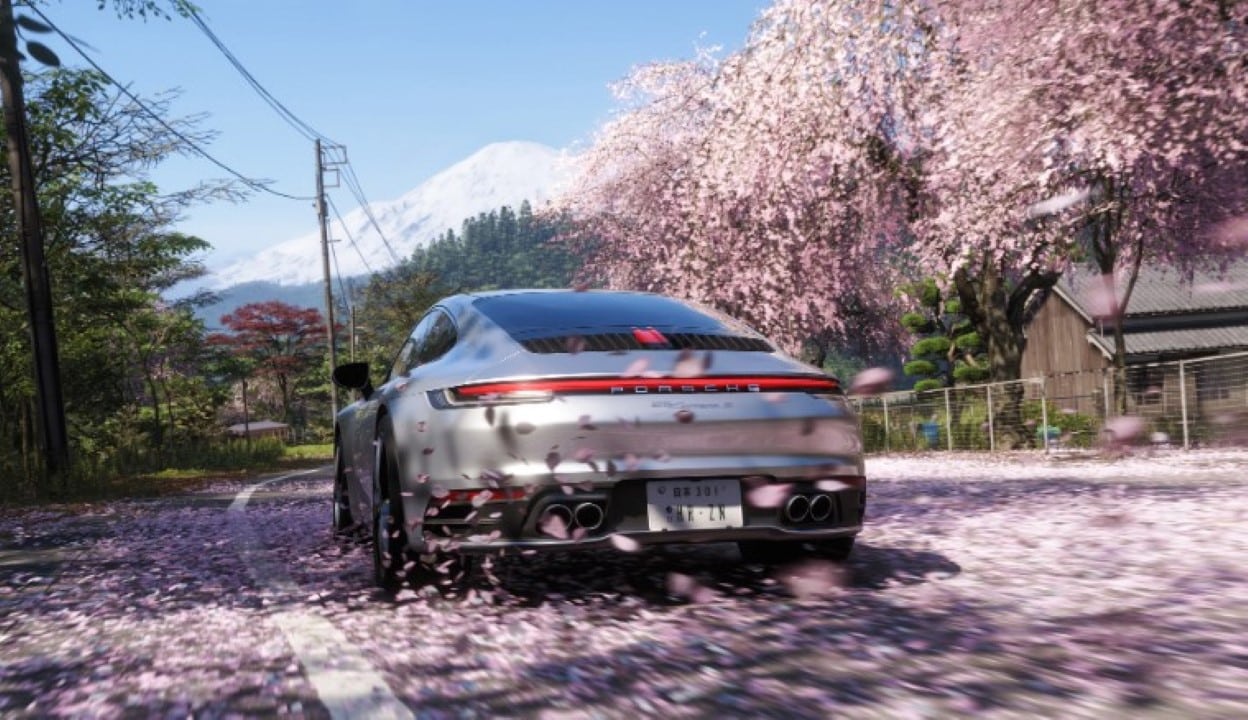
Revamped Mecânica changes the search for classic vehicles on the map
The developers maintained the concept of mystery surrounding the classic models lost across the map. The player continues to receive hints and rumors through the game’s radio stations, which indicate an approximate search area after the completion of certain events. Exploration requires attention to the details of the environment to find barns hidden among trees or rural buildings. The location process requires patience and careful observation of terrain irregularities. The structure of old warehouses protects the vehicles from the direct action of the weather, but the cars still need extensive mechanical and visual repairs.
Após finds a classic vehicle, the player cannot immediately use it in official races or free exploration. The car is automatically sent to the campaign’s central workshop, where it undergoes a detailed restoration process led by the game’s characters. The time required to complete the repair varies drastically depending on the rarity of the model and the initial state of conservation of the bodywork and engine. The mechanics simulate the real and time-consuming work of recovering old cars found in warehouses.
Users have the option to speed up this restoration process using virtual credits obtained during races and championships. Payment of the fee stipulated by the game instantly releases the vehicle to the driver’s garage. Jogadores veterans, however, usually wait for the natural processing time to save financial resources and invest in other areas. The gradual release of these classic cars occurs organically as you progress through the main story missions and discover new festivals.
Veículos Treasury Offers Immediate Competitive Advantage
The main new feature implemented by Playground Games is the introduction of treasure cars. Esses vehicles represent an unprecedented category of high-value rewards spread across the vast map of Forza Horizon 6. Diferente from rusty and inoperable classics, these models are modern cars, previously modified and equipped with high-performance parts. Eles are hidden in hard-to-reach places, such as abandoned industrial complexes, narrow alleys, or dense forest areas far from main highways.
Encontrar one of these treasure cars activates a dynamic event at the exact moment the player discovers it. The user immediately takes the wheel of the vehicle and must complete an escape challenge or plot a high-speed route to a safe point. Successful completion of this initial testing stage guarantees permanent ownership of the luxury automobile. Não there is no need to go through workshops or wait long restoration periods. The car enters the user’s collection with all factory improvements and aerodynamic adjustments intact.
Essa new mechanic provides a considerable tactical advantage for competitors in the early stages of the campaign. Treasure cars have high attributes of maximum speed, acceleration and handling, serving as crucial tools for specific advanced difficulty events. The location of these vehicles is fixed in the scenario from the first minute of play. The system directly rewards players who dedicate time to thoroughly exploring the map rather than focusing solely on closed-course races.
Diferenças strategies between the two exploration categories
The production team established clear visual and practical distinctions between the icons and objectives of each type of search on the global map. Separation helps the player plan his exploration routes according to the immediate need for his garage. The abandoned car system appeals strongly to the nostalgia factor and the construction of a historic automobile collection. Treasure hunting focuses on immediate action and gaining raw performance to overcome difficult opponents.
The technical characteristics that separate the two collection modalities define the rhythm of vehicle progression during the journey:
- Release time for classic models depends on hours of gameplay for complete restoration in the mechanic shop.
- Treasure vehicles enter the player’s garage at the exact moment the discovery challenge is successfully completed.
- The activation of ancient searches depends strictly on radio rumors, while modern cars can be found by free exploration at any time.
- The physical condition of the classics shows accumulated rust and dust, contrasting with the clean bodywork and perfectly tuned engines of the treasures.
- The usefulness of older models focuses on exhibition events and tours, while new cars are used for high-level competitions and record breaking.
The gaming community usually maps these locations quickly after the title’s official launch on the market. Sharing exact coordinates and navigation tips on forums makes life easier for users looking to complete their garage in less time. The developer plans to add new quest points and new vehicles through future seasonal updates, keeping the map dynamic and appealing to the fan base for many months to come.
Motor updated chart boosts technical performance
The development of Forza Horizon 6 uses a vastly improved version of the ForzaTech graphics engine. Playground Games’s proprietary technology allows the creation of scenarios with a level of visual detail much higher than previous games in the series. The art team used real photogrammetry data captured via satellite and drones to recreate soil textures, vegetation density and building architecture with millimeter precision. The global lighting system reacts realistically and in real time to the dynamic weather changes present in the racing environment.
The title hits the market with native and optimized support for next-generation consoles and high-performance computers. Global publication is the responsibility of Xbox Game Studios, ensuring full integration with the company’s service ecosystem. Players equipped with the Xbox Series X experience the game in native 4K resolution, with the option to switch between two distinct graphics modes. The user can prioritize extreme visual quality locked at 30 frames per second or choose fluid performance mode focused at 60 frames per second. The Xbox Series S receives a version specifically tuned for its more compact hardware architecture.
The sound part of the game received full and native support for Dolby Atmos technology. Three-dimensional spatial audio allows competitors to identify the exact approach of opposing vehicles just by varying the sound of the engine and the friction of the tires on the asphalt. The platform’s cloud save system synchronizes the player’s progress between desktop consoles and PC completely automatically and transparently. The use of solid-state storage drives eliminates long loading screens, maintaining continuous immersion during transitions between free-roaming the map and starting official races.



