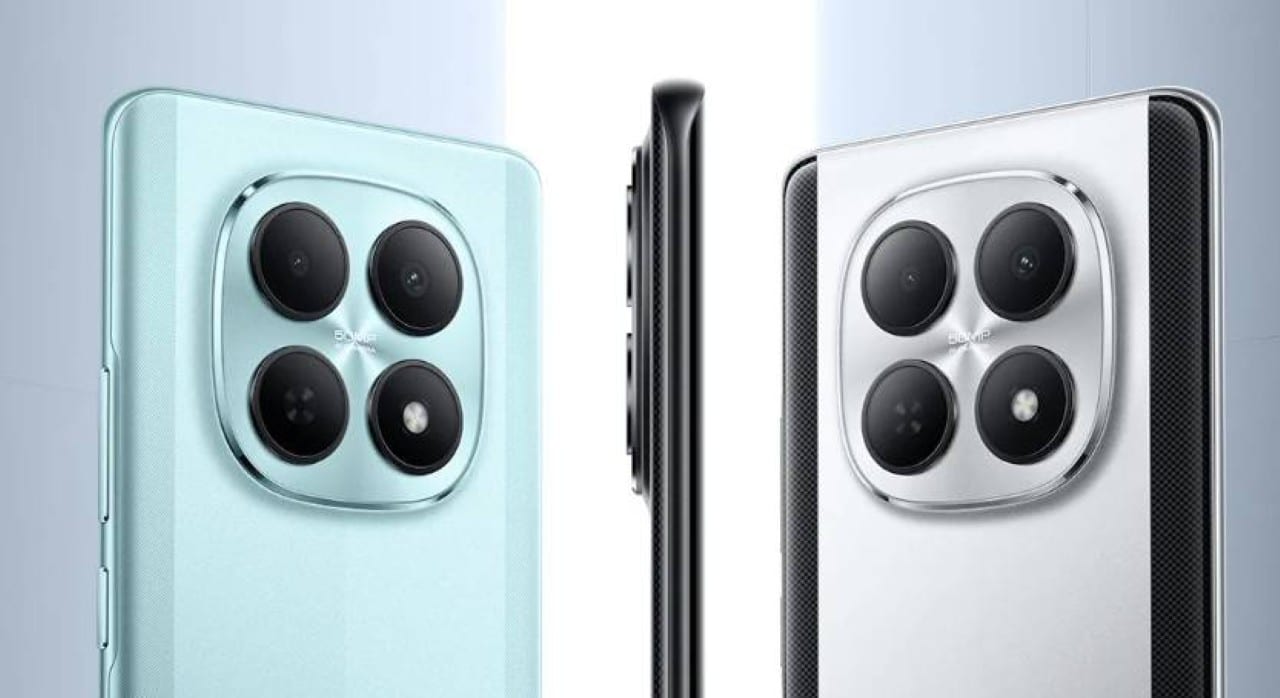
The manufacturer Xiaomi has consolidated two major options in the premium mid-range smartphone segment with the POCO M8 Pro, officially launched in January 2026, and the POCO Choosing between devices requires attention to processing details, power capacity, video capture quality, and physical resistance against external elements.
The current mobile phone market demands extreme versatility from equipment in this price range. Consumidores evaluates cost-benefit based on operating system longevity and high-end heavy gaming support. Both versions deliver robust RAM and internal storage configurations, leveling the basic daily use experience. The final decision rests on which specific feature best suits the routine of each user profile.
Desempenho and hardware define the focus of each smartphone
The POCO X7 Pro houses the Dimensity 8400 Ultra processor, manufactured by MediaTek. The chip reaches a maximum clock rate of 3.25 GHz on the main processing core. Essa architecture ensures a clear advantage in performing complex multitasking, rendering videos and opening demanding applications. Testes benchmarks, like the popular AnTuTu, record scores of over 1.7 million for this specific model. The constant fluidity in games with graphics configured at maximum is one of the main attractions of the embedded hardware.
The POCO M8 Pro relies on the Snapdragon 7s Gen 4 processor, developed by Qualcomm, operating at frequencies of up to 2.7 GHz. The chip is efficient. The component handles everyday activities, web browsing and supports the complete Play Store catalog with extreme agility without noticeable hiccups. The manufacturers equipped both cell phones with generous options of 8 GB or 12 GB of RAM. Não MicroSD card is supported. The internal storage follows the market standard, offering 256 GB or 512 GB variants, requiring precision in the choice at the time of purchase.
Telas AMOLED and water resistance certifications
Visual quality maintains a high standard in both design builds. The M8 Pro features a 6.83-inch AMOLED panel with a sharp resolution of 1280 x 2772 pixels and a density of 447 ppi. The X7 Pro features a slightly more compact display, measuring 6.67 inches, with a resolution of 1220 x 2712 pixels and 446 ppi. Both displays operate at a dynamic refresh rate of 120 Hz, providing smooth interface transitions. Peak brightness reaches an impressive 3,200 nits, making text easy to read in bright, direct sunlight.
Media playback features advanced image enhancement and biometric security technologies. The devices offer the following built-in features:
- Suporte native to the HDR10+ standard for greater contrast in dark scenes.
- Certificação Dolby Vision enabled on supported streaming platforms.
- Optical fingerprint Leitor built under the main screen.
Physical durability presents important distinctions for adventurous or clumsy users. The M8 Pro uses Gorilla Glass Victus 2 glass on the front and boasts the rigorous IP69K certification, allowing submersion in up to 1.5 meters of water for 30 minutes and resistance to high pressure jets. The X7 Pro adopts the Gorilla Glass 7i and industry standard IP68 protection. The older model weighs 195 grams and has an exclusive version with a vegan leather finish, while the 2026 launch weighs 206 grams with a rear made entirely of resistant plastic.
Capacidade battery and charging speed
Energy autonomy represents a decisive differentiator in direct technical comparison. The POCO M8 Pro integrates a massive 6,500 mAh battery into its structure. Recharging is fast. The component works in conjunction with a 100W fast charging system provided in the box. Essa configuration perfectly suits users who spend long periods away from sockets and need quick recharges during short periods of time.
The POCO X7 Pro provides a 6,000 mAh power cell, accompanied by a 90W charger. The slightly lower capacity does not compromise continuous use during a full day of mixed activities, including browsing via 5G and consuming videos. The difference in total recharge time from zero to one hundred percent is only noticeable in rigorous timed practical testing. Ambos devices do not require wireless charging technology to keep production costs under control.
Câmeras, operating system and updates guaranteed
The rear camera module follows an identical and versatile configuration on both smartphones. The main sensor captures images at 50 MP, with optical image stabilization and phase detection autofocus, assisted by an 8 MP ultrawide lens for landscapes. The divergence appears in the front camera. The M8 Pro offers a 32 MP sensor for detailed selfies, surpassing the 20 MP present in the X7 Pro. Video recording on the 2025 model reaches 4K resolution at 60 fps. The 2026 device limits 4K capture to 30 fps, a crucial detail for content creators.
The factory software is HyperOS 2, the company’s new interface based on the Android 15 system. The manufacturer’s software support policy favors the most recent release in the long term. The M8 Pro is officially guaranteed four major operating system updates. The X7 Pro will receive three major updates over its lifetime. The connectivity of both includes support for next-generation 5G networks, fast Wi-Fi 6, Bluetooth 5.4, NFC for contactless payments and the traditional infrared sensor for controlling home electronics.
Preços in the Brazilian market and multimedia resources
The price positioning in national retail brings the two competitors together in a surprising way. The POCO M8 Pro, recently arrived on the Brazilian market, is sold for prices close to R$1,920 in importers and online stores. The suggested price at the official launch reached R$3,699. The rapid devaluation common in the technology segment makes the device a highly affordable option for those looking for updated hardware.
The POCO X7 Pro started its journey in stores for R$5,199 the previous year. The smartphone is currently available for aggressive promotions ranging between R$1,910 and R$2,100, depending on the amount of memory chosen and the e-commerce platform. Parity in final values transfers the purchasing decision exclusively to the user’s technical needs. Alto Calibrated stereo speakers with Dolby Atmos technology and high-precision GPS navigation complete the package of efficiently shared features.