
Thirteenth generation of the Toyota Corolla features new turbo engines and a revolutionary look


Japanese automaker Toyota accelerates practical testing and technical development of the thirteenth generation of the Corolla midsize sedan. The global project focuses efforts on creating an unprecedented family of turbocharged engines, designed to deliver superior power levels combined with strictly lower fuel consumption. The vehicle, which had its first lines revealed through a concept in the Salão of Tóquio in late 2025, will adopt a highly flexible mechanical architecture to meet the specific demands of different continents.
The corporate strategy recognizes the profound asymmetries in environmental regulations and energy infrastructure around the planet. In European or Asian markets with restrictive emissions legislation, the manufacturer will prioritize the offering of advanced hybrid sets, including a plug-in hybrid version that is new to the line. On the other hand, in emerging countries where the electric charging network is still in its infancy, traditional internal combustion options and flex systems will remain in the portfolio to guarantee sales volume and product accessibility.
Strategic Parceria drives thermal efficiency and consumption reduction
The engineering departments are working on the final calibration of a new 1.5 turbo engine, specifically designed to replace the current 2.5 naturally aspirated block on several of the brand’s platforms. The power unit delivers higher power figures than its predecessor, while recording a reduction in fuel consumption of around 30%. The mechanical equipment has a modular architecture, which allows it to be operated completely independently or coupled to an auxiliary electrical system in hybrid variants.
Outro equipment highlighted in the development schedule is the 2.0 turbo engine, scaled to succeed the current 2.4 turbo used in the conglomerate’s high-performance models. The new engine features more compact physical dimensions and a significantly reduced total weight, characteristics that favor the car’s mass distribution and aerodynamic efficiency. Todos internal components received special heat treatments to withstand high working pressures without compromising the historic durability associated with the sedan’s name.
The technical evolution results from an industrial collaboration agreement signed between Toyota and its compatriots Subaru and Mazda. The technological consortium aims to dilute high research costs and accelerate the energy transition of the Japanese automotive sector. Testes performed at closed tracks and emissions laboratories point to consistent gains in low-rpm torque delivery, as well as much cleaner fuel burn compared to the previous generation.
- Desenvolvimento set of combustion technologies focused on carbon neutrality.
- Compatibilidade native mechanics with gasoline, ethanol, liquid hydrogen and synthetic fuels.
- Integração facilitated with high-density batteries for conventional or plug-in hybrid systems.
Identidade visual abandons conservatism in favor of bold lines
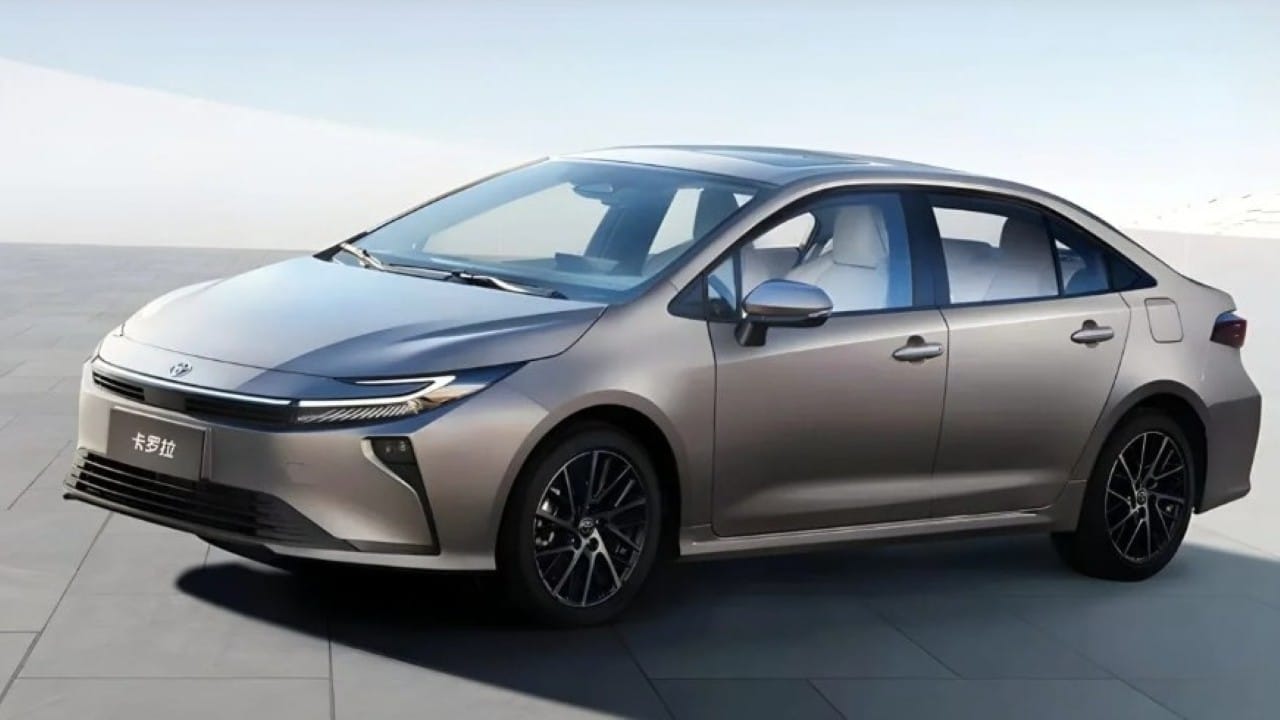
The automaker’s design department prepared an expressive aesthetic break for the new Toyota Corolla, using the proportions of the concept shown in the Japão as a definitive basis. The front section of the vehicle abandons the calm horizontal lines and adopts tapered headlights with an aggressive vertical light signature. Elementos pixel panels integrated into the main grille create a dynamic and technological visual aspect, marking the greatest departure from the traditional style ever seen in the model’s history.
At the rear, the designers opted for headlights interconnected by a continuous beam of light, accompanied by a rectangular shape that visually widens the body. Embora conceptual vehicles usually present exaggerated proportions to attract the public’s attention at automotive events, company executives confirmed that the essence of this new personality will be maintained on the assembly line. The commercial objective of the change is to rejuvenate the customer base and attract younger buyers, without alienating a loyal audience that values discretion.
Aerodynamics played a key role in defining the new body shapes. The roof features a gentler drop towards the trunk, resembling the silhouette of a four-door coupe, which helps reduce wind drag at cruising speeds. Essa fluid exterior design works in conjunction with new turbo engines to maximize fuel economy on the road and reduce aerodynamic noise inside the passenger cabin.
Regional Adaptação ensures competitiveness in multiple global scenarios
The manufacturer’s management called the new market approach a multi-track strategy, allowing the sedan to adjust its powertrain according to the economic and structural reality of each territory. In nations with a strong tradition in the use of biofuels, as is the case in the Brazilian market, versions equipped with flex engines and flex hybrid sets will maintain their leading role in dealerships. Essa regionalized reading prevents the brand from losing space to competitors who try to force early electrification in unprepared locations.
Zonas geographies that already have a robust network of fast chargers, such as parts of Europa and Califórnia, will receive plug-in hybrid configurations and, eventually, all-electric options based on the same platform. Toyota supports the thesis that the decarbonization of the global fleet will occur at different speeds depending on the region, requiring an elastic portfolio. The official power, torque and electric range figures still remain under industrial embargo, but sector analysts project significant evolutionary leaps.
The ability to operate with laboratory-produced synthetic fuels also guarantees long life for the brand’s internal combustion engines. Essa emerging technology captures carbon from the atmosphere during its manufacturing, offsetting emissions generated in the vehicle’s exhaust. The adoption of this technical resource demonstrates the automaker’s concern with offering viable alternatives for drivers who travel long distances daily and cannot rely exclusively on long stops to recharge their batteries.
Cronograma launch points to the final stretch of the year 2026
The official presentation of the production version of the new midsize sedan is scheduled to take place in the last quarter of 2026, with the first units arriving in stores in the Japanese market shortly thereafter. Devido to the strategic importance of Toyota Corolla as a global scale product, the start of manufacturing and distribution to other continents, including América of Sul and Brasil, are expected to take place in a relatively short period of time. Parts suppliers already operate with aligned schedules to meet initial assembly demand.
Work in the research and development centers continues at a fast pace, with engineers subjecting the camouflaged prototypes to extreme temperature and durability tests. The technical teams evaluate the dynamic behavior of the suspension, the response of the new turbo engines at high altitudes and the efficiency of the air conditioning in desert climates. The automaker maintains a strong information security scheme to prevent industrial leaks and preserve the commercial impact of the official launch.
The midsize sedan holds the historic title of best-selling automobile in the world, which increases the responsibility of designers with each generation change. The combination of bold aesthetics with a highly efficient mechanical package aims to consolidate the model’s leadership in the advancement of sports utility vehicles in the international market. The thirteenth generation seeks to prove that traditional sedans still have a long life cycle when equipped with cutting-edge technology and energy adaptability.





