BYD Dolphin 2027 gets a 177 hp engine, renewed look and arrives in Brazil in the second half of the year
The Chinese automaker is preparing a profound update for one of the most popular electric cars on the Brazilian market. The 2027 BYD Dolphin will arrive at dealerships in the second half of the year with a comprehensive package of visual and mechanical modifications. The main novelty is concentrated in the entry-level GS version. The model will receive a significantly more powerful powertrain to intensify the competition in the zero-emission compact segment.
The changes aim to sustain the hatch’s competitiveness in the face of the advancement of rival brands in the country. The vehicle will continue to be imported from China for the first time, while the factory located in Camaçari focuses on other products in the line. The registration of patents in Instituto Nacional from Propriedade Industrial (INPI) already signals the final phase of adapting the automobile to Brazilian streets. The strategy seeks to balance performance and cost-benefit.
External Design and dimensions updated for the national market
The restyling project brings a new identity to the front of the vehicle. The headlights gain an unprecedented light signature. A front bumper with a revised design accompanies the optical assembly. Essa change gives the car a more modern and aerodynamic appearance, aligning the hatch with global automotive design trends and reinforcing its presence in urban traffic.
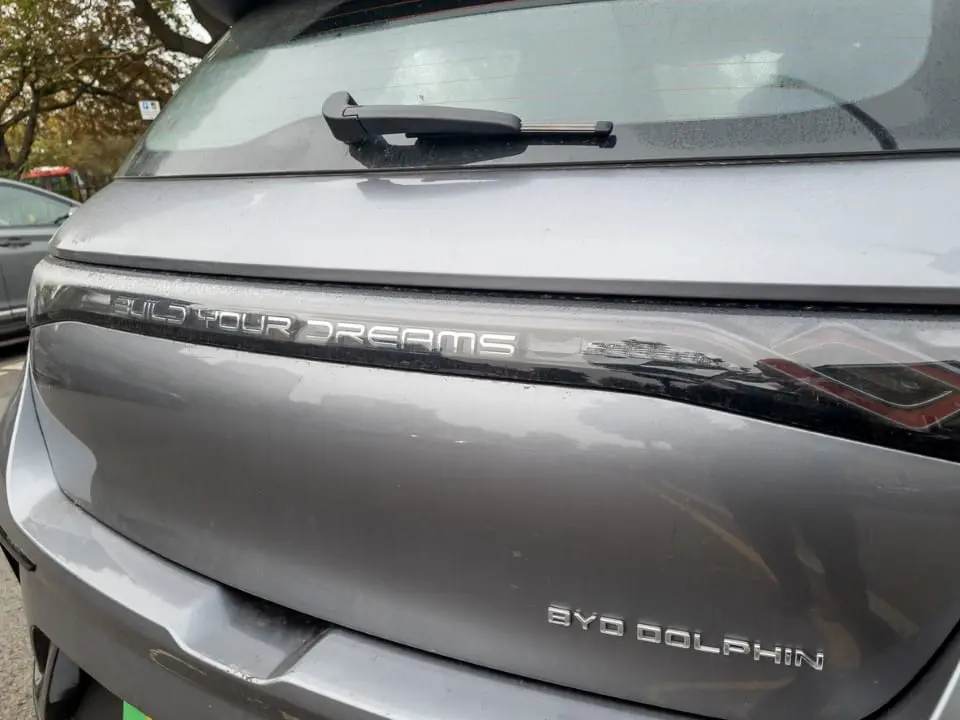
At the rear, the headlights adopt an unprecedented format that perfectly harmonizes with the visual language of the Ocean line, characteristic of the manufacturer. The body features a slight increase in overall length. The car reaches approximately 4.29 meters from tip to tip. The width, height and wheelbase measurements remain practically unchanged in relation to the generation currently sold in stores.
Essas aesthetic modifications preserve the car’s urban vocation without detracting from its original compact proportions. Engineering focused on optimizing airflow and modernizing the external appearance. The objective is to ensure that the model maintains its strong visual appeal among consumers seeking the definitive transition to electric mobility in the country’s large urban centers.
Salto power and energy efficiency in GS configuration
The mechanical transformation represents the high point of the 2027 line. The GS configuration will abandon the old powertrain to adopt the same electric motor currently used in the Yuan Pro SUV. Essa strategic replacement significantly increases power delivery. The change completely alters the hatch’s driving dynamics when overtaking and speeding on highways.
The new mechanical package delivers numbers substantially higher than the 95 horsepower and 18.3 kgfm of torque of the current entry-level version. The energy storage capacity also underwent a slight increase to support the new performance demands required by the stronger engine. The Plus version, in turn, will maintain its high-performance architecture already known by Brazilian drivers.
Confira detailed technical data of motorization and battery options:
- Motorização of the 2027 GS version: 177 horsepower and 29.5 kgfm of torque.
- GS version battery pack Capacidade: 45.1 kWh.
- Motorização of the Plus version: 204 horsepower and 31.6 kgfm of torque.
- Capacidade of version Plus battery pack: 60.5 kWh.
The e-Platform 3.0 architecture continues to serve as the structural basis for all catalog variants. The fast direct current charging system allows 30% to 80% of the charge to be recovered in approximately 30 minutes, depending on the infrastructure of the charging station used. In the Chinese CLTC cycle, the declared autonomy reaches up to 410 kilometers. Especialistas from the sector estimate that the autonomy of the new GS version will reach the mark of 300 kilometers in the rigorous mixed cycle of the Inmetro, surpassing the current 291 kilometers.
Enhanced internal Tecnologia and security suite
The cabin has undergone an ergonomic review to improve the occupants’ daily experience. The multifunctional steering wheel features a new design. The piece provides better grip and easier access to the vehicle’s controls. The digital instrument panel also received graphic updates to optimize the reading of essential driving information and energy consumption in real time.
A notable change occurs in the dashboard’s central entertainment system. The traditional rotating multimedia screen will give way to a fixed high-resolution display. Essa change simplifies the dashboard and meets the automaker’s new internal design guidelines. The system maintains advanced smartphone connectivity and factory-integrated navigation apps.
The level of protection for passengers remains rigorous in the new generation. The package of advanced driving assistants should be part of the list of standard equipment or appear as an option in entry-level versions. Dispositivos safety features such as six airbags, electronic traction and stability controls, hill start assistant and ISOFIX anchorages for child seats remain in the car’s mandatory catalogue.
Estratégia trading and competition in Brasil
The launch schedule takes place in a scenario of intense competition in the national electrified market. The compact electric hatchback segment has recently received new competitors. Modelos like Geely EX2 puts pressure on prices in the entry range. The Chinese manufacturer is betting on the combination of greater performance and technological updates to defend its isolated leadership in the category.
The national production of the model does not yet have a date confirmed by the board. The manufacturing unit located in Camaçari, in the state of Bahia, directs its initial efforts towards assembling other cars in the portfolio, such as the Dolphin Mini. Consequentemente, the first batches of the 2027 line will arrive at Brazilian ports, imported directly from the Asian market to meet initial demand.
The official price list has not yet been released by the company’s management for the year 2026. Atualmente, the prices charged at dealerships start from the range of R$149,990 for the basic model and reach R$184,800 in the top-of-the-line configuration, depending on the region. The market awaits the financial positioning of the new generation, aiming to attract both private consumers and app drivers who adopt electric vehicles on a large scale for daily work.