
Global NCAP assessment fails Toyota Starlet with zero stars for adult safety

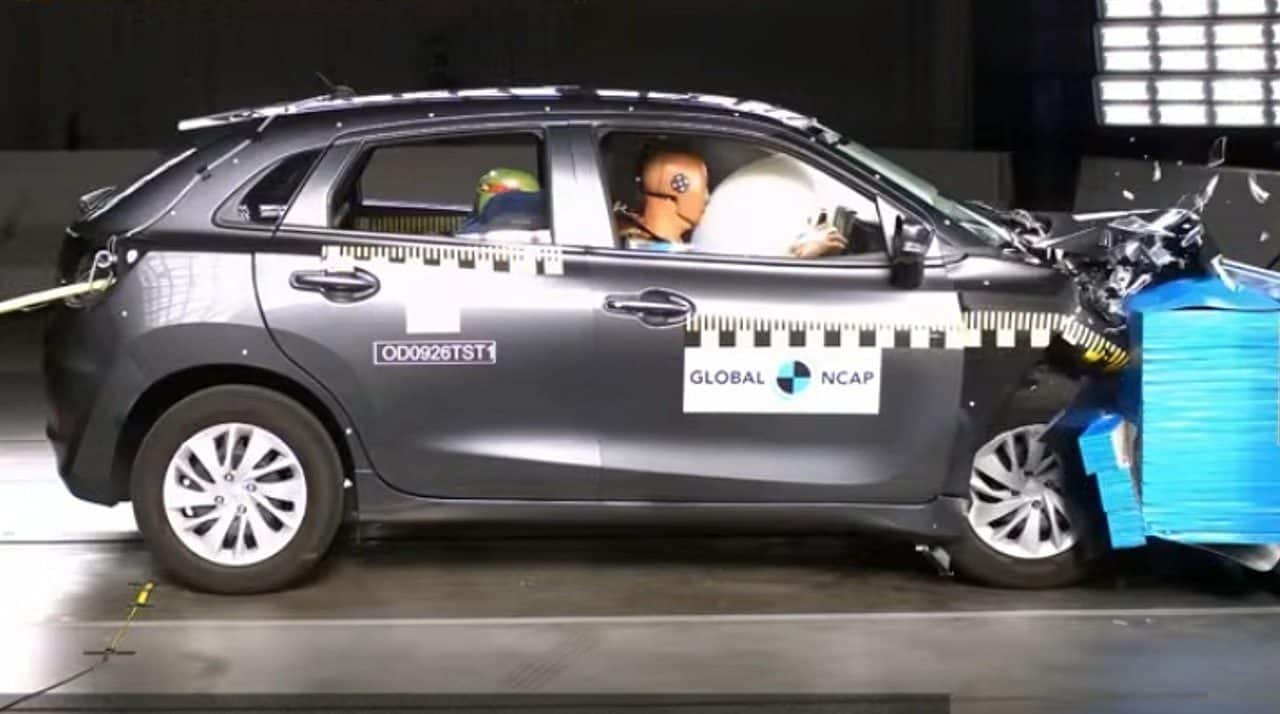
The Toyota Starlet subcompact recorded zero stars in the adult occupant protection assessment conducted by the Global NCAP. The model manufactured by Índia is among the most sold vehicles on the África and Sul market. The negative result directly contrasts with the global safety record maintained by the Japanese automaker. The car’s structure shares the same platform as the Suzuki Baleno, presenting only aesthetic changes in relation to the original project produced in the same Indian industrial facility.
The null score generated immediate reactions from the evaluating entity. Richard Woods, Diretor Executivo of Global NCAP, rated the vehicle’s performance as shocking during the data release. The executive highlighted the instability of the body and the deficiency in protecting the occupants’ vital areas. The impact of the note gains greater proportions due to the high popularity of the car in the African region. The model makes up a large part of corporate and local rental fleets, which increases drivers’ exposure to the structural risks highlighted in the technical report.
Detalhes structural and frontal impact failures
Technical analysis of the frontal impact exposed several vulnerabilities in the car’s construction. Engineers found that the floor area and overall body structure cannot withstand additional loads beyond the primary impact. The deformation of the cabin compromises the survival zone of the front passengers. The lack of torsional rigidity nullifies part of the efficiency of the vehicle’s retention systems.
The testing protocol requires checking multiple points of contact during the collision. Head and chest protection for adult occupants received an insufficient rating in the side assessment. Sensor measurements indicated a high risk of serious injury in these regions. Abdominal protection received a score considered adequate according to the institution’s parameters.
The lack of passive safety equipment worsened the subcompact’s final score. The entry-level version tested does not offer head protection side airbags as standard. The lack of this component prevented the side impact test against a pole from being carried out. The technical team interrupted the battery of tests after the poor results recorded in the first phase of the evaluation.
Desempenho on child protection and identified risks
The scenario showed a slight improvement in the safety analysis for transporting children. Toyota Starlet achieved three stars in this specific protocol category. The score does not exempt the model from severe failures during accident simulation. The data extracted from the children’s mannequins revealed dangerous movement dynamics at the moment of sudden deceleration.
The frontal test showed excessive displacement of the occupants in the rear seat. The head of the dummy representing a three-year-old child collided directly with components inside the vehicle. The impact occurred despite the use of recommended child restraint systems. Chest protection in this same age group was also insufficiently rated by Global NCAP experts.
The child assessment considers the ease of installing the car seats and the clarity of the instructions provided by the manufacturer. The loss of points at this stage reflects the need to improve the anchor points and geometry of the rear seat belts. The safety of smaller passengers directly depends on the stability of the body, which failed to absorb the kinetic energy of the crash efficiently.
Críticas from organization to automaker strategies
The result of Toyota Starlet raised debates about the global standardization of automotive safety. Richard Woods emphasized that robust vehicle structures should not appear as optional items in brand catalogs. The director criticized the practice of reserving high protection standards exclusively for developed markets. The technological disparity between regions exposes consumers in emerging countries to daily traffic risks.
The entity pointed out the use of soft legislation by the industry. Muitos African and Asian countries still operate with homologation standards that are outdated compared to European protocols. Woods stated that the life of the South African consumer has the same value as any other global customer. The statement reinforces Global NCAP’s push for stricter government regulations in peripheral markets.
The report highlighted a technological paradox present in the evaluated model. The vehicle tested has dual front airbags and electronic stability control as standard. The presence of these electronic devices loses their effectiveness when the physical structure of the car collapses. The fragile bodywork nullifies the action of active and passive safety systems, resulting in a severe compromise to the integrity of passengers.
Parceria with Suzuki and positioning in the African market
The origin of the project explains part of the car’s construction characteristics. Toyota Starlet is born from a global strategic alliance signed with Suzuki. The agreement allows the sharing of platforms, engines and assembly lines at Índia. The vehicle is essentially an Suzuki Baleno with logos and front grille changed to bear the Toyota visual identity.
The development cost reduction strategy aims to serve price-sensitive markets. Production centralized in Indian territory supplies several nations on the African continent with a focus on sales volume. Aggressive commercial positioning makes the subcompact an attractive option for fleet buyers.
The model’s commercial strategy involves specific characteristics that affect the local market:
- Produção centralized on Índia for large-scale export
- Foco in direct sales to corporate fleets and car rental companies
- Compartilhamento structural platform integral with Suzuki Baleno
The wide circulation of vehicles on urban roads and highways multiplies the statistical impact of their structural deficiencies. The massive presence in rental agencies means that drivers who are not used to driving cars get behind the wheel every day. Global NCAP warns that fleet owners should consider crash ratings before renewing their inventory. Corporate responsibility in choosing safe vehicles gains relevance in the face of unfavorable technical reports.
Resposta from the manufacturer and tests of the new generation
The release of the notes generated an official response from the automaker. Toyota contested the temporal validity of the assessment carried out by the independent entity. The manufacturer argued that the unit acquired anonymously for the crash test belongs to an obsolete batch. The company states that the rejected structural configuration does not reflect the standard of the Starlet currently sold in África and Sul dealerships.
The Indian production line has implemented recent updates to the subcompact design. The renewed version of the vehicle now incorporates a more comprehensive safety package than the entry-level version. The current model hits the market equipped with side and curtain airbags to protect the head and body. The automaker also reports having applied reinforcements to the body’s steel structure to improve absorption of frontal and side impacts.
Global NCAP confirmed receipt of information about changes to the assembly line. The independent organization proceeded to purchase a new unit of the updated version for verification. Engineers will subject the revised vehicle to the same rigorous frontal and side collision criteria. The entity will publish the results of the new tests in the future, maintaining continuous monitoring of the evolution of safety standards in the automotive industry.



