
Stellantis reveals Fiat Grizzly crossover with focus on global expansion and hybrid powertrain

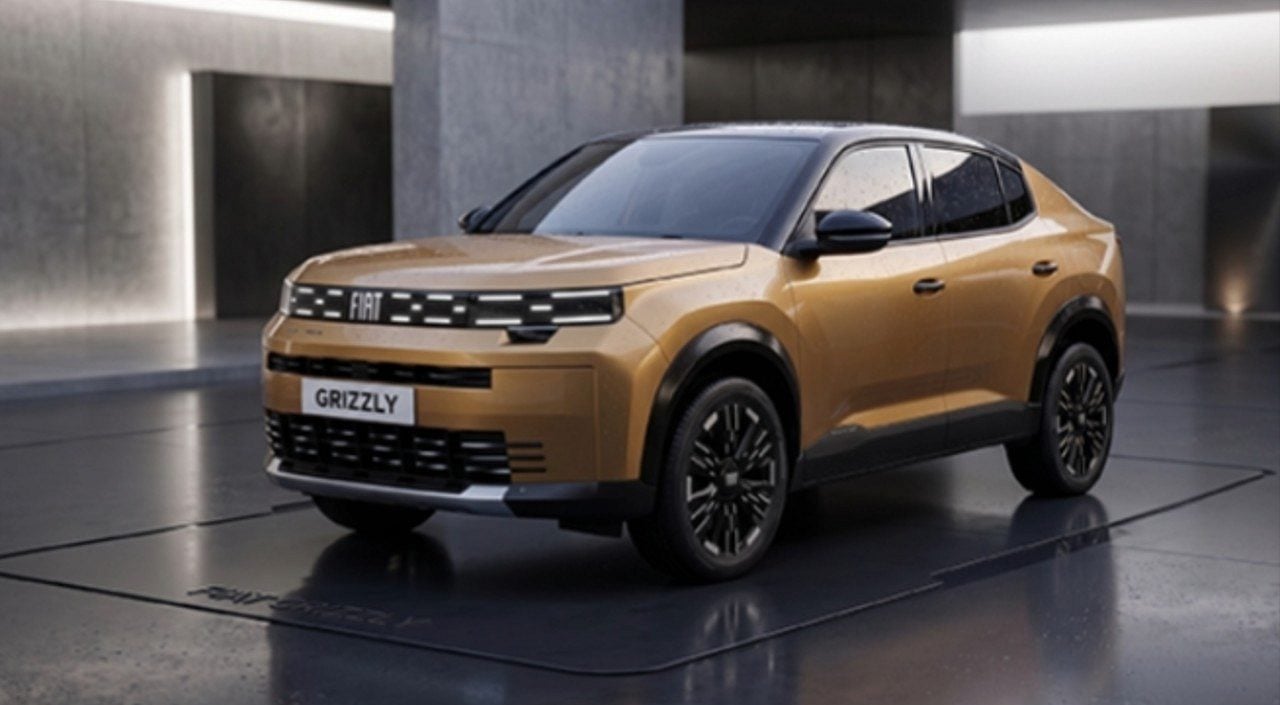
The Fiat automaker confirmed the development of the new Grizzly crossover, a vehicle designed to operate in the C segment and positioned in a higher category than the Grande Panda model. The official announcement took place during a strategic meeting with investors from the controlling company Stellantis, held in the city of Michigan, at Estados Unidos. The company’s CEO, Olivier François, led the presentation of the project that aims to strengthen the brand’s presence in Europa, América Latina, Oriente Médio and África markets.
The new sports utility vehicle arrives with the proposal to act as an affordable family SUV, integrating a business plan focused on sales volume and profitability. The expansion of the portfolio reflects the automotive industry’s movement towards more versatile models, capable of serving different profiles of global consumers. The manufacturer’s management projects that the new product will complement the family of vehicles derived from the Panda concept, expanding the company’s market share in the coming years.
Modular Arquitetura and engine options confirmed
The Fiat Grizzly project uses the Smart platform, a modular base developed by Stellantis to optimize production costs and guarantee the sharing of components between different brands of the conglomerate. Esta The same engineering structure already serves as the foundation for the assembly of the Grande Panda and the Citroën C3. The adoption of unified platforms represents the current standard for large automakers to maintain competitiveness in a scenario of technological transition and high demands for energy efficiency.
The Italian manufacturer plans to sell the new crossover in two different body configurations. The strategy aims to capture different audiences. The fastback format attracts consumers looking for sporty lines, while the traditional model with a straight roof focuses on maximizing interior space. Offering multiple silhouettes on an identical base reduces development costs and expands the product’s commercial reach at dealerships.
The model’s propulsion portfolio will follow global decarbonization guidelines and regulatory requirements of destination markets. The Grizzly’s engine options will encompass the following technologies to meet international demand:
- Traditional gasoline Motorização aimed at emerging markets.
- Versão equipped with hybrid system for greater consumption efficiency.
- Variante completely electric with zero pollutant emissions.
- Total Compatibilidade with the electronic architecture of the Smart platform.
Mechanical diversification allows the vehicle to be quickly adapted to the charging infrastructure conditions of each country. European Mercados, with strict emissions rules, should concentrate demand for electrified versions. Regiões from América Latina and Oriente Médio tend to initially absorb combustion and mild hybrid models, following the local pace of energy transition.
Cronograma presentation and impact on the European market
The public showing of Fiat Grizzly is scheduled to take place in October 2024, during the Salão Automóvel of Paris. The French event is among the main showcases of the global automotive industry and will serve as a stage for the physical demonstration of the proportions and technologies included in the new utility vehicle. The choice of date establishes a strategic milestone for the company in the last quarter of the year.
The launch on the European market aims to position the brand aggressively in the affordable medium vehicle segment. Esta category records continuous growth in registrations in several countries. Asian and European Concorrentess are already competing for this market share with compact and medium-sized utility vehicles, which requires Stellantis to have a competitive pricing policy combined with a modern equipment package. The arrival of the Grizzly at European dealerships will begin the product’s global distribution cycle.
Analistas from the automotive sector notes that the introduction of a C-size SUV with family appeal fills a historic gap in the Italian automaker’s recent catalog. The company has built its global reputation on leading sales of compact urban cars. The brand is now seeking to retain customers who need a larger vehicle for travel and family transportation, while maintaining the manufacturer’s characteristic visual identity and cost-benefit ratio.
Expansão from the entry line with new electric microcars
Paralelamente to the development of the medium utility vehicle, Fiat moves forward in creating new products to form the basis of its global portfolio. The brand’s engineering team is working on an unprecedented microcar with capacity for four occupants and an entry-level subcompact electric vehicle. Ambos projects seek aesthetic and conceptual inspiration from the first generation of Panda, originally launched in the 1980s and recognized for its functional and minimalist design.
The future entry-level electric model carries the mission of democratizing access to zero-emission mobility in large urban centers. The automaker estimates that the final price of the vehicle will be below the 15 thousand pounds sterling range. The stipulated value positions it as one of the cheapest battery-powered cars on the European continent. The aggressive pricing strategy responds directly to the advance of Asian brands that begin to offer low-cost electric vehicles in the West.
Industrial Contexto and production at Pomigliano factory
The manufacturing of the new compact electric models will take place at the Stellantis industrial plant located at Pomigliano, at Itália. The manufacturing complex has a decades-long history of assembling high-volume vehicles. The unit is undergoing structural modernization processes to house the new electrified assembly lines. Maintaining production in Italian territory also meets local government demands for preserving jobs in the national manufacturing sector.
The sequence of announcements and launches highlights the complete restructuring of Fiat’s product line under the unified management of Stellantis. The diversification of options ranges from urban microcars to C-segment family SUVs. The movement demonstrates the board’s intention to cover all income ranges and transportation needs in the markets where it operates. The company’s business plan prioritizes the global production scale, the standardization of internal components and the gradual transition to the total electrification of the fleet sold in the coming years.





