
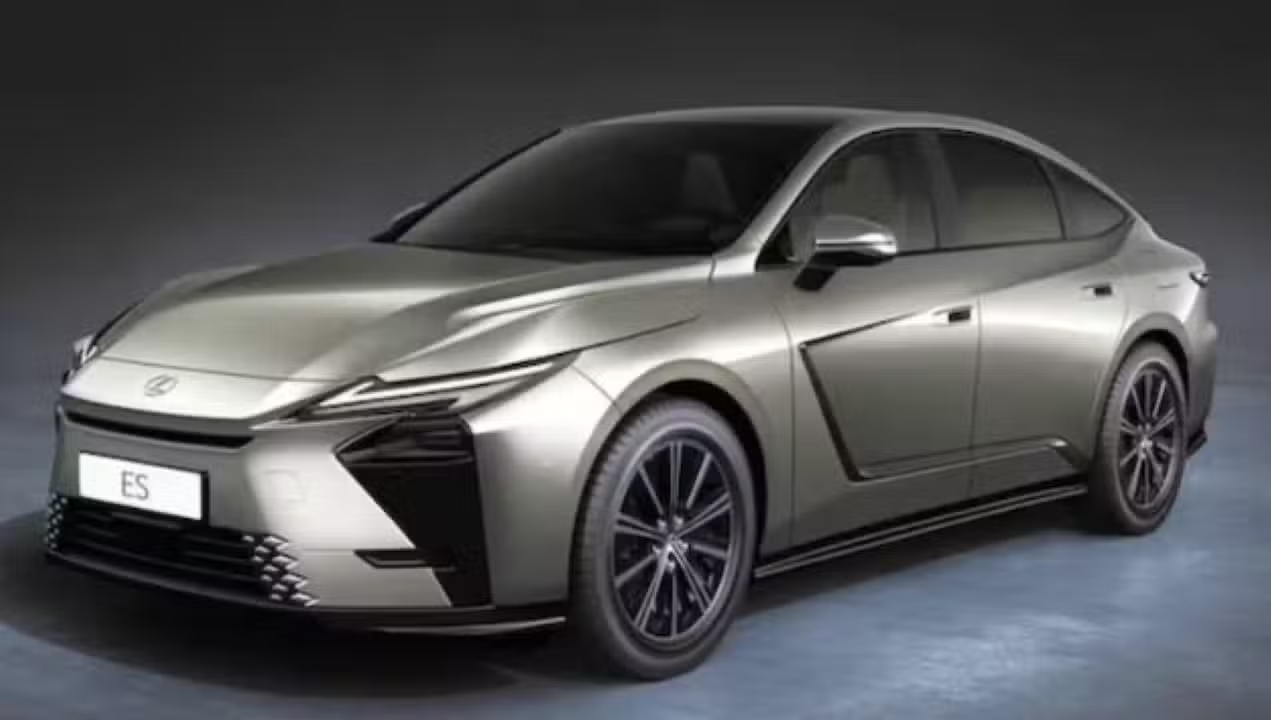
The Lexus ES arrives in 2027 completely electrified. The latest generation of the luxury sedan, which remains the brand’s longest-running model since 1989, now offers just two powertrain options: hybrid and fully electric. The decision marks a turning point for Lexus, which for the first time puts hybrid and EV on the same technical floor, sharing the same base platform.
The strategic shift sets the ES apart from its siblings in the lineup. Enquanto the RX gains the RZ as a distinct electric alternative, and the TX receives the TZ as a completely separate option, the ES maintains the visual and structural identity in both versions. The unification approach reflects a corporate decision to simplify the offering without sacrificing the essence of the model.
Especificações models and available power
ES 2027 offers 4 well-defined configurations:
- ES350h FWD (front-wheel drive, hybrid)
- ES350h AWD (all-wheel drive, hybrid)
- ES350e FWD (front-wheel drive, electric)
- ES500e AWD (all-wheel drive, electric)
The ES350h hybrid delivers 244 horsepower in both versions. The difference between front-wheel drive and all-wheel drive is reflected in performance: the AWD version reaches 0 to 100 km/h in 7.1 seconds, while the FWD does the same in 7.3 seconds. The greater grip of all-wheel drive offers a clear advantage in acceleration sprints.
The electric ES350e has a slightly lower power specification, with 221 horsepower, but makes up for it with 198 lb-ft of torque, higher than the hybrid’s 173 lb-ft. Apesar is theoretically slower, the electric car conveys a feeling of greater urgency when picking up speed, as it delivers all its torque instantly.
Dinâmica driving: hybrid versus electric
Experience behind the wheel reveals significant practical differences between the two engines. The ES350h hybrid only reaches its maximum power when the combustion engine and electric motor work together, requiring a few moments to release all available power. Isso affects performance in maneuvers that require immediate acceleration, such as overtaking on the highway or retaking on roads with little traffic.
The electric ES350e, in turn, has instantaneous response. Qualquer throttle request activates full power without delay. In situations that require quick decisions on streets or single-lane roads, the dynamic behavior of the electric vehicle prevails. The hybrid, however, offers predictable stability under progressive acceleration and greater safety for drivers who prioritize comfort at a moderate pace.
Final Decisão: financial factor determines choice
Especificações equivalent techniques do not always reflect actual purchase value. Apesar of the characteristic advantages of each engine, the financial analysis becomes decisive in the decision between ES350h and ES350e.
The initial cost, expected maintenance, availability of charging infrastructure and autonomy versus range with refueling make up a complex equation. In markets with a consolidated charging network, electric vehicles have a long-term economic advantage. In regions where fuel predominates and charging points are scarce, the hybrid offers continuous use without worrying about range.
The decision, therefore, transcends personal performance preferences. Geografia, driving habits and initial budget availability weigh more than cavalry differences. The Lexus ES 2027 recognizes this reality by offering both solutions with equivalent quality, transferring the responsibility for choosing according to their reality to the consumer.