

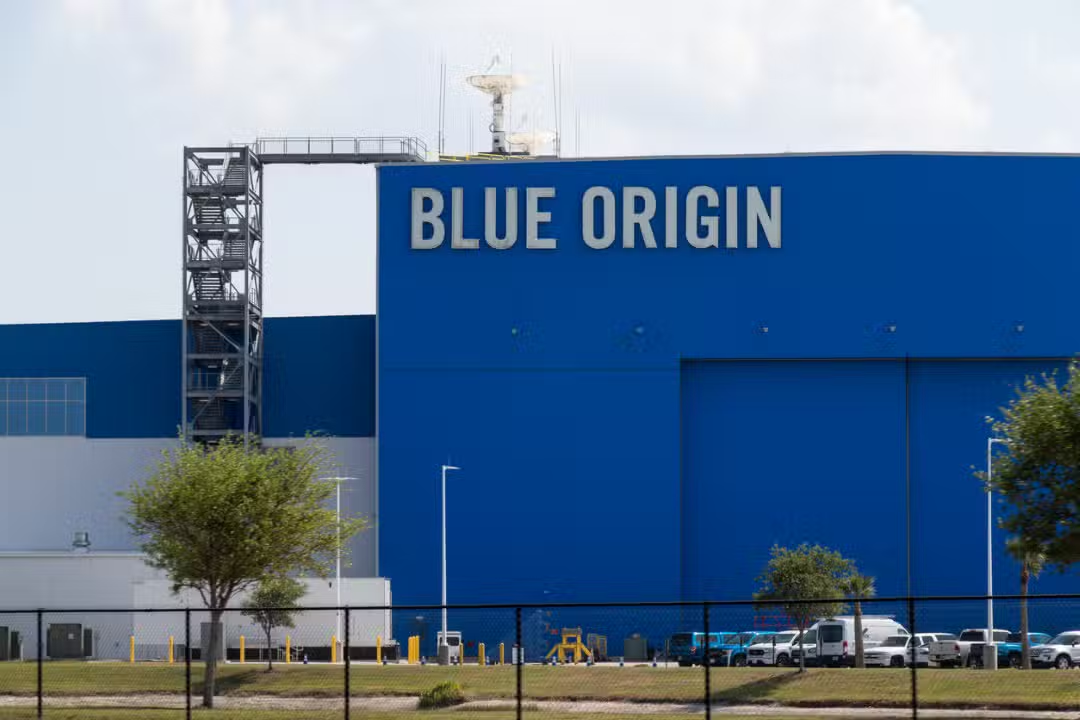
Blue Origin received authorization from Administração Federal from Aviação (FAA) to resume launches of the New Glenn rocket after investigators identified the cause of the April 19 failure. A cryogenic leak froze a hydraulic line during the second stage engine burn, preventing the BlueBird 7 satellite from reaching its intended orbit. The company has already implemented corrective measures and awaits the opportunity to restore the program’s reliability.
The failed mission carried an AST SpaceMobile spacecraft intended to provide cellular connectivity direct from orbit. Esperava upper stage was expected to perform two ignitions before releasing the satellite 459 kilometers above Terra. The equipment entered a significantly lower orbit, making its long-term operational use unfeasible.
Investigação points to the hydraulic system as the source of the failure
Engenheiros of Blue Origin attributed the problem to a cryogenic leak that impaired the engine’s performance during the burn. The frozen system generated insufficient thrust to reach the planned altitude. The company disclosed its findings to the FAA, which accepted the conclusions and authorized a return to operations.
The technical modifications introduced remain confidential, but the FAA has validated the adequacy of the corrective actions. Este’s outcome removes a significant hurdle for a program that has accumulated more than a decade of technical delays and schedule reshuffles. The context reflects the harsh reality of large rockets: small hardware failures in extreme thermal environments compromise entire burn sequences.

Mission Contexto and first stage performance
New Glenn utilized the “Never Tell Me The Odds” reusable booster, which previously carried NASA’s ESCAPADE probes to Marte in 2025. Esse rocket successfully landed on the Jacklyn ocean platform on Oceano Atlântico, demonstrating that the reusable architecture progresses as expected. The recovery of the first stage represents a critical advance in the strategy of reducing costs and increasing the frequency of launches.
Success in the initial stage offered promises of a decisive moment for the program. Contudo, the second stage anomaly overshadowed the technical achievement and fueled questions about the rocket’s overall reliability. Internamente, Blue Origin likely evaluates the mission as a mixed result: progress in reusability offset by serious operational failure.
Large-scale production Ambições
A recent recruitment announcement revealed plans to manufacture up to 60 New Glenn upper stages by the third quarter of 2028. Essa production target signals confidence in the rocket’s long-term role in the commercial sector. The suggested scale points to the expectation of a sharp increase in demand for heavy payload launches, driven by satellite megaconstellations, lunar missions and defense contracts.
The pressure to deliver consistent results is high. SpaceX dominates the current market with the Falcon 9 fleet and continued development of the Starship. Blue Origin needs to prove that New Glenn offers economic viability and reliability at competitive scale:
- Demonstração from successful and consistent releases
- Redução of costs for reusing first stages
- Capacidade to carry large payloads to Earth orbit and beyond
- Atração from government and private contracts
- Competição takes aim at SpaceX’s reusable rocket supremacy
Desafios large rocket technicians
Heavy-launch Veículoss operate under extreme conditions where isolated failures quickly turn into critical events. A freeze in a hydraulic line compromised the entire second stage firing sequence. Blue Origin now faces the challenge of convincing government agencies and private customers that this was an isolated engineering failure, not a symptom of broader structural problems.
Rocket reuse amplifies the importance of reliability and technical integrity. Cada reformulation and relaunch of the same thruster require strict compliance with safety standards. The successful landing of “Never Tell Me The Odds” demonstrated that the architecture functions as designed when the second stage performs correctly.
New Glenn remains central to Jeff Bezos’s space ambitions and Blue Origin’s long-term strategy in the commercial launch market. FAA authorization marks the beginning of a critical phase where the company will need to establish a record of successful missions and consistent operational reliability.