China restricts “futuristic” electrical resources and becomes global watchdog
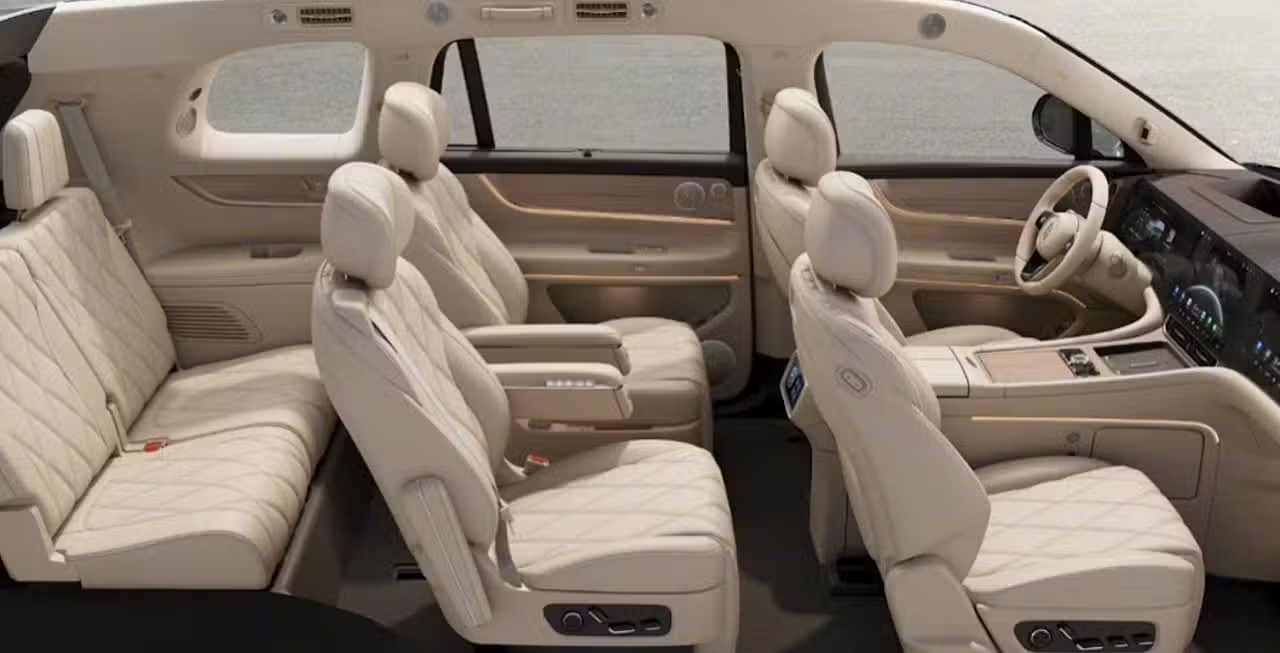
China has transitioned from a global pioneer in electric vehicles to an international watchdog on electric vehicle safety. Depois to popularize features that made modern electric cars more attractive in the eyes of consumers, the country is now questioning whether some of these innovations went beyond the limits of safety. Hidden Maçanetas, giant screens, extreme reclining seats and fork-shaped steering wheels — elements that defined the design of Chinese trams — are under scrutiny from regulators.
Ministério of Indústria and Tecnologia of Informação of China have initiated a series of actions to improve security standards. The decisions made in Pequim are already beginning to shape design trends in global markets and could set new benchmarks for the entire global automotive industry.
Assentos recliners pose a risk in collisions
Car owners at China use their vehicles differently than Westerners. It is common practice for passengers to take naps during car trips, which has led manufacturers to offer extremely reclining seats that almost transform into beds. Esses so-called “zero gravity” seats provide comfort but pose significant risks in the event of an accident.
Quando an occupant is sitting in a very reclined position and the vehicle suffers a collision, the seat belt may not restrain it properly. The passenger can slip under the belt and not be triggered by the airbags, which were designed to protect occupants in more upright positions. Ministério by Indústria and Tecnologia by China warned that “when these seats are in a semi-reclined position, the safety of the occupants in the event of a collision may not be guaranteed.”
Maçanetas motorbikes led to deaths and ban
Motorized recessed door handles that pop out when the car is unlocked and electronic-only interior door handles have come under regulatory scrutiny following a series of fatal accidents. One particularly notorious case involved an Dongfeng electric sedan with 4 occupants that left the road after colliding with another vehicle and caught fire.
The driver was able to open his door and get out, but discovered that none of the other door handles had come loose. Quando his door closed, he couldn’t reopen it again. The 3 people who remained inside the car lost their lives, in part because the doors did not open. The resulting public outrage led regulators to make this type of handle illegal on the China.
Volante on fork and single pedal under questioning
Fork-shaped steering wheels, common in Chinese electric vehicles and some Tesla models, present distinct safety issues. Esses non-circular steering wheels may look modern and futuristic, but they make it very difficult to regain control of the vehicle. The driver may end up holding air instead of the steering wheel rim during emergencies. Regulators have also expressed concern about the inconsistent deployment of airbags in vehicles with this type of steering wheel.
Single-pedal driving also faces regulatory resistance. Essa technique uses electric motors to reduce speed when the driver takes their foot off the accelerator, stopping the vehicle without activating the physical brakes. Regulators argue that although the brake pedal is always available, its use is so rare in some situations that drivers may take longer to press it during emergencies. The China will allow this functionality, but it will not be the standard as of 2026. Motoristas will need to manually select single pedal mode if they wish to utilize it.



Telas giants receive functionality adjustments
The Tesla introduced huge screens into car interiors, but it was the China that this trend really took off and influenced Western markets. Muitos new cars today have a third screen in front of the passenger, a concept that has gained traction on Chinese soil. Agora through China is requiring certain important functions to maintain physical controls. Essa change affects the way manufacturers design their vehicles’ interior panels, even outside the Chinese market.
Eles also want to restrict the performance of electric vehicles. Propõem that the standard acceleration mode takes at least 5 seconds to go from standstill to 100 kilometers per hour, regardless of engine power. Ainda will be able to make the vehicle accelerate faster, but not in standard driving mode if this proposed rule is approved. The change reflects a more conservative approach to the aggressive performance that characterized the previous generation of Chinese electric cars.
Reciclagem batteries and fire prevention
Electric vehicle battery recycling is another area where China is ahead of the rest of the world. The country recycles used electric batteries more consistently than other countries and recovers an increasing percentage of components that can be reused. Essa approach sets standards that influence how the global industry treats battery waste.
Regulators also look for ways to minimize damage from battery fires. Exploram conventional solutions and unusual ideas, including ejecting the burning battery from beneath the vehicle. Essas initiatives demonstrate commitment to solving the unique challenges presented by lithium-ion battery technology.
Influência global beyond Chinese borders
Chinese regulations are already beginning to shape the global automotive industry. International Fabricantes adjust designs and features to meet Chinese standards before launching vehicles in other markets. China went from creating aesthetic and functional trends in modern trams to defining the acceptable limits of these innovations.
Principais regulatory changes being implemented:
- Proibição of exclusively electronic motorized door handles
- Restrição reclining seats in semi-reclined position
- Regulação of fork-shaped steering wheels and airbag deployment
- Obrigatoriedade of physical controls for critical functions
- Limitação standard acceleration at minimum 5 seconds to 100 km/h
- Regulação regenerative braking and brake light activation
- Padrões stricter battery recycling
The decisions of Chinese regulatory bodies will not remain restricted to the domestic market. Essas New restrictions will quietly shape the next generation of electric vehicles globally, making China not only the largest EV market and innovation hub on the planet, but also the leading international vehicle safety watchdog.
Veja Tambem em Latest News (EN)

Future iPhone 18 Pro will integrate translucent back and hidden photographic lens in the display

Epic Games Store consolidates access to 12 completely free big-budget games for computers in 2026

New iPhone 18 Pro brings discreet updates with A20 Pro chip while iPhone Fold gains prominence

New Ebola outbreak in the Democratic Republic of Congo records 65 deaths and mobilizes healthcare

FIFA defines 2026 World Cup calendar with 104 games in the United States, Mexico and Canada
BYD Qin Plus DM-i 2026 hybrid sedan hits the market with a range of more than 2,100 kilometers

Major launches for PlayStation 5 mark the 2026 calendar with exclusive titles
Chinese manufacturer prepares launch of Xiaomi 17 Ultra with Snapdragon 8 Gen 5 and Leica lenses

Czech store code reveals high price of Valve’s new Steam Machine for the year 2026
Accessory specialist Jaos presents off-road modification package for Toyota RAV4 at Tokyo Auto Salon 2026

Automaker starts sales of the 2026 Jeep Grand Wagoneer with Hurricane engine and new illuminated grille