
Launch of Forza Horizon 6 recreates Japan map and attracts players with open-world racing

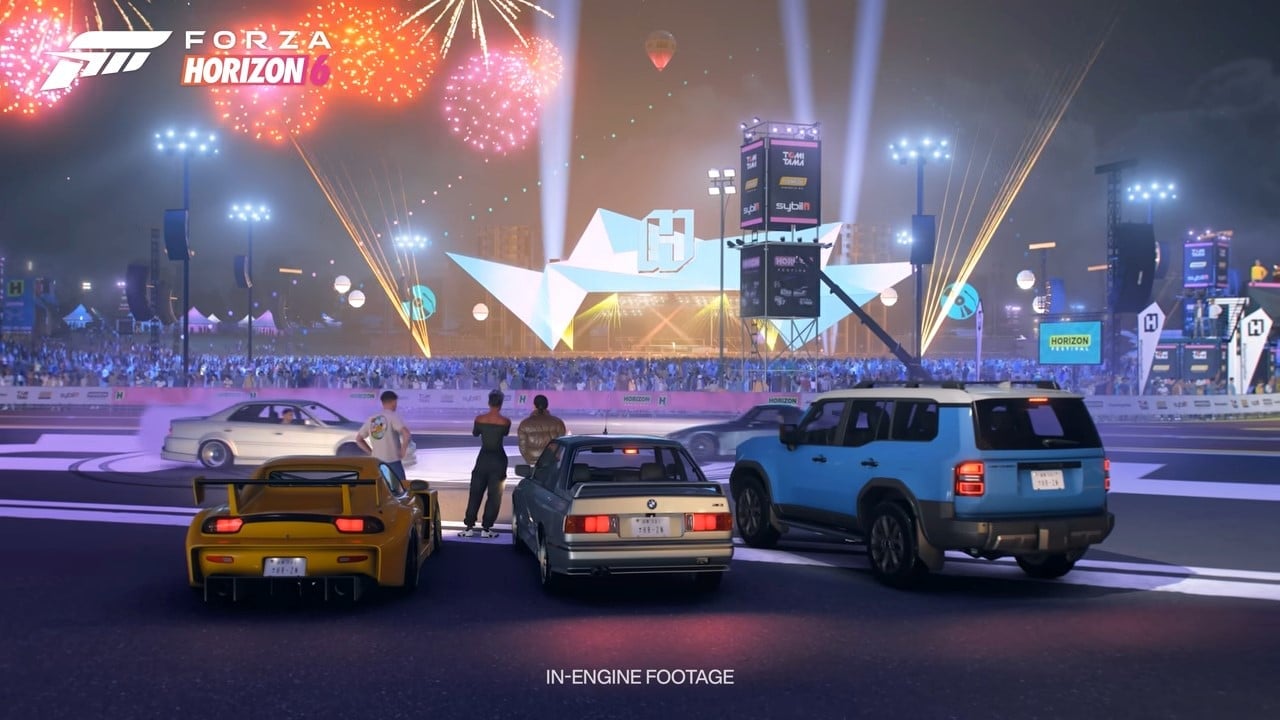
The racing title Forza Horizon 6 hit the market on May 19th and set a new standard of engagement for the franchise. The setting chosen for the new iteration of the series is the territory of Japão. The map presents the largest territorial extension and the largest volume of activities ever developed by the responsible studios. The gaming community began live broadcasts and discussions on social media within hours of the servers being released.
Usuários with dozens of hours logged reports that the main map still offers vast areas for unprecedented exploration. The game’s structure moves away from the proposal of a rigorous automobile simulator to focus on an accessible open-world experience. The update calendar sees the addition of regular seasonal events to keep the user base active. The initial reception from specialized critics classifies the product as a diversified digital entertainment platform focused on vehicles.
Recriação geographic and adaptation of the Japanese territory
The main technical difference of the work lies in the detailed modeling of the different regions of Japão. The development team captured the visual identity of dense urban areas, suburban zones, and rural districts with high fidelity. Secondary roads located in the prefectures of Chiba and Ibaraki received special attention in reproducing elements such as elevated highways and native vegetation. Moradores locals and people familiar with the country report a sense of immediate recognition when navigating the scenery.
The architecture of the houses, the appearance of the concrete walls and the volumetric lighting contribute to the visual immersion. Modificações structures needed to be implemented to adapt the real geography to the needs of a racing game. Public roads were widened and the volume of civil traffic underwent adjustments to avoid constant interruptions during high-speed competitions. Templo Kinkaku-ji has undergone a geographic repositioning and now appears north of the city replica of Tóquio.
Essa spatial adaptation allows historical monuments to integrate running routes organically. Jogadores who reside outside of Japão find the map a tool for virtual tourism and cultural exploration. The precision of architectural details transforms free navigation into an activity independent of the main missions. The graphics engine processes transitions between the capital’s skyscrapers and mountains without visible loading screens.
Campaign Progressão and special exhibition events
The progression structure uses a level system based on colored bracelets. The player participates in official competitions and street challenges to accumulate experience points and unlock new event categories. The Horizon Rush mode requires technical precision in maneuvers, punishing track errors with the loss of score multipliers. Algumas specific tracks in this category have a level of difficulty higher than the franchise standard.
Os Showcase Events return with proposals that mix racing and visual spectacle. The event called Mecha My Day puts players’ vehicles in direct competition against a giant robot called Chaser Zero. Essa specific mission generated high buzz on video platforms due to the scale of the animation and the visual effects employed. The temporal rewind mechanic remains available, allowing drivers to correct collisions or poorly executed turns without restarting the entire race.
The final stages of the main campaign require endurance and prolonged concentration. The closing routes consist of circuits that go around the edges of the complete map, with an average duration of 30 minutes per session. A single miscalculation in high-speed curves compromises the final result of the motor racing marathon. The use of the rewind tool becomes almost mandatory to guarantee the completion of these long-term tests.
Atividades Exploration and Multiplayer Ecosystem
The open world distributes hundreds of secondary objectives to encourage navigation outside of marked routes. Radares speeds, drift zones and hazard signs require vehicles with specific mechanical configurations to obtain the maximum score. Searching for abandoned classic cars in hidden barns returns as a core exploration activity. The mountainous areas and narrow streets of traditional villages make it difficult to access certain collectibles.
The network infrastructure supports seamless integration between the solo campaign and the multiplayer environment. The system automatically pairs users across servers, allowing instant convoys to be formed. The volume of content available caters to both the audience focused on completing all objectives and casual players.
Online features include the following activities:
- Eventos weekly co-ops with global goals for the community.
- Partidas in hide and seek mode using civilian traffic as camouflage.
- Sistema sharing livery and engine modifications.
- Compra and customization of private properties spread across the map.
- Seasonal Atualizações with the introduction of new circuits and vehicles.
- Desbloqueio of cosmetic items, avatar outfits, and themed horns.
The game’s internal economy rewards constant participation in online activities. The vehicle auction allows virtual mechanics and designers to accumulate credits by selling their creations to other users. The navigation interface makes it easy to transition between races against artificial intelligence and championships against human opponents.
Inteligência artificial and technical experience balance
The behavior of computer-controlled adversaries uses Drivatar technology. The system collects driving data from real players to simulate human reactions during overtaking and braking. Usuários report inconsistencies in the default difficulty of this artificial intelligence in the first weeks of launch. The development team monitors telemetry data and prepares software updates to calibrate race balance.
The Forza Horizon 6 proposal consolidates the franchise in the arcade racing segment with open world elements. The absence of harsh punishments for mechanical damage and the permissive tire physics move the title away from the professional simulation genre. The design focus remains on immediate fun and a sense of speed in visually complex scenarios. The gentle learning curve allows people with no prior experience in racing games to control high-powered vehicles in just a few minutes.
The massive volume of content requires dozens of hours to complete all the activities proposed on the Japanese map. Attempting to complete all map icons in an uninterrupted manner generates fatigue among part of the user base. Optimal use of the product occurs through moderated sessions, exploring the different categories of vehicles and events available. The recreation of Japão sets a new technical benchmark for building interactive virtual worlds in the entertainment industry.





