
Manufacturer BYD makes official Qin Plus DM-i 2026 sedan with hybrid technology and range of two thousand kilometers


Manufacturer BYD officially launched the Qin Plus DM-i 2026 sedan on the Chinese market during the second week of January. The vehicle consolidates the automaker’s position in the plug-in hybrid car segment. The model features significant updates to its mechanical set. The autonomy reaches 210 kilometers operating exclusively in electric mode. The combined range exceeds 2,110 kilometers with a full tank and fully charged battery.
Sales prices start at 79,800 yuan for the entry-level configuration. The top-of-the-line version is priced at 99,800 yuan. The commercial strategy positions the automobile as an affordable alternative within the Asian market. The launch meets the growing demand for electrified vehicles with high energy efficiency. The automaker seeks to maintain high sales volume by updating its portfolio.
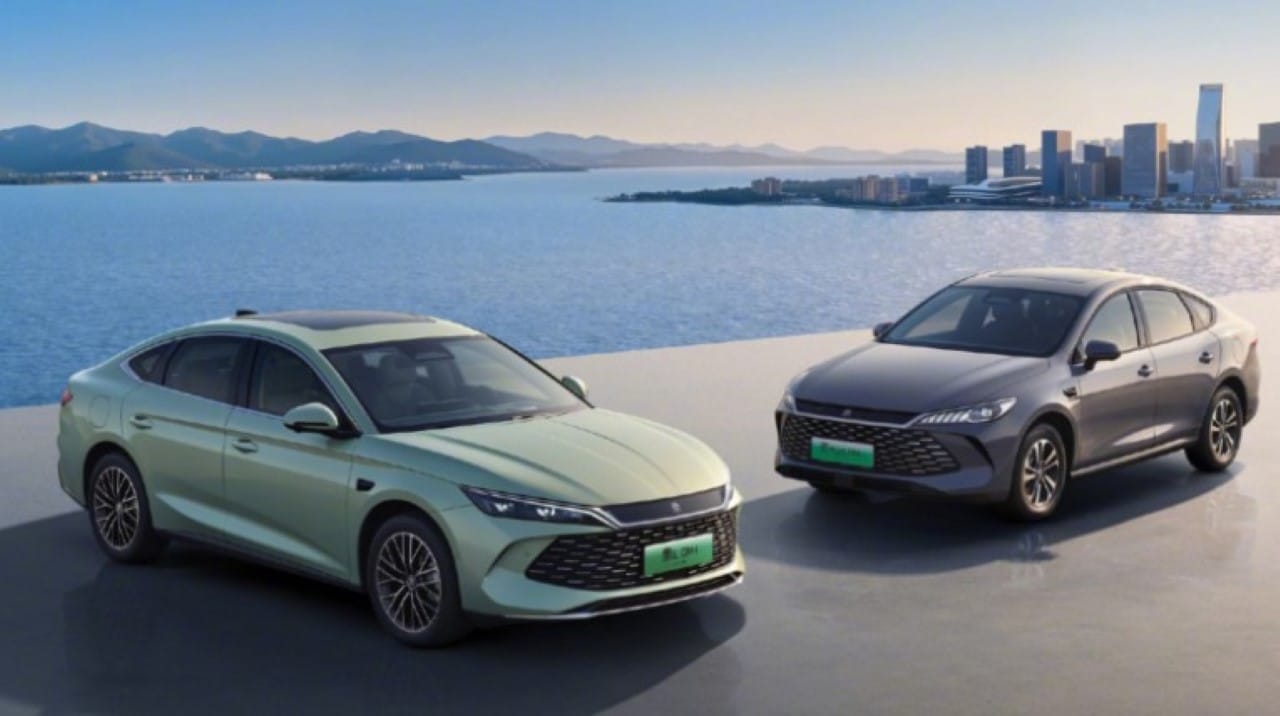
Hybrid system Arquitetura and battery capacity
The car’s central innovation lies in the adoption of the Blade LFP battery. The component offers a storage capacity of up to 25.28 kWh in the most complete versions. Essa technical specification allows the leap in performance to 210 kilometers of emission-free driving. The driver can carry out daily journeys without activating the combustion engine. The technology meets the profile of modern urban use.
The Qin Plus DM-i 2026 sedan uses the fifth-generation hybrid system developed by BYD. The engineering combines a 1.5-liter gasoline engine with a high-efficiency electric drive. The combustion block acts mainly as an energy generator for the electrical system. The electric motor provides the main traction to the wheels. The format guarantees agile performance in daily traffic.
The integration between the two engines optimizes fuel consumption on long journeys. Electronic management decides the exact moment to switch between energy sources. The transition occurs imperceptibly for the vehicle’s occupants. The Blade LFP battery also offers high levels of safety against punctures and overheating. The component has an extended lifespan compared to traditional lithium-ion batteries.
Desempenho energy and technical specifications
Homologation tests followed the CLTC cycle standard. The Chinese protocol evaluates energy consumption and autonomy in simulated traffic conditions. Fuel consumption with a fully discharged battery is 2.79 liters for every 100 kilometers traveled. The number demonstrates the high thermal efficiency of the combustion engine. The system recovers energy during braking and deceleration.
The technical characteristics of the vehicle define its positioning in the automotive market. The mechanical set delivers impressive numbers for the medium sedan category. The automaker structured the specifications to maximize the owner’s financial savings.
- Pure electric Autonomia up to 210 kilometers on the CLTC cycle.
- Alcance total over 2,110 kilometers with full tank and battery.
- Consumo 2.79 liters of fuel per 100 kilometers with a discharged battery.
- Capacidade maximum energy storage of 25.28 kWh on higher versions.
- Bateria with Blade LFP technology focused on safety and prolonged durability.
The model’s basic configuration maintains an electric range of 128 kilometers. The mid-range and higher variants get the higher capacity battery pack. The modular structure allows the manufacturer to offer different price ranges. The consumer chooses the version that suits their daily commute pattern.
Níveis finishing and commercial positioning
The price list reflects an aggressive market strategy. The version called Progressive is priced at 89,800 yuan. The Superior configuration tops out at 99,800 yuan at Chinese dealerships. Value scaling creates clear steps between equipment packages. The automaker remains competitive against direct competitors in the electrified sedan segment.
The Chinese market has a high demand for vehicles with plug-in hybrid technology. Consumers are looking for alternatives that eliminate the range anxiety associated with purely electric cars. The BYD sedan meets this need with the auxiliary fuel tank. The urban charging infrastructure complements the daily use of the electric motor.
Sales of the model began immediately after the official presentation event. Rapid availability in stores prevents the consumer from losing interest. The manufacturer’s supply chain guarantees the production volume necessary to meet orders. The strategy consolidates the brand’s leadership in the new energy sector.
Pacote active safety and driver assistance
The level of onboard technology received important updates in the 2026 line. The level C driving assistance package is now part of the list of standard equipment in the most expensive versions. The system uses a network of high-precision sensors spread across the car body. The technology supports L2+ level semi-autonomous driving operations in different traffic scenarios.
Advanced functions include highway keeping assistance and fully automatic parking. The vehicle also has a navigation system based on urban memory. The on-board computer records frequent routes to optimize the daily commute. Autonomous emergency braking acts to avoid frontal collisions with other vehicles or pedestrians.
The lane keeping assistant corrects the sedan’s trajectory if the driver becomes distracted. The technologies operate in an integrated manner to raise the standard of active safety for occupants. The automaker democratizes access to resources previously restricted to luxury vehicles. The safety package attracts families looking for a reliable car for long trips.
Conforto acoustic and vehicle interior design
BYD engineering paid special attention to cabin sound insulation. The interior noise level remains below the 53 decibel mark when driving at moderate speeds. The result comes from the installation of laminated double glazing in the front windows. The active noise cancellation system emits inverse sound waves to cancel out external noise. The indoor environment becomes silent and comfortable.
The sedan preserves the visual identity known as Dragon Face. The exterior design features fluid lines and a pronounced front grille that characterizes the brand’s models. The color catalog offers seven distinct options for buyers. The palette includes a new shade of gray that changes its appearance depending on the incidence of sunlight. The special paintwork adds a premium look to the car.
The interior of the vehicle accommodates five adult passengers with adequate leg and head room. The DiLink entertainment system has received a software update to the latest version. The floating central screen measures up to 12.8 inches in top-of-the-line configurations. The equipment processes intelligent voice commands and integrates everyday applications.
The center console features a clean and functional design. The gear selector positioned on the steering column frees up useful space between the front seats. The digital air conditioning system has outlets for rear seat passengers. The front seats have electrical position adjustments. The premium sound system completes the hybrid sedan’s convenience package.





