
Tennis player Naomi Osaka defeats Olympic medalist in a two-hour match and advances to the French Open in Paris

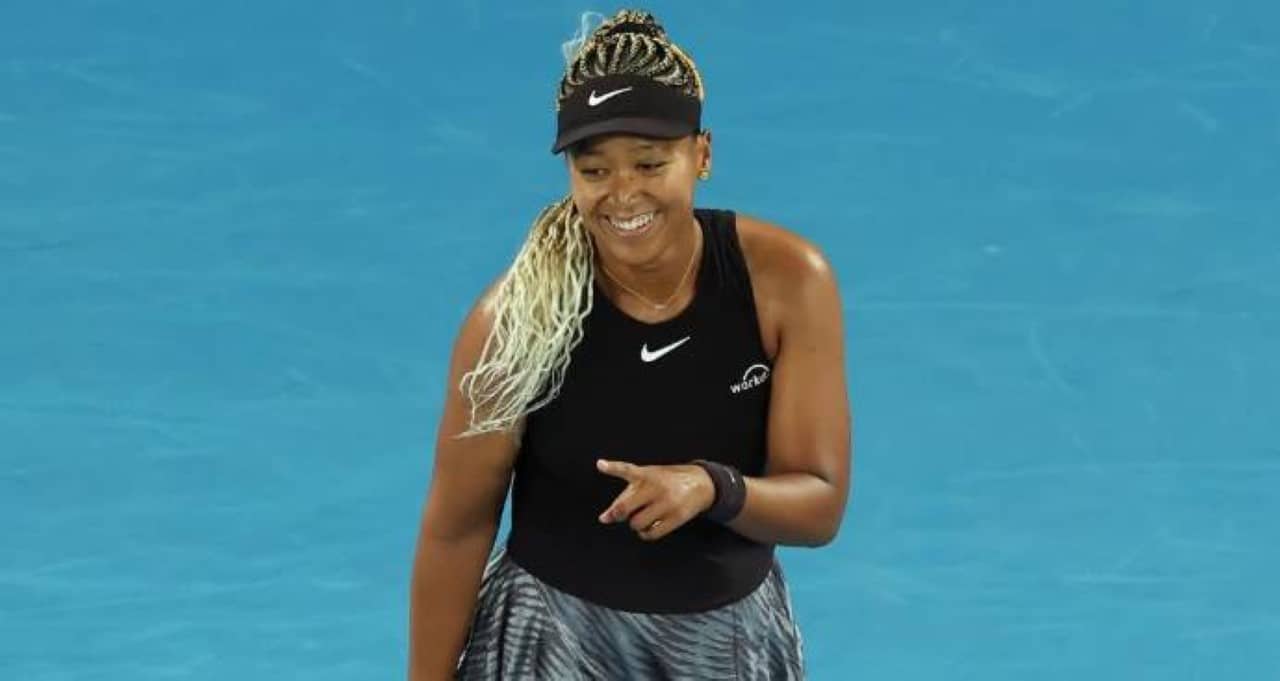
Former world number 1 Naomi Osaka secured qualification for the third round of Aberto from França after an intense clash that lasted almost two full hours. The athlete overcame her opponent on the traditional clay courts of Paris. The impressive result marks the competitor’s return to this specific phase of the competition for the first time since the 2019 season. The victory required extreme physical resistance and constant tactical adaptation throughout the entire dispute.
The triumph in the French capital demonstrates a technical evolution in the athlete’s game on a historically complex surface for her hitting style. Após confirmed the last point, the celebration took place in a restrained manner. Ela clenched his left fist in a discreet gesture of satisfaction. The concentration maintained during the intense rallies was the determining factor in the final score. Absolute focus allowed us to overcome the most pressured moments in the tournament.
Desempenho in the first set demands emotional control from the tennis player
The beginning of the confrontation presented a highly demanding scenario for Naomi Osaka. The tennis player faced direct difficulties in confirming her own service on two separate occasions. Quebras serving on the professional circuit usually generates immediate psychological instability. The Japanese woman, however, absorbed the negative impact without showing any apparent frustration. Maintaining calm avoided an irreversible deficit on the scoreboard.
The recovery in the scoreboard required a change in attitude when returning service. The athlete needed to adjust her timing on the ball to neutralize her opponent’s initial aggression. Emotional control on the court worked as the basis for tactical reconstruction within the partial. Ela found his rhythm. The calmness in moments of disadvantage prevented the opponent from consolidating a comfortable lead in the opening set.
The definition of the first stage occurred only in the tiebreak. Neste moment of tiebreaker, the former number 1 in the world changed the pattern of ball exchanges. Ela took an offensive stance. The imposition of a faster pace surprised the opponent in the decisive points. Precision in hitting from deep court guaranteed victory in the most balanced part of the match. Tactical intelligence under pressure defined the initial advantage.
Adaptação on clay neutralizes Olympic medalist’s strategy
The second set demonstrated the maturity of the game plan established by the Naomi Osaka technical team. The athlete eliminated the performance fluctuations recorded in the first hour of the match. The strategy adopted prioritized patience in the construction of each point. Ela avoided the premature search for winning balls. The lengthening of the ball exchanges had the clear objective of physically wearing down the opponent. The tactic forced a series of unforced errors on the other side of the net.
The level of difficulty of the confrontation was increased by the resume of the opponent faced in Paris. The opponent holds the title of silver medalist in the Jogos Olímpicos and Paris 2024. The victory over a competitor with recent experience on highly relevant podiums attests to the quality of the tennis presented. The clash required quick responses to variations in effect and speed. The ability to nullify an elite player’s main weapons confirmed the effectiveness of prior preparation.
The response to the opponent’s dropshots illustrated the improvement in reading the game. Short balls, traditionally used to break the rhythm of aggressive players, were achieved with ease. The anticipation of the plays allowed potential lost points to be transformed into efficient counterattacks. The neutralization of her opponent’s tactical subtleties undermined the Olympic medalist’s confidence. Control of the shares remained in the hands of the Japanese company until the end.
Evolução movement technique guarantees advantage during the match
Improving his footwork represented Naomi Osaka’s main competitive advantage on French clay during the match. The clay surface requires a very specific sliding technique to reach the ball correctly. The athlete demonstrated vastly superior body stability compared to previous years of her career. The agility in lateral movements made it easier to cover all spaces on the court. Ela reached angled shots with enough time to set up the return shot with absolute precision.
Efficient movement reduced the impact of forced displacement attempts promoted by the opponent. Mesmo under pressure at the back of the court, the consistency of the responses was maintained. The prolonged defense capacity frustrated the opponent’s offensive attacks. The physical exhaustion generated by the extensive rallies favored the tennis player with better athletic preparation. The quick transition from defensive to attacking posture created crucial scoring opportunities.
- Aumento of tactical patience during prolonged ball exchanges at the back of the court.
- Melhora significant in covering spaces and in the technique of sliding on clay.
- Redução of the number of unforced errors in moments of high pressure on the scoreboard.
- Maior efficiency in reading the game and reacting quickly against short balls.
- Crescimento gives you the confidence to execute aggressive shots on slow surfaces.
The consolidation of these technical fundamentals transforms the athlete’s game dynamics in tournaments played on clay. Biomechanical adaptation to controlled slips reduces the risk of injuries and increases the precision of strikes in motion. The specific work carried out during the pre-season directly reflects on the results obtained in the first rounds of the competition. The confidence gained with each victory strengthens the mental aspect for the next challenges.
Histórico in Grand Slam tournaments and performance on clay court
Naomi Osaka’s professional career includes winning four Grand Slam titles. The trophies were erected on the hard courts of Aberto and US Open. The speed and bounce of the ball on these surfaces have always favored the natural power of his strikes. Aberto’s França, played on a slow surface, represented the main barrier to the expansion of its dominance on the world circuit. Reaching the third round equals the best campaign of his career in the Paris tournament.
Overcoming historical limitations on clay adds a new layer of complexity to the player’s profile. The serenity demonstrated in the critical moments of the match points to a notable competitive maturity. The union between characteristic physical strength and new tactical intelligence expands the possibilities of success in the French capital. The agency Jiji Press followed the details of the classification and highlighted the importance of the result for Asian sport.
Progression in the tournament places the athlete against opponents with increasingly varied playing styles. Maintaining focus and tactical discipline will be required at even higher levels in the next phases. The ability to continuously adapt to court conditions and the local climate directly influences physical performance. The current campaign redefines expectations about the tennis player’s potential in clay competitions on the international calendar. Advancement in the main draw confirms the effectiveness of the technical planning established for the European season.





