
GigaAI’s SeeLight S1 humanoid begins home trials in China for US$15,000 to cook and assist elderly people

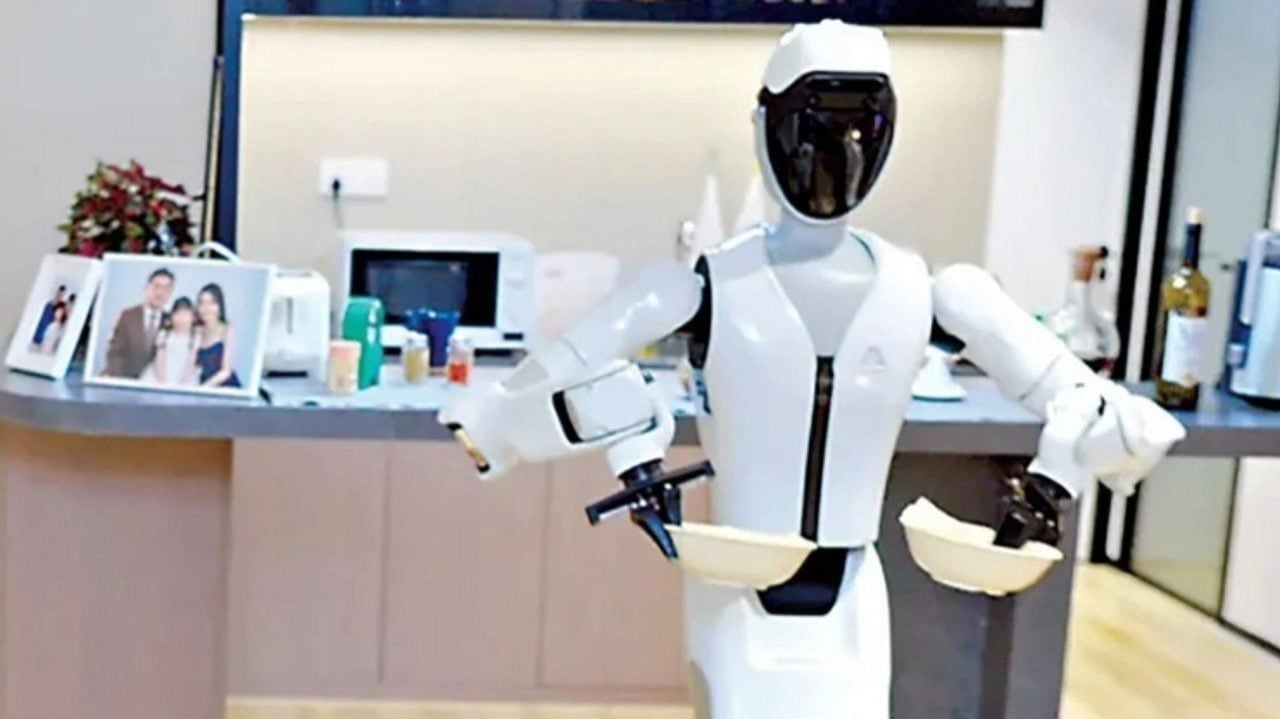
GigaAI, a Chinese robotics startup based in Hubei province, introduced SeeLight S1, billed as the world’s first general-purpose household humanoid robot. Este model was planned for deployment in real homes, marking an evolution in relation to prototypes or controlled demonstrations of other humanoids on the market. The initiative aims to test the device’s artificial intelligence in complex environments for large-scale commercial validation.
Diferentemente humanoids such as ASIMO, Honda, or models Boston Dynamics, Figure AI and Tesla, SeeLight S1 stands out for its concrete and public testing and launch plan. GigaAI has already distributed an initial batch of 100 units for internal testing in corporate housing focused on technology professionals in the city of Wuhan, setting the stage for a more comprehensive phase of deployment.
SeeLight S1 Implantação in Chinese homes
GigaAI’s project advances to a crucial stage in the first half of 2027, when the startup plans to expand the program by distributing free SeeLight S1 units to families in Wuhan. Esta phase will prioritize homes with elderly people, young children or pets, groups that can directly benefit from robotic assistance.
The main objective of these tests is to collect a vast amount of data in authentic home environments. The robot’s interaction with families’ daily lives will improve artificial intelligence and validate the commercial viability of the product. Para ensure the safety of occupants, especially children and animals, the S1 incorporates advanced sensors that immediately lock their movements upon detecting contact, an essential functionality for public acceptance and trust.

Funcionalidades and home robot differences
With two functional arms and an articulated torso, the SeeLight S1 is capable of manipulating a variety of objects, being technically classified as a hybrid humanoid due to its movement on wheels. Essa specific feature, which prevents it from climbing stairs like bipedal models, is actually a strategic choice aimed at accelerating its arrival to the market before many of its more complex competitors.
GigaAI released demonstration videos on WeChat where the robot performs various household tasks autonomously. SeeLight S1 capabilities include:
- Corta vegetables and fry eggs.
- Coloca and hangs clothes in the washing machine.
- Arruma beds.
- Abre curtains.
The robot uses embodied AI, which interacts directly with the physical world, learning and making decisions based on visual, tactile and sensory perceptions of the environment. Esse system is a significant advance over industrial robots, which rely on rigid algorithms and pre-programmed routines, allowing for continuous adaptation and learning in unstructured contexts such as the home.
The challenge of robotics and data from the physical world
Para to GigaAI, the real challenge of contemporary robotics no longer lies in the hardware, which has already reached a considerable level of sophistication with motors, sensors and advanced mechanical structures. Nem even the artificial intelligence, which has already been extensively trained with vast data of text, images and simulations, represents the main bottleneck. The crucial missing link is data from the physical world, collected in real interactions.
To learn how to pick up a glass without dropping it, a robot needs more than millions of images of glasses. Ele needs to experience the practice of holding a real glass, feeling the resistance, weight, angles and surface variations. Essa direct interaction generates data that cannot be replicated in simulations. The exact force to pick up an egg without breaking it or the readjustment of movement when an object slips is information that can only be acquired through experience in the real environment.
Metas of Pequim and the future of SeeLight S1
Cada SeeLight S1 robot deployed in a real home has an invaluable value for GigaAI, equivalent to a thousand laboratory simulations, in the process of generating this data from the physical world. Essa’s approach directly aligns with the goals of the Pequim government, which is facing a demographic crisis and a rapidly aging population. Cuidar for the elderly, helping families with children and automating domestic work are government priorities, not just marketing promises for the company.
Além from current tests, the SeeLight S1 already has a defined date for its transition from prototype to commercial product. In an interview with Wuhan’s Changjiang Daily newspaper, GigaAI CEO Zhu Zheng confirmed that the model will be available for purchase in stores in June 2027. The estimated price of US$15,000, although high for the average consumer, is significantly lower than the projected cost of competing humanoids, positioning the SeeLight S1 as a more affordable option in the emerging home robot market.





