
Jeep Commander surpasses the advance of Asian brands and consolidates leadership in the seven-seater segment

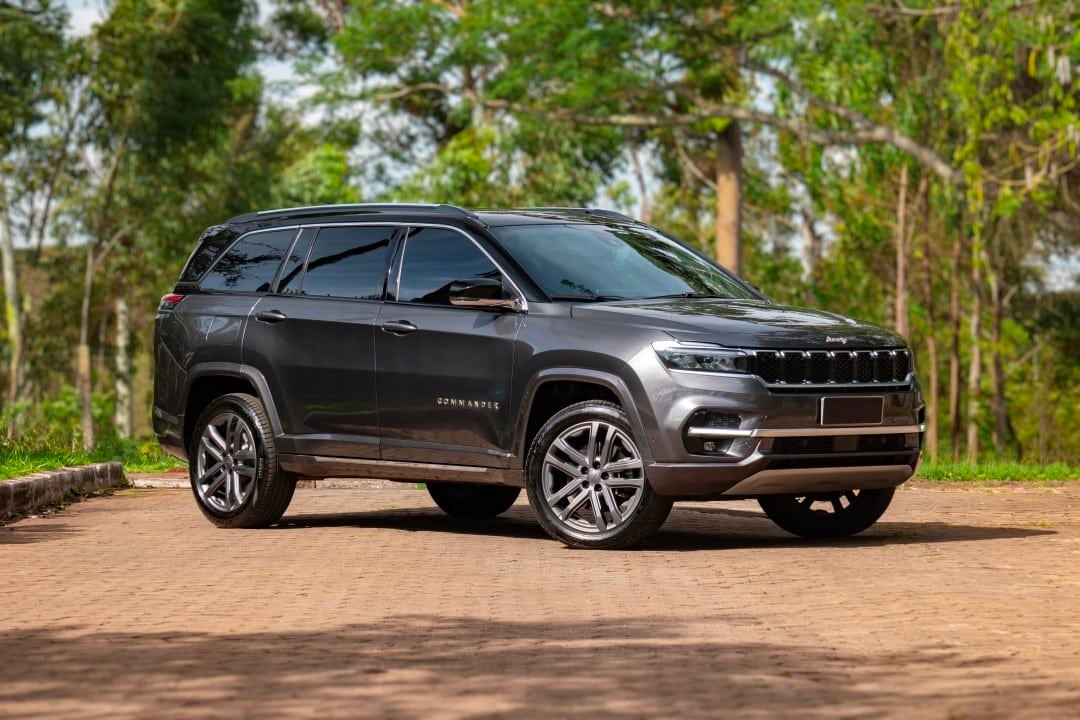
The Jeep Commander maintains a consolidated position in the seven-seater SUV segment in the Brazilian market. The model produced by Stellantis records consistent sales, despite the growing presence of Asian automakers in the country. The entry version Longitude acts as the utility’s main commercial support pillar. The automotive scenario requires rapid adaptations, but the vehicle maintains its captive space among consumers who seek space and reliability.
The manufacturer’s strategy includes price adjustments that bring the utility closer to direct competitors without changing the essence of the product. Enquanto Some traditional brands quickly adapt their lines with electrified proposals and more aggressive values, Jeep opts for specific evolutions in the current range. The model offers space for families, refined finishing and varied mechanical options that suit different usage profiles in cities and highways.

Estratégia commercial and discounts boost entry version sales
The seven-seat Longitude configuration appears to be primarily responsible for maintaining the model’s leadership in the registration ranking. The vehicle starts from the official table with values around R$228 thousand in the year 2026. However, the network’s dealerships apply strategic discounts that take the effective value to a level close to R$200 thousand in several regions of the country.
Esse financial adjustment places Commander in a highly competitive position compared to CAOA Chery Tiggo 8 Pro, which also competes for the attention of the same public profile. The aggressive pricing charged in physical stores demonstrates Stellantis’s intention not to give up space to imported brands that focus on cost-benefit.
The 176 hp 1.3 turboflex engine powers the Longitude version and offers better relative efficiency than the most powerful options in the catalogue. Esse mechanical set is well suited to daily family use, ensuring safe overtaking and balanced consumption for the size of the vehicle. Commander Longitude records a monthly average of more than 1,300 units sold in recent periods.
Standard equipment includes items widely expected in SUVs in this price range. The consumer will find a modern multimedia center, several advanced driving assistants and an interior finish that conveys the feeling of a premium product. Efficient traction and ample internal space continue to be the most highlighted positive points by those who evaluate the utility vehicle at dealerships.
Desempenho mechanics and consumption of the top-of-the-line configuration
The Blackhawk configuration caters to drivers who demand faster responses and greater traction capacity. The model has the Hurricane 2.0 turbo gasoline engine under the hood, capable of generating 272 hp, combined with the 4×4 traction system. Esse mechanical set transforms the utility’s behavior on different types of terrain.
The powerful engine allows acceleration from 0 to 100 km/h in around 7 seconds. The number gives the large SUV excellent dynamic behavior, exceeding expectations for a family vehicle that weighs more than two tons. The handling balances its robust size with surprising agility in urban traffic.
Fuel consumption in the city averages 6 km/l when the driver uses the sportiest driving mode. Essa feature requires greater financial planning for those who drive daily in congested urban stretches. On the road, consumption figures improve significantly, varying depending on the pace set by the driver and the load transported in the luggage compartment.
The interior of the Blackhawk version offers superior quality materials, with darkened linings and exclusive details. Technology and comfort equipment is comprehensive, including premium sound systems and enhanced electrical adjustments. Dirigir the model provides the feeling of robustness typical of the Jeep brand, without giving up the refinement required by customers in this category.
Asian Concorrência and the positioning of Stellantis in the market
Models of Chinese origin have gained significant volume in the SUV categories in recent years. Asian automakers present proposals that combine attractive prices, closed equipment packages and plug-in hybrid engine options. The Brazilian market quickly absorbed these new developments, changing the price dynamics in several segments.
In the specific niche of seven-seater vehicles, the advance of competition is still occurring more gradually compared to the compact and medium SUV segments. The complexity of producing a large family car with good finishing and suspension adapted to the Brazilian surface creates an entry barrier that partially protects already established models.
The Jeep keeps the Commander updated with subtle visual modifications in the 2026 line. The manufacturer focuses on traditional attributes, such as light off-road capability, absolute comfort on long journeys and the security of a technical assistance network widely established throughout the country. The capillarity of dealerships weighs on the purchasing decision.
Families that prioritize ease of maintenance and structural robustness continue to consider the Stellantis utility as a viable and safe alternative. Resale value and liquidity in the used market also act as customer retention factors for the North American brand.
Espaço indoor, acoustic comfort and versatility for families
The Commander offers a spacious trunk, even when all seven seats are in use. The brand’s engineering managed to optimize the cabin, which makes it easier to transport luggage and purchases when traveling with the whole family. The cargo compartment has hooks and adequate lighting for night use.
The second row seats slide and fold, increasing the versatility of the interior space according to the owner’s daily needs. Access to the third row of seats was designed to be intuitive, allowing children and adults of average height to accommodate themselves with an acceptable level of comfort on short and medium journeys.
Consumers who tested the model highlight the interior silence and the high level of acoustic insulation in the cabin. Essas features directly contribute to reducing fatigue on long road trips. Sealing the doors and using thicker glass blocks much of the noise from wind and tire rolling.
The four-wheel independent suspension helps absorb asphalt irregularities without compromising directional stability at high speeds. The utility remains an absolute reference for those looking for a large SUV with its own identity and real capacity for seven adult occupants on moderate journeys.
Opções engine and the future of electrification in the brand
The utility’s current catalog has mechanical variations ranging from the 1.3 turboflex engine to the 2.0 turbo gasoline engine. The brand also maintains diesel-powered options in the upper configurations, aimed at people who travel long distances or need extra strength for towing. Cada engine meets different consumption and performance needs.
The arrival of the Renegade model with the new 48V mild hybrid system indicates the brand’s initial movement towards the electrification of its national fleet. The market awaits similar upgrades for larger vehicles, but the Commander still relies solely on existing thermal configurations to maintain its sales volume.
The 2026 line presents a simplified version structure to facilitate consumer choice at dealerships. Mechanical options define the usage profile of each available configuration.
- Motor 1.3 turboflex with 176 hp in the Longitude version, ideal for balanced family and urban use.
- Motor Hurricane 2.0 turbo gasoline engine with 272 hp in the Blackhawk configuration, focused on those looking for high performance.
- Transmissão six-speed automatic for flex-fuel engines or nine-speed for the more powerful versions.
- Tração 4×4 available in the most equipped configurations, guaranteeing grip on low-traction surfaces.
The diversity of the portfolio allows Stellantis to operate in different price ranges within the same segment. The vehicle can attract everyone from the customer who upgrades a medium SUV to the buyer who gives up on imported luxury models in search of a more rational maintenance cost. The strategy guarantees the longevity of the product on the national market.





