
South Korean automaker presents Kia EV2 compact SUV with a range of 448 km for 26,600 euros

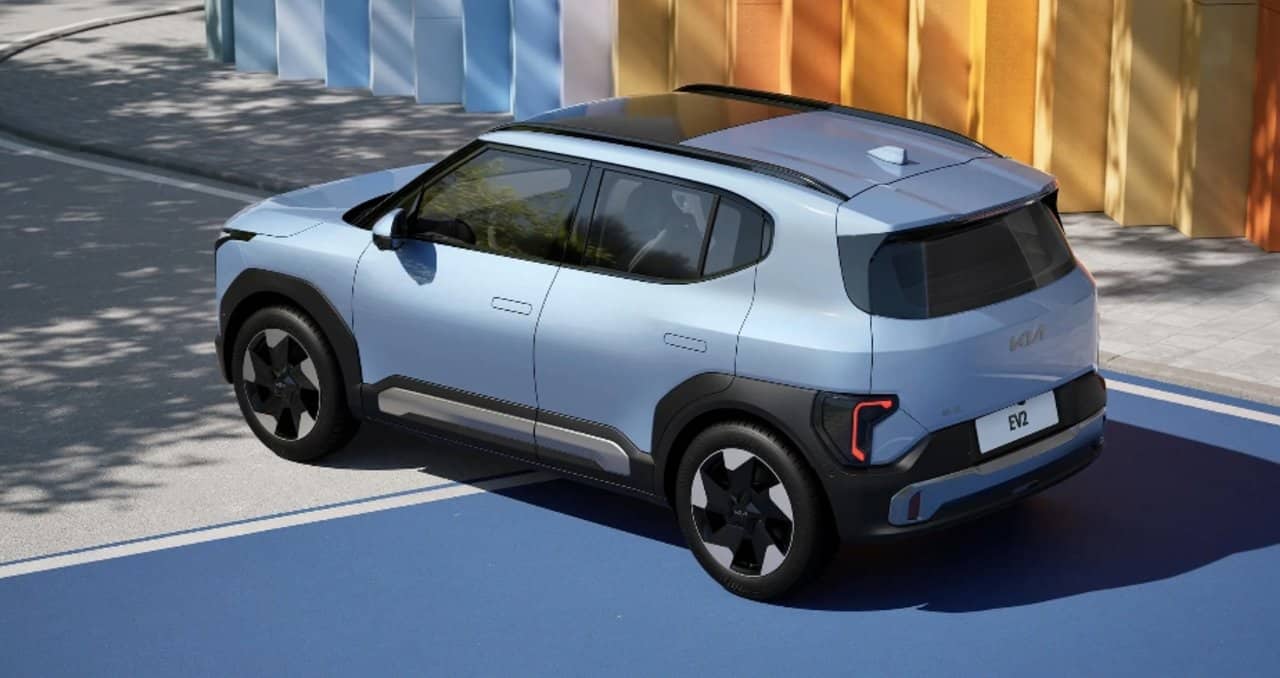
Kia officially announced the arrival of the EV2 on the European automotive market as the new gateway to its line of fully electric vehicles. The compact sports utility vehicle debuts with a starting price set at 26,600 euros. The South Korean automaker developed the model with a focus on daily urban use. The design adopts square and robust lines that directly refer to the bigger brother EV9.
The manufacturer’s strategy aims to attract consumers looking to transition to electric mobility through an affordable family car. Orders have already been opened in specific countries on the continent, such as Alemanha. The vehicle combines balanced technical specifications with internal versatility solutions for everyday life. Production on European soil facilitates regional distribution logistics.
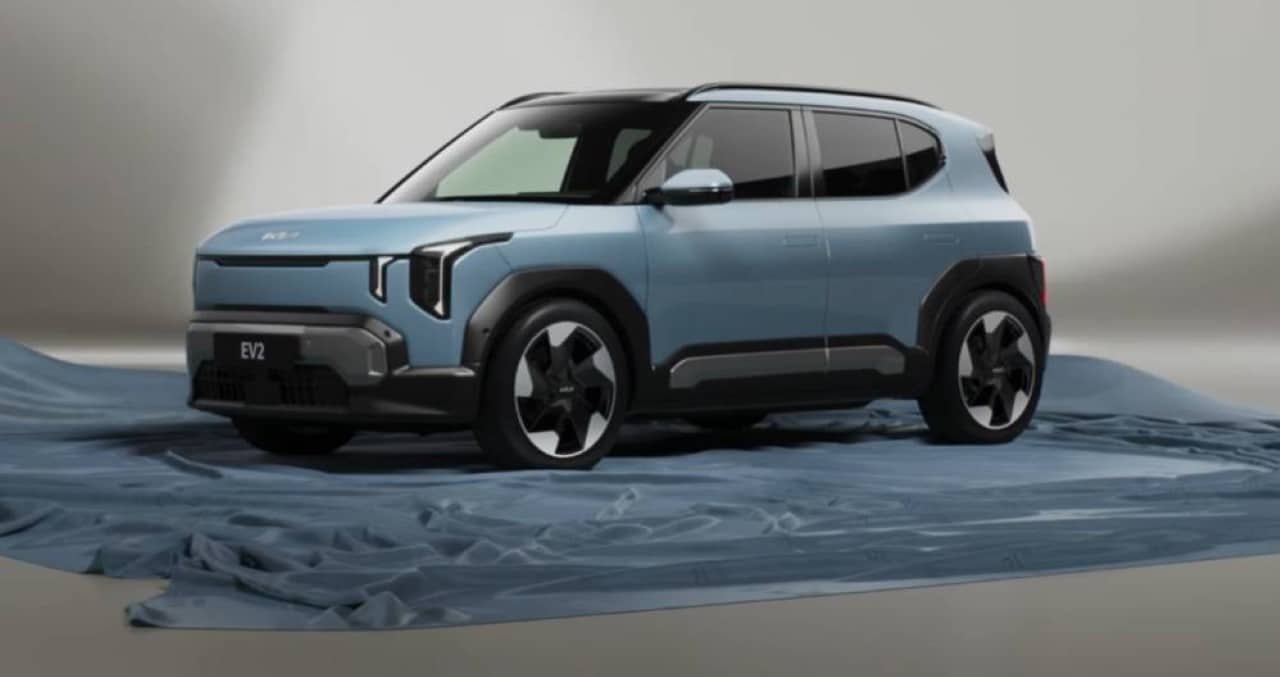
Arquitetura technical and electric motorization options
The SUV is built on a 400-volt electrical architecture. Buyers will find two different battery configurations in the automaker’s initial catalog. The access version offers a 42.2 kWh energy package associated with a 108 kW electric motor. Esse mechanical set delivers power equivalent to 146 hp. The range approved in the European WLTP cycle reaches 317 kilometers on a full charge.
The top variant focuses on extending range for longer trips. The model receives an enlarged battery with a capacity of 61.0 kWh. The electric drive of this configuration generates 99 kW of power, which represents 135 hp. The system’s energy efficiency allows the vehicle to travel up to 448 kilometers between recharges. Ambas versions sold have a maximum speed electronically limited to 161 km/h for safety and cargo preservation reasons.
Compact Dimensões and use of internal space
Kia engineering designed the EV2 specifically for navigating narrow urban roads and limited parking spaces. The car measures exactly 4.06 meters in total length. The distance between the axles reaches 2.66 meters. Essa proportion guarantees accommodation of up to five occupants in the cabin. The rear luggage compartment has an initial volume of 362 liters. Fully folding the second row of seats expands the volumetric capacity to 1,201 liters.
The modularity of the interior represents one of the central points of the South Korean project. The manufacturer offers a rear seating system with sliding rails and reclining backrests as optional equipment. Essa functionality allows owners to adjust the ratio between passenger legroom and cargo carrying area. The cabin incorporates technological elements inherited from the brand’s higher-end sports utility vehicles.
Tecnologia Loading and Vehicle-to-Load System
The compact SUV’s energy management includes support for ultra-fast direct current charging stations. Factory specifications indicate that the battery level jumps from 10% to 80% in approximately 30 minutes under ideal terminal temperature and power conditions. The vehicle also accepts alternating current connections. Charging at home or in public points via wallbox supports up to 22 kW of power from the moment of commercial launch.
The list of standard equipment features advanced connectivity and electrical management features. The technological package encompasses the following main features:
- Factory integrated Sistema Vehicle-to-Load for powering external equipment directly from the car battery.
- Additional front Compartimento under the hood specifically designed for practical storage of charging cables.
- Central infotainment compatible with remote software updates via the internet available as an optional item.
The inclusion of Vehicle-to-Load technology in the cheapest version of the catalog demonstrates the brand’s intention to democratize premium functions. Users can plug household appliances, power tools or camping equipment into the vehicle’s socket. The dashboard’s digital interface centralizes climate control, satellite navigation and real-time energy flow monitoring controls.
European Produção and positioning in the face of competition
The assembly line for the new electric SUV was established at the Kia factory located in the city of Žilina. The industrial complex at Eslováquia received structural adaptations to support mass production of the electrified platform. European nationalization of manufacturing reduces import costs and shortens delivery times to local markets. The external design maintains the bold visual identity characteristic of the company’s current generation of products.
The compact electric SUV segment presents an increasing level of competitiveness in the global automotive scenario. The Kia EV2 is on a direct collision course with projects from other traditional automakers. The Renault 4 emerges as one of the main rivals in the entry-level category. The future launch of the VW ID. Cross will also compete for the same price range and consumer profile. The South Korean brand is betting on a balance between acquisition cost and realistic autonomy to gain market share.
Cronograma for deliveries and expansion of the brand’s portfolio
The automaker’s official calendar establishes the year 2026 for the effective start of deliveries to end customers. Distribution will begin with units equipped with a 42.2 kWh battery. The long-range version with the 61.0 kWh accumulator is scheduled to arrive at dealerships in the second half of the same year. The early opening of orders at Alemanha serves as a thermometer to measure the initial acceptance of the European public.
The introduction of the compact model consolidates the Asian manufacturer’s global electrification plan. The portfolio of battery-powered vehicles now covers everything from the entry-level segment to large sports utility vehicles with three rows of seats. The commercial strategy focuses on drivers who make daily urban journeys and need a versatile car for short weekend trips. The 400-volt architecture ensures compatibility with existing public charging infrastructure on highways.



